The Nigerian Guild of Editors (NGE) has urged the Independent National Electoral Commission (INEC) to ensure transparency and timely disclosure of information to safeguard the integrity of the 2027 general elections.
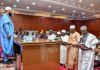
NGE President Eze Anaba made the call on Monday in Abuja, during a strategic workshop organised by INEC in collaboration with the NGE.
The theme of the three-day workshop is: “Strengthening Democracy Through Partnership Among Editors, Civil Society and Electoral Institutions.”
While acknowledging that the media cannot shoulder the trust-building responsibility on its own, Anaba added the vital role that timely and accessible information from the electoral body plays in a symbiotic relationship between both sides.
Anaba urged media managers and the electoral umpire to forge a deeper partnership based on mutual respect and open communication to effectively combat misinformation.
“Elections are not merely about casting ballots. They are about trust.
“They are about citizens believing that their votes will count, that the process will be transparent and that the institutions responsible for conducting elections will act fairly and professionally,’’ he said.
He pledged editors’ commitment to working with INEC and other stakeholders to promote elections that Nigerians could trust and a media that citizens could rely upon for credible information.
“In an environment increasingly polluted by misinformation, disinformation, manipulated content, deepfakes and partisan narratives, the relationship between INEC and the media must therefore be one founded on openness, mutual respect and regular engagement,’’ Anaba said.
Also speaking, the Executive Director of the Centre for Media and Society (CEMESO), Dr Akin Akingbulu, called for mutual transparency between institutions and the media.
He said:”newsrooms cannot verify what institutions do not disclose.”
Akingbulu advocated for an “INEC–Editors Verification Compact” to define clear obligations for both information sharing and responsible reporting, cautioning against the rising threat of AI-generated electoral falsehoods.
”Ballot papers may decide an election’s winner, but the quality of information surrounding the process shapes whether citizens trust the outcome.”
Arogundade called on the media to prioritise verification over speed, while emphasising the need for robust measures to ensure the safety of field journalists during election coverage.
The INEC Director of Publicity and Voter Education, Mrs Victoria Eta-Messi, warned against the widespread threat of fake news on electoral process.
She described fake news as “a cancer” with its attendant effect on citizen participation in the electoral system.
Eta-Messi said that distorted reports directly contribute to voter apathy and charged editors to leverage their gatekeeping positions to verify field claims before publication.
Team Leader of DAI, Rudolf Elbling, commended both INEC and the NGE for initiating the platform, stating that strong media-institution synergy remains indispensable for preserving democratic stability in Nigeria.
Elbling describing media as the oxygen of democracy, empahsised the need for timely and accurate information.
“Media as the oxygen of democracy, but today, there’s a lot of poisonous oxygen out there as well, which is hard to breathe, especially for these guys here.
“It really becomes a horrible mess out there. But you as respectable media, you still stick to the facts that are more important than ever,’’ he said.
Speaking on the operational objectives of the workshop, the Chief Press Secretary to the INEC Chairman, Adedayo Oketola, said that the session was designed to establish direct, round-the-clock verification channels between newsrooms and the commission.
This according to Oketola was to prevent unverified claims from undermining public peace.
“Beyond reporting the news, the media, civil society, and electoral institutions share a joint obligation to protect the integrity of the ballot.
“Our goal today is to align on ethical gatekeeping, conflict-sensitive reporting, and civic enlightenment—especially as the nationwide collection of Permanent Voters’ Cards (PVCs) commences in four days, on Oct.9,’’ he said.
Mohammed Haruna, INEC National Commissioner, commended media support for the commission, which according to him made its achievements possible.
Haruna, who is also the Chairman of the Information and Voter Education Committee (IVEC), called for greater collaboration between the media and INEC.
He said that upcoming milestones, including the countdown to the general election, required even stronger collaboration with media executives to keep the public accurately informed.
(NAN)