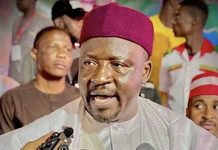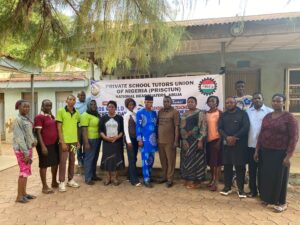
Dr Babatunde Folarin, National President, Private Schools Tutors Union of Nigeria (PRISCTUN), has urged the Federal Government to increase education investment and extend welfare and housing interventions to private school teachers.
Folarin made the call on Monday in Abuja to mark the 2026 World Teachers’ Day.
The 2026 celebration has the themed “Standing with Teachers: 60 Years of Protecting the Profession, Advancing its Status and Shaping our Futures”.
He said relevant authorities should ensure good salary structure and better working conditions to ease the economic hardship of private school teachers.
The president also called for stronger recognition of PRISCTUN and collective bargaining rights for private school teachers.
He stressed that teachers should be allowed to organise and advocate for better working conditions without victimisation.
“Private school teachers across Nigeria entering the classroom with a smile each morning is an act of resilience, in spite of low wages, job insecurity and poor working conditions.
“The celebration should not just be about appreciating teachers, but confronting the conditions under which many of them work, particularly in Nigeria’s private school sector,” he said.
Addressing teachers and stakeholders at the event, Folarin decried the hardship and poor welfare among private school teachers and called for urgent action.
He noted that the theme marks 60 years of the 1966 ILO/UNESCO Recommendation concerning the Status of Teachers, which established international principles on teachers’ rights, responsibilities, training and working conditions.
“Teachers in many private schools still collect salaries below the national minimum wage, lack social protection and face casualisation and job insecurity.
“Some teachers earn between N20,000 and N35,000 monthly, while others are left without salaries during long school vacations.
“Due to ‘holiday hunger’, some teachers resort to petty trading, including selling biscuits and groundnuts to survive vacation periods,” he said.
Folarin alleged that some private school teachers worked without appointment letters, promotion structures, salary increments, pensions, health insurance or other basic employment benefits.
He also alleged that some teachers were dismissed through WhatsApp messages, describing the situation as an indication of insecurity in the sector.
He said the situation was of concern because private schools played a significant role in educating Nigerian children.
“The Federal and state governments should ensure that registered private schools comply with labour laws and the N70,000 national minimum wage,” he said.
Folarin advocated written employment contracts, pension contributions, health insurance, annual leave with pay, maternity leave and holiday pay for private school teachers.
He urged stakeholders to end what he described as the practice of paying teachers for only nine months of the year, insisting that teachers should receive salaries for 12 calendar months.
He also proposed the establishment of a Teachers’ Welfare and Training Fund by private school proprietors’ associations and PRISCTUN to support professional development and welfare.
On the growing use of Artificial Intelligence in education, Folarin called for teachers to be trained to work with emerging technologies rather than being displaced by school owners.
He commended private school proprietors who prioritised teachers’ welfare, describing them as partners in nation-building.
He, however, appealed to those who exploited teachers to improve their working conditions, stressing that “no school is greater than its teachers.”
Folarin congratulated teachers and said their contribution to shaping the future of the country remained invaluable in spite of the challenges confronting the profession.
“The future of Nigeria cannot be shaped by hungry teachers,” he said.
He urged Nigerians to go beyond celebrating teachers on Oct. 5 and support measures that would guarantee decent wages, job security, professional recognition and dignified working conditions.(NAN)