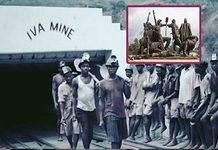
The Enugu State Government on Wednesday commemorated the 77th anniversary of 21 coal miners killed at Iva Valley, Enugu in 1949, pledging to support the victims families.
The anniversary, held at International Conference Centre, Enugu had the theme: “Beyond Remembrance: Justice, Colonial Accountability and the Imperative of Reparations for the Iva Coal Mine Massacre.”
It was organised by the Enugu State Council for Arts and Culture in partnership with the Centre for Memories, Art Focus Foundation, AfroTides Studios and the National Council for Museums and Monuments.
The News Agency of Nigeria (NAN) recalls that the incident took place on Nov. 18, 1949, when the miners were protesting against harsh working conditions, racial disparities in wages and unpaid back wages.
The event featured the launch of the Coal Miners Massacre 1949 Foundation and a stage play titled IVA: The Incarnations.
Speaking at the event, Secretary to the State Government, Prof. Chidiebere Onyia, said the anniversary was not merely an annual ceremony but an obligation to preserve the memory of the victims.
He said, “For this administration, this anniversary is not an event to be held merely as an annual ritual. It is an obligation to history”.
He said the 21 miners deserved more than commemorative ceremonies, saying that they deserved an enduring institutional recognition and a place of honour in national consciousness.
He described the victims as “fathers, husbands, brothers and community members” whose aspirations were cut short, disclosing that Enugu State Government provided financial and logistical support for the commemoration.
The SSG urged young people to learn about Enugu’s history and understand the sacrifices of those who contributed to the state’s development.
Delivering the keynote address, Ozo Ferdinand Aniekwe, former Director General of Centre for Black Arts and African Civilisation (CBAAC), said Britain’s colonial expansion into Africa was driven by economic interests rather than a civilising mission.
He linked capitalism, colonialism and imperialism, arguing that the pursuit of wealth and control of resources shaped Britain’s activities in Africa.
Aniekwe also called for better documentation of African history, noting that European accounts had received greater attention in historical records.
The Executive Secretary of the Enugu State Council for Arts and Culture, Mr Lawrence Ani, said theatre could take the story beyond local remembrance.
Ani said the stage production would help attract wider attention to the tragedy and preserve its memory for future generations.
He urged Nigerians not to allow historical grievances to prevent efforts to build relationships and address past injustices.
Speaking on behalf of the Foundation, Mr Hyacinth Ohagwu, said it was documenting affected families and preserving Enugu’s underground mining history.
He warned that deteriorating and abandoning of mining tunnels could pose risks to residents in affected communities, calling on the authorities to identify vulnerable areas and protect residents from possible tunnel collapses.
He proposed restoring the old mining school and preserving mining-era structures as archives and exhibition centres as well as the state government introducing mining history into the school curriculum.
Two people who identified themselves as relatives of victims, Chima Ihedube and Steven Agu, shared their families’ experiences.
Chima recalled how his family gradually came to terms with the loss after elders told him about the tragedy suffered by his forebears.
Agu called on government to treat miners fairly and praised the state government for recognising the victims. (NAN)