Development

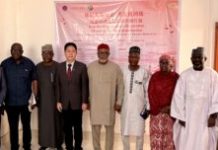
The Alake of Egbaland, Oba Adedotun Gbadebo, has called for collective commitment to the implementation of a 10-year development plan to accelerate growth across Egbaland.
Gbadebo made the call on Wednesday in Abeokuta at the Conference for Egba Development Plan 2027-2037, urging indigenes to become ambassadors of the initiative.
He said the plan provided an opportunity to address years of developmental neglect, particularly in Abeokuta, which he said had not received adequate attention as Ogun’s capital.
The traditional ruler urged successive governments to prioritise the development of Abeokuta, citing Lagos and Abuja as examples of capital cities benefiting from substantial government investments.
“This time when the government of Ogun state is changing hands is the right time for us to promote the plan for a better development.
“We have been shortchanged over the years because we are not supposed to be where we are now.
“The state has not taken care of the capital enough at all.
“We thank God that we had a son who changed all our two lanes to six lanes all over Egbaland,” he said.
Gbadebo also described Egbaland as Nigeria’s educational capital, stressing the need to consolidate its position through sustained investment in education and other critical sectors.
He called for equitable development across the six local government areas, noting that projects should reflect the peculiar needs of each community.
He commended Abeokuta Club for promoting the development initiative and urged stakeholders to support its implementation for the benefit of present and future generations.
Earlier, the Chairman of the Egba Development Plan Committee, Chief Ademola Ayodele, said the 2027-2037 plan was designed as a comprehensive roadmap for sustainable development.
Ayodele identified six pillars of the plan as economic sovereignty, infrastructure, human capital development, security and justice, identity and culture, and institutional capacity for development.
He said the committee’s preliminary assessment revealed significant developmental gaps across Egbaland, requiring strategic interventions, stakeholder contributions and professional recommendations.
According to him, the committee is developing practical priorities, measurable targets and sustainable implementation mechanisms, drawing from submissions by indigenes at home and in the Diaspora.
“There should be a shift from short-term political considerations to development-oriented governance that prioritise infrastructure, economic opportunities, education, healthcare, security and institutional growth.
“I believe that collective commitment, strategic direction and effective institutions will enable Egbaland to overcome its challenges and secure a prosperous future,” he said.
In his presentation titled” Proud Heritage, Present Strengths and a Bold Vision for the Future”, the Olowu of Owu, Oba Saka Matemilola, sought strategic investment to position Abeokuta among top West African cities.
Matemilola noted that there was need for strategic investments in infrastructure, education, tourism and technology to position Abeokuta among leading west African cities.
He said Abeokuta’s historical heritage, educational institutions, cultural identity, geographical location and entrepreneurial potential provided opportunities for economic growth and international recognition.
He identified education, manufacturing, agriculture, Adire production, cultural tourism and creative industries as critical sectors requiring investment to strengthen the city’s economy and create employment.
He proposed a phased development roadmap, focusing on urban renewal, improved transportation, industrial expansion, tourism development, environmental sustainability and youth empowerment.
Matemilola stressed that measurable targets, sustainable funding and accountability were essential to transforming Abeokuta into a prosperous and internationally recognised city.(NAN)