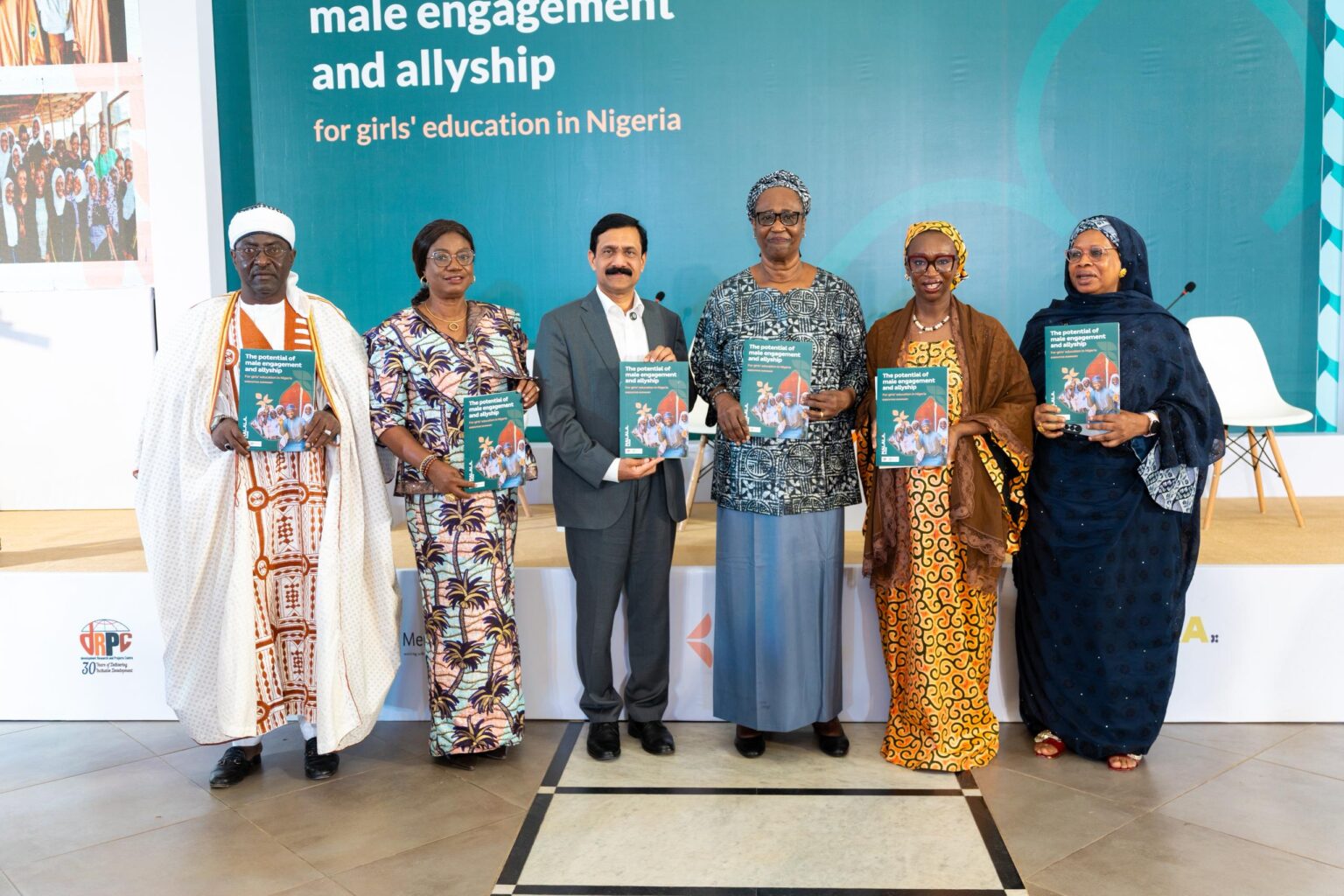
The Malala Fund has called for a shift from symbolic support for girls’ education to deliberate, measurable and accountable male allyship capable of improving educational outcomes, particularly in Northern Nigeria.
The call was made on Wednesday in Abuja during the inauguration of a report titled, “The Potential of Male Engagement and Allyship for Girls’ Education in Northern Nigeria.”
Speaking at the event, Country Lead for Malala Fund Nigeria, Nabila Aguele, said the report highlighted the need to intentionally engage men and boys in removing barriers.
According to her, such engagement must ensure that girls remain at the centre of all interventions aimed at expanding access to quality education and improving learning outcomes.
“Male engagement cannot be a symbolic endorsement or simply a matter of having more men in the room.
“It must be intentional, tied to clear outcomes for girls’ education and measured by the difference it makes in girls’ lives,” she said.
Aguele said that while discussions on girls’ education must remain focused on girls and their needs, many decisions affecting educational opportunities were still made by men.
She said fathers, policymakers, traditional rulers, faith leaders and community actors played critical roles in shaping social norms that determined whether girls enrolled, remained and succeeded in school.
According to her, stronger allyship requires ensuring that policies on girls’ education, school re-entry for adolescent mothers, child marriage prevention and education financing are implemented effectively.
She said Malala Fund was supporting local organisations and education advocates to domesticate national school re-entry guidelines across states and promote education as a strategy against child marriage.
“We want to see resources reaching the girls who need them most and accountability mechanisms that ensure commitments translate into action,” she added.
Delivering a keynote address, Malala Fund Co-founder, Mr Ziauddin Yousafzai, described girls’ education in Northern Nigeria as being in crisis due to multiple barriers.
He identified poverty, insecurity and restrictive gender norms as major obstacles, noting that millions of girls remained out of school across the region in spite of ongoing interventions.
“Men have a key role because many of the final decisions affecting girls are made by them. Change in the hearts and minds of men are therefore crucial.
“We do not need to call men out; we need to call them in. Men should not be viewed as part of the problem alone, but as part of the solution,” he said.
Yousafzai emphasised that effective allyship began with personal transformation and a commitment to challenge discriminatory norms within families, communities and institutions influencing girls’ opportunities.
Reflecting on his upbringing in Pakistan, he recounted how educational opportunities were denied to his sisters because of gender, shaping his lifelong advocacy for girls’ rights.
He said that support for girls’ education among influential men in Northern Nigeria was increasing, but said such support remained largely symbolic and insufficient for lasting change.
“There is widespread endorsement of girls’ education, but endorsement alone is not enough. Allyship must move beyond words and become active support, active advocacy and active accountability,” he said.
According to him, the report highlights the need for male engagement that is deliberate, strategic, measurable and fully aligned with broader gender equality objectives and outcomes.
He said faith leaders, traditional rulers, media practitioners, civil society organisations and government officials all had important roles in transforming harmful norms affecting girls’ education.
Yousafzai also urged policymakers and development partners to strengthen monitoring systems and establish clear indicators for measuring the impact of male engagement initiatives.
“The standard should not be how many men participate in programmes. The standard should be whether more girls enter school, stay in school, complete their education and have greater opportunities in life,” he said.