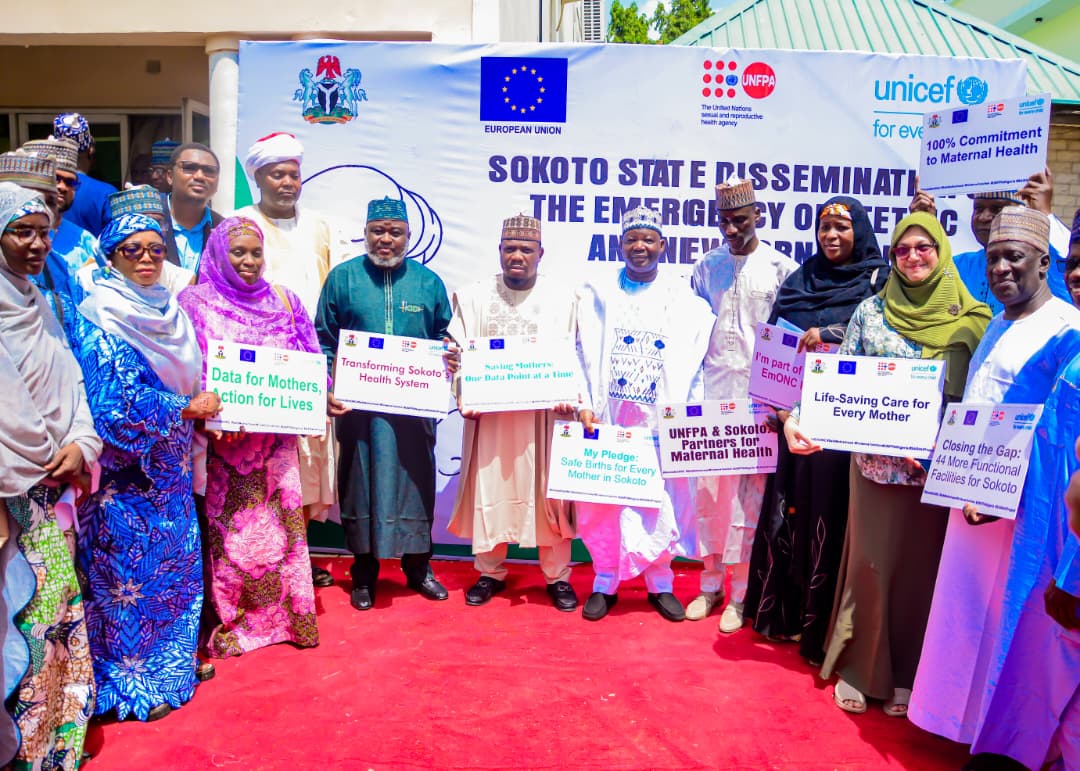
Stakeholders in healthcare delivery have expressed satisfaction with the progress recorded in Emergency Obstetric and Newborn Care (EmONC) services and pledged continued support to sustain the gains across Sokoto State.
The commitment was made on Tuesday in Sokoto during the presentation of the EmONC assessment report, where participants called for stronger policy and financial commitments to improve maternal and newborn healthcare services.
A cross-section of stakeholders pledged to work towards securing support from the state government, development partners and other key actors to integrate the improvement plan into operational plans and budgets.
Speaking at the event, the Commissioner for Health, Dr Faruku Abubakar-Wurno, said the dissemination provided an opportunity to assess health sector performance, identify gaps and improve resource allocation.
He said the exercise would also strengthen coordination among government agencies and development partners, while providing evidence needed for effective planning and accountability in the health sector.
Abubakar-Wurno said more than 60 per cent of resolutions reached at the National Health Council had been implemented in Sokoto, describing the state as a leader in implementing national health policies.
He, however, noted that challenges remained, particularly inadequate financial protection and the need for increased investment and reforms to strengthen healthcare delivery across the state.
The commissioner urged development partners working on maternal health issues to prioritise programmes aimed at reducing maternal mortality and improving outcomes for women and newborns.
According to him, the state government plans to introduce free delivery kits for women delivering in public health facilities as part of efforts to reduce maternal and newborn deaths.
He added that the government would provide solar lighting in labour rooms and maternity wards while strengthening antenatal care services to address causes of maternal and infant mortality.
Abubakar-Wurno said the state had recorded improvements in immunisation coverage and a gradual decline in maternal and child mortality, although more interventions were still required.
“We are committed to addressing the three delays responsible for maternal mortality. These include delays in seeking medical attention, delays in reaching health facilities and delays in receiving adequate medical care,” he said.
The Commissioner for Budget and Economic Planning, Dr Bashir Achida, commended UNFPA, UNICEF and other partners for their contributions to improving lives and assured continued government support.
Also speaking, the Sokoto State ALGON Chairman, Alhaji Abba Shehu, called for the extension of the programme to all 23 local government areas, particularly underserved rural communities.
Shehu, who is also the Chairman of Tambuwal Local Government Area, said healthcare challenges at the local government level often differed from those experienced in urban centres.
“We need to extend this programme across the 23 local governments so that we can have a wider campaign involving district heads, village heads and community leaders,” he said.
He assured stakeholders that local government chairmen were ready to support initiatives aimed at improving maternal and newborn healthcare services at the grassroots level.
The Chairman of the Sokoto State House of Assembly Committee on Health, Alhaji Kabiru Dauda, assured stakeholders of the legislature’s commitment to supporting the initiative through enabling laws.
Dauda said the assembly would continue to enact policies and legislation aimed at protecting women and children while improving access to quality healthcare services.
The District Head of Gagi, Alhaji Sani Umar-Jabbi, described the assessment review as an opportunity to strengthen reproductive, maternal, child and general healthcare services across the state.
Umar-Jabbi, a reproductive health champion, urged stakeholders to remain proactive and committed to implementing recommendations arising from the assessment exercise.
He described traditional rulers and community groups as critical partners in promoting healthcare delivery and ensuring successful implementation of government health programmes.
Earlier, the UNFPA State Team Lead, Dr Rabi Sagir, said the dissemination was intended to move beyond statistics and drive concrete actions based on assessment findings.
Sagir said the exercise would identify critical infrastructure, human-resource and supply gaps affecting Emergency Obstetric and Newborn Care services across the state’s 23 local government areas.
She added that the assessment would strengthen collaboration among development partners and stakeholders in implementing recommendations to improve maternal and newborn healthcare services.
Sagir urged stakeholders to translate the findings into practical interventions capable of improving the availability, quality and accessibility of EmONC services across Sokoto State.(NAN)