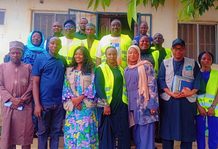
The Plateau government says the remuneration of health workers recruited under the Human Capital Opportunities for Prosperity and Equity (HOPE) project is governed by existing state and local government salary structures.
Dr Nicholas Baamlong, Plateau Commissioner for Health, said this in a statement on Saturday in Jos.
Baamlong explained that salary placement for the recruited health workers was strictly in line with public service regulations and not by the HOPE Project or the World Bank.
“The remuneration of recruited health workers is governed by the existing Plateau State and local government salary structures, including the Consolidated Medical Salary Structure (CONMESS) as applicable.
“Salary placement is determined strictly by public service regulations and not by the HOPE Project or the World Bank,” he said.
The commissioner further said that the state government had not yet received any disbursement under the HOPE Project.
According to him, salaries of the newly recruited personnel are currently being paid through existing local government and relevant agency payroll systems, based on approved salary structures and the terms of engagement accepted by employees at the point of recruitment.
Baamlong said the recruitment was conducted through a collaborative process involving the Ministry of Health, Ministry of Finance, Office of the Head of Service, Ministry for Local Government and Chieftaincy Affairs, Plateau State Primary Health Care Board, and other relevant government institutions.
He stressed that the exercise, designed to strengthen healthcare delivery across the state, followed approved civil service procedures.
The commissioner explained that the recruitment formed part of the World Bank-supported HOPE Project, which operated under a Performance-for-Results (PforR) financing model.
“Under this arrangement, implementation is carried out through existing government systems and structures rather than through parallel mechanisms,” he said.
Baamlong added that the government, through the Ministry of Health, was engaging stakeholders to address operational concerns raised by health workers in accordance with existing public service regulations.
He said the engagement was aimed at promoting an equitable workforce distribution across health facilities and sustaining constructive dialogue with relevant professional bodies.
He reaffirmed the government’s commitment to strengthening the health sector as efforts were ongoing to expand access to quality healthcare services and create sustainable employment opportunities for qualified citizens.
According to him, these objectives aligned with national health priorities and the goals of the HOPE Project, which sought to improve human capital outcomes through systemic reforms and results-based implementation.
He acknowledged that health sector reforms must positively impact both healthcare workers and the communities they served, adding that the concerns, welfare, and aspirations of health workers remained important considerations in ongoing policy discussions and reform efforts.
“In line with government’s commitment to continuous improvement, consultations are ongoing with relevant stakeholders to progressively review and harmonise applicable structures where necessary.
“However, such processes are guided by established public service procedures and require broad consultation, careful planning and adequate time to ensure fairness, sustainability and equity across the health sector,” he said.
The commissioner reiterated the ministry’s commitment to accountability, transparency, and the welfare of health workers.
He said the government remained dedicated to ensuring that personnel within the state health system operated under lawful, fair, and professionally appropriate conditions that would support staff motivation and quality healthcare delivery.
Baamlong reassured the public of government’s unwavering commitment to effective and accessible healthcare service delivery across the state and urged citizens to continue supporting efforts aimed at building a stronger and more responsive primary healthcare system.