The Centre for Water and Environment Development (CWED), an NGO, has called on states and the Federal Government to invest in the establishment of small hydropower plants in the country.
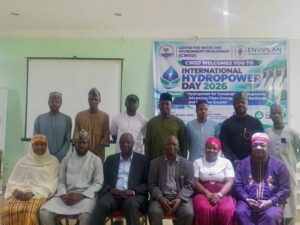
CWED Project Director, Mr Musa Nimrod, made the call during the 2026 International Hydropower Day celebration in Kaduna on Wednesday.
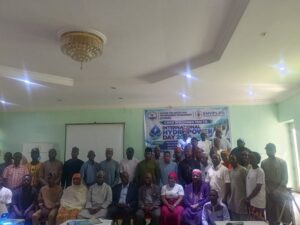
The News Agency of Nigeria (NAN) reports that the event was organised by CWED in collaboration with ENVIPLAN International Ltd. , with the theme, “Hydropower for Sustainable Development : Advancing Clean Energy, Climate Resilience and Inclusive Growth.”
Nimrod also called on the Federal Government to upgrade the existing power generation facilities in the country to enhance electricity supply.
He noted that the celebration was intended to promote discussions on sustainable hydropower development, technological innovations, environmental protection and the effects of climate change.
He explained that the initiative was also designed to expose students to industry challenges and encourage them to contribute to developing Nigeria’s hydropower sector.
Nimrod said students from Ahmadu Bello University (ABU), Zaria, Kaduna Polytechnic and Air Force Institute of Technology, among others participated in the event to deepen their understanding of hydropower and its future prospects.
He stressed that Nigeria needed to look beyond thermal electricity generation and explore its abundant water resources to expand renewable energy production.
According to him, small hydropower plants could provide electricity to communities and areas where conventional power supply remains inadequate.
Nimrod cited an example from Switzerland, where a community-level hydropower station reportedly generates between one and two megawatts using a relatively simple system.
He said Nigeria could adopt suitable innovations to develop small hydropower facilities, while encouraging the government to critically examine available technologies and support their implementation.
Nimrod also expressed concern over the condition of existing hydropower stations, describing their infrastructure as obsolete and calling for modernisation.
He said sustainable hydropower development required attention not only to construction but also to environmental impacts, climate resilience, institutional challenges and long-term maintenance.
In his remarks, Mr Imo Ekpo, President of the Nigerian Hydropower Association, called for stronger policies, effective institutions and increased private investment to unlock Nigeria’s untapped hydropower potential.
Ekpo said Nigeria had an estimated hydropower potential exceeding 14,120 megawatts, capable of generating more than 50,800 gigawatt-hours of electricity annually.
He noted that about 85 per cent of the country’s hydropower potential remained untapped, despite its abundant rivers and water resources.
Ekpo said developing additional hydropower facilities could strengthen energy security, support industrial growth, create jobs and expand electricity access in rural communities.
He advocated combining hydropower with solar and wind energy, alongside energy storage systems, to improve electricity reliability and maximise existing infrastructure.
Ekpo also called for improved dam management and climate-resilient infrastructure to address the effects of drought, flooding and irregular rainfall on hydropower generation.
Dr. A.S Abdulrasheed of the Department of Civil Engineering, ABU, Zaria, said discussions at the event examined climate change, technological innovations and ways to improve the efficiency of Nigeria’s hydropower systems.
Abdulrasheed, who leads the university’s Kainji Hydropower Plant Model Team, said artificial intelligence and other technological advances could support more sustainable hydropower infrastructure.
He said stakeholders discussed measures to make dams and reservoirs more resilient to changing rainfall patterns, sedimentation, flooding and drought.
Abdulrasheed called for stronger collaboration among government, universities and industry, saying the three sectors could work together to develop practical solutions for the power sector.
He also identified transmission and distribution challenges as areas requiring attention, noting that improvements across the electricity value chain were necessary to reduce energy losses and improve service delivery.
Muhammad Aliyu, Strategy Officer of Kaduna Electricity Distribution Company (KAEDCO), also highlighted the need for coordination among electricity generation, transmission, distribution and customer service stakeholders.
Kasimu Abdullahi of the National Water Resources Institute emphasised the importance of preserving and responsibly managing water resources to support hydropower generation and other water needs.
The NAN reports that a panel of discussion was held on the topic “Building a Sustainable and Resilient Hydropower Future for Nigeria : Water, Energy, Climate, Investment and Innovation”.
The participants called for sustained investment, research, technical capacity development and collaboration to strengthen hydropower’s contribution to Nigeria’s sustainable energy future.(NAN)