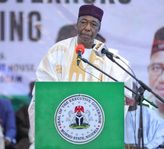
) The President of the Petroleum and Natural Gas Senior Staff Association of Nigeria (PENGASSAN), Mr Festus Osifo, has demanded stronger protection for workers affected by acquisitions and divestments in Nigeria’s oil and gas industry.
Osifo made the demand at the ongoing fifth edition of the PENGASSAN Energy and Labour Summit (PELS) 2026 on Tuesday in Abuja, stressing that workers must remain central to industry stability.
The three-day summit, with the theme, “Strengthening Regulatory Frameworks as a Catalyst for Stability and Growth in Nigeria’s Oil and Gas Industry,” will end on Aug. 21.
He said changes in ownership of oil and gas assets should not lead to arbitrary job losses or undermine workers’ pensions, collective bargaining agreements and established rights.
“Licences and assets may change hands, but workers are not commodities to be discarded at will,” Osifo said.
He said worker protection must form part of the regulatory architecture guiding the industry, particularly as major acquisitions, divestments and restructuring continued.
Osifo also expressed concern over the abuse of expatriate quotas, saying foreign personnel should only be employed where genuine skills gaps existed.
“Nigeria welcomes foreign expertise where genuine skill gaps exist. However, expatriate quota must never become a mechanism for replacing qualified Nigerians where local capacity exists,” he said.
He urged regulators to ensure that expatriate employment approvals were properly justified, monitored and linked to measurable knowledge transfer and succession plans.
According to him, every expatriate engagement should ultimately leave behind greater Nigerian capacity through deliberate skills development and understudy arrangements.
“We cannot enforce local content in procurement while neglecting local content in employment and human capital development,” he said.
Osifo called for stronger enforcement of the Nigerian Content Framework to ensure qualified Nigerians received opportunities to develop and occupy positions within the oil and gas industry.
He said employers and regulators should work with labour unions to ensure that local content policies translated into meaningful employment and skills development.
The PENGASSAN president also called for consistent enforcement of health, safety and environmental standards across the industry.
“Good regulations on paper cannot transform an industry without enforcement. The life of a Nigerian worker must never become the price we pay for increased production,” he said.
Osifo said occupational safety, fair labour practices, productivity, technological advancement and skills development were essential to building a sustainable oil and gas industry.
He urged employers to recognise workers as human capital critical to safety, productivity, innovation and long-term business success.
“Workers are the human capital upon which success, safety, productivity, innovation and sustainability of the industry depend,” he said.
According to him, industrial harmony should not merely mean the absence of strikes or disputes, but should include justice, mutual respect, effective communication and responsible engagement.
He said where workers felt valued, businesses benefited, while fair treatment of employers and consistent regulation would contribute to improved productivity and sustainable investment.
Osifo called for stronger collaboration among government, regulators, operators and labour to protect workers while promoting investment and production.
“Government cannot build the industry we desire alone. Regulators cannot do it alone. Operators cannot do it alone. Labour cannot do it alone,” he said.
He said the industry could only achieve sustainable growth through collaboration, accountability, predictability and mutual respect among stakeholders.
Osifo said PENGASSAN would continue to advocate an oil and gas industry where both capital and labour could prosper.
He said protecting workers’ rights should remain central to efforts to increase production, attract investment and maximise Nigeria’s oil and gas resources.