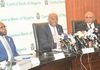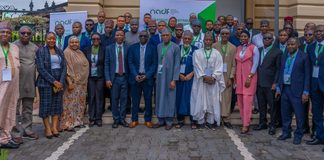
The acting Vice-Chancellor, African Aviation and Aerospace University, Dr Mustapha Abdullahi has urged investment in aviation education, research, innovation and manpower development to ensure safety in the sector.
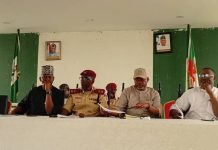
Abdullahi gave the advice in Abuja on Thursday at a public hearing organised by the House Committee on Aviation.
The News Agency of Nigeria (NAN) reports that the hearing was on a bill for an Act to amend the Nigerian Airspace Management Agency Establishment Act to revise the percentage of statutory charges accruing to the agency and other related matters.
The bill is also for an Act to amend the Civil Aviation Act to provide for the automated remittance of funds accruing to aviation agencies and to revise revenue sharing formula to reflect the remaining of the Accident Investigation Bureau and for other related matters.
According to him, the future of Nigeria’s aviation industry depends not only on funding infrastructure and regulation, but also on investing in the people who will design, regulate, operate and sustain infrastructure and sector operations.
He said that as the house moves to review the revenue sharing formula of the statutory five per cent Ticket, Charter and Cargo Sales Charge, AAAU and other aviation research institutions should be included.
According to him, AAAU is the only specialised university in the country dedicated to aviation, aerospace and allied disciplines in Nigeria.
Abdullahi said that agencies in the industry depended primarily on competent professionals, adding that without qualified professionals, none of the statutory agencies can effectively discharge their mandates.
He argued that revenue generated from aviation users should not only finance current operations but also build the next generation of aviation professionals.
“It is noteworthy that the Nigerian Safety Investigation Bureau (NSIB), formerly the Accident Investigation Bureau (AIB), now operates outside the direct supervision of the Federal Ministry of Aviation and Aerospace Development, having been moved under the Presidency.
“This institutional change presents an opportunity for the National Assembly to review the existing sharing formula and appropriately accommodate AAAU as a strategic aviation institution dedicated to manpower development.
“Additional funding will enable AAAU to establish internationally accredited aviation laboratories, expand aerospace engineering laboratories, support aviation research and innovation, train future aviation professionals locally rather than abroad, reduce dependence on foreign aviation institutions and produce industry-ready graduates,” he said.
In his presentation, Mr Olusegun Lijofi, the Business Consultant for Human Capital Associate Global Consult, said the AAAU needed a strong support base to bridge severe human resource gaps.
He said that such support would also build critical research infrastructure for air safety and sustain specialised education as a public institution addressing industry manpower shortages.
Lijofi said that a special intervention by the government, backed by a concrete legislative framework was not just necessary, but will serve as a stitch in times.
According to him, fixing AAAU is a giant stride toward resolving one of the pressing challenges in the continent, which is a huge manpower deficit in the aviation sector.
Declaring the hearing opens earlier, the Speaker of the House, Rep. Abbas Tajudeen, said that the bills sought to improve revenue sharing formula among key aviation institutions to enhance the capacity and effectiveness to manage and safeguard airspace.
He said the bills also seek to improve safety, efficiency investor confidence and the quality of service enjoyed by the Nigerian travelling public.
“As a House, we are committed to ensuring that our aviation laws are aligned with global best practices, guarantee stable and sustainable funding for vital agencies and promote the growth of aviation as a driver of commerce, tourism and national development.
“This underscores the importance of today’s public hearing. It offers a platform for regulators, service providers, airline operators, labour unions, professional bodies, telecommunications and infrastructure firms, civil society organisations and interested members of the public to scrutinise the bills and provide well-considered contributions,” he said. (NAN)