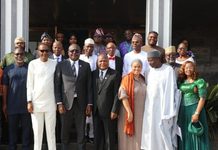
The National Counter Terrorism Centre (NCTC), in collaboration with Civil-Military Cooperation (CIMICO) Centre, has inaugurtaed a campaign to prevent electoral violence and strengthen election security ahead of the 2027 general elections.
The campaign, which began with a North-Central zonal town hall in Abuja on Friday, is aimed at mobilising stakeholders and communities to identify potential threats, promote peaceful participation and strengthen early-warning and response mechanisms.
The National Coordinator of NCTC, Maj.-Gen. Adamu Laka, said the initiative reflected the commitment of the Office of the National Security Adviser (ONSA) to protecting Nigeria’s democratic institutions and ensuring a peaceful, credible, inclusive and secure electoral process.
Laka described elections as the heartbeat of democracy, stressing that their credibility should not be measured only by the conduct of voting and announcement of results, but also by the peace, security and public confidence surrounding the entire process.
He said Nigeria’s preparations for the 2027 general elections required a collective commitment to safeguarding democratic institutions, protecting citizens and preventing the loss of lives and destruction of property.
The NCTC coordinator identified misinformation and disinformation, hate speech, political intolerance, incitement, youth manipulation and political thuggery as some of the factors capable of triggering electoral violence.
He also listed vote buying, voter intimidation and suppression, as well as attacks on electoral personnel and destruction of public infrastructure, as threats requiring deliberate preventive measures.
According to him, the campaign will strengthen early-warning and response systems, promote public trust and encourage the participation of all segments of the society, particularly women, young people, persons with disabilities and internally displaced persons.
Laka stressed that prevention of electoral violence should not be regarded as the exclusive responsibility of security agencies.
According to him, it is a shared national obligation involving political parties, government institutions, traditional and religious leaders, civil society organisations, the media and community-based groups.
He disclosed that the NCTC was working with the Independent National Electoral Commission (INEC), the Nigeria Police Force, the National Orientation Agency and other security agencies and development partners to extend the campaign across the 36 states and the Federal Capital Territory.
He also explained that the initiative would among other things, help prevent attacks on INEC offices and personnel, protect voters and electoral infrastructure, counter fake news and inflammatory narratives, and improve community-based early-warning mechanisms.
The coordinator urged young Nigerians not to allow themselves to be used as instruments of violence, but to channel their energy towards peace, tolerance and responsible civic participation.
He also called on political parties and their supporters to embrace issue-based campaigns, respect the rule of law and demonstrate political maturity, warning that the pursuit of political power should not undermine the lives, security and unity of the country.
Laka further said that the success of the campaign would be measured by its impact at the community level, increased public awareness, effective early-warning and response mechanisms, and the ability of citizens to participate in the electoral process without fear.
Also speaking, the Coordinator of CIMICO, Dr Adams Otakwu, said the framework was designed to move discussions on electoral violence beyond rhetoric to practical actions, institutional commitments and measurable outcomes.
Otakwu said the campaign was anchored on five major pillars, including building a deeper understanding of the causes and consequences of electoral violence.
Others he said included clarifying the responsibilities of institutions and stakeholders, as well as adopting a common methodology for engagements across the geopolitical zones.
He said the town hall meetings would provide platforms for stakeholders to identify local risk factors, share experiences and develop practical recommendations for preventing violence before, during and after elections.
According to him, the framework also provides for follow-up mechanisms to ensure that recommendations are implemented and taken to grassroots communities and subnational institutions.
“Electoral violence prevention and election security are continuous responsibilities. They are not activities that should begin and end on election day.”
He stressed the need for timely information-sharing and community vigilance, urging citizens to report potential threats and warning signs to appropriate security institutions.
In a goodwill message the Minister of Defence, retired Gen. Christopher Musa, said elections remained fundamental to democracy, adding that no citizen should be denied the opportunity to exercise their franchise through intimidation or oppression.
Musa, represented by Mr Oluwole Ashiru, an Assistant Director, called for a whole-of-society approach to election security, urging traditional rulers, religious leaders, youth leaders and other community stakeholders to promote peace, tolerance and responsible conduct.
He commended Laka and the NCTC management for their efforts in coordinating national counter-terrorism initiatives through both kinetic and non-kinetic approaches.
On his part, the Norwegian Ambassador to Nigeria, Svein Baera, described elections as a critical test of democratic institutions, saying the manner in which a country conducts its elections sends an important signal about the quality of its democracy.
Baera said credible elections were recognised internationally, while processes undermined by irregularities and violence could weaken a country’s democratic standing.
He commended the initiative, noting that election security should be addressed long before election day because the electoral process involved several stages and required sustained engagement among relevant institutions.
Similarly, the representative of the Danish Embassy and Defence Attaché, Lt.-Col. Henrik Laugesen, said elections in Denmark were regarded as an opportunity for citizens to assess the performance of elected leaders and decide whether to retain them or choose new leadership.
Laugesen said though elections were an important feature of democracy, the transfer of political power could generate tension, particularly when some political actors or their supporters refused to accept the outcome.
He described the campaign as timely, saying initiatives that encouraged peaceful participation and helped prevent violence were important to the stability of democratic institutions.
In his remarks, the Director-General, Inter-Party Advisory Council (IPAC), Chinedu Obi, said elections were processes governed by constitutional and legal frameworks, stressing the need for stakeholders to respect the laws and institutions responsible for conducting them.
Obi expressed concern over inflammatory rhetoric and communal statements capable of heightening tension, and urged political actors and other stakeholders to exercise restraint in their public engagements.
He said the town hall provided an opportunity for stakeholders to examine the challenges associated with election security and develop collective responses.
According to him, Nigeria’s stability is a shared strategic interest. The consequences of political violence will affect all citizens, irrespective of their political affiliations.
“When Nigeria fails, everybody loses; and there can be no meaningful winner in a crisis that resulted in loss of lives, displacement and destruction.
Obi therefore urged participants to sustain the engagement and translate discussions into practical measures that would strengthen peace, stability and national unity.(NAN)