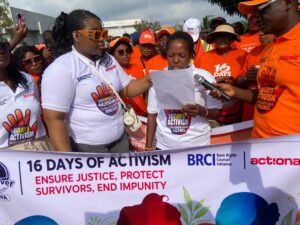
Women from seven communities in Cross River have demanded representation and voting rights in traditional ruling councils to strengthen their participation in community governance.
The women made the demand on Friday in a communiqué issued during the 2026 rally marking the 16 Days of Activism Against Gender-Based Violence.
The communiqué was issued in collaboration with the Basic Rights Counsel Initiative (BRCI) and CLEEN Foundation.
The women urged Gov. Bassey Otu to engage traditional rulers to facilitate their inclusion in community leadership and decision-making structures.
Mrs Janet Ohana, who presented the communiqué, said allowing women to speak at community meetings without granting them representation and voting rights was insufficient.
Ohana, from Adachi community in Bekwarra Local Government Area, represented women from Idoma, Abredang, Ofumbongha IV, Edondon, Afrike II, Akaraba and Adachi communities.
She said women’s exclusion from traditional councils limited their influence on community development, land allocation, dispute resolution, security and other issues affecting their welfare.
Ohana also expressed concern over discriminatory land practices, saying women in some communities were denied access to family or community land unless they purchased it.
She said such practices undermined women’s economic independence, agricultural productivity, livelihoods and property ownership.
She said: “We call for equal opportunities to inherit, own and access land.
“We also condemn the preference for male children because some women have suffered and are still suffering emotional abuse and mistreatment for giving birth exclusively to girls.”
Ohana urged families and communities to guarantee equal acceptance, protection and opportunities for children, irrespective of sex, while rejecting discrimination against women.
She also expressed concern over the continued clandestine practice of female genital mutilation, citing its physical, psychological and reproductive health consequences.
Ohana condemned the traditional settlement of rape and sexual violence cases through fines involving goats, drinks and other items, rather than prosecution.
“We urge community leaders to refer sexual violence cases to law enforcement agencies because rape is a serious human rights violation, not a community dispute.
“We also call for shared household responsibilities because women face heavy domestic workloads alongside farming, childcare and other income-generating activities,” she said.
The women urged the state government to strengthen survivors’ access to medical care, legal assistance, psychosocial support, safe reporting channels and referral services.
The reports that the women, alongside BRCI and CLEEN Foundation, pledged to sustain advocacy for gender equality.
They also urged government, traditional institutions and other stakeholders to promote women’s rights, safety and inclusion in community governance. (NAN)