Target
The Kaduna State Internal Revenue Service (KADIRS), says it has generated about N90 billion revenue and is targeting stronger performance to achieve its set target of N120 billion for the year 2026.
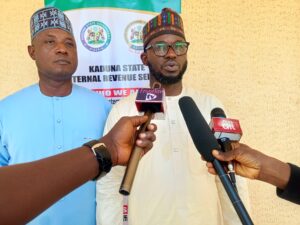
Dr Mohammed Lawal, Acting Executive Chairman of the KADIRS, disclosed this on Thursday in Kafanchan during the agency’s third-quarter 2026 stakeholders’ engagement.
The engagement was held under the theme, “Transparent Taxation, Better Services, Building Our State Together”.
The discussion focused on leveraging the Nigeria Tax Act 2025 and Nigeria Tax Administration Act 2025 for improved internally generated revenue, taxpayers’ experience and data compliance in Kaduna state.
Lawal expressed optimism that the state would exceed N100 billion by the end of the year and eventually achieve its N120 billion target.
He attributed the improved revenue performance to successive tax reforms and the transformation of the state’s revenue administration system.
According to him, Kaduna generated about N12 billion annually before the commencement of major tax reforms approximately 10 years ago.
He said the state recorded more than N86 billion in revenue collections in 2025, reflecting significant improvement in revenue mobilisation.
Lawal described stakeholder engagement as a permanent feature of KADIRS’ administrative processes for obtaining feedback and addressing taxation-related challenges.
Lawal said Kaduna had undertaken three major tax reforms within the last decade, beginning with the 2016 Tax Codification and Consolidation Law.
He explained that the 2016 reform abolished cash collections, introduced technology and reduced the state’s revenue lines from more than 400 to fewer than 50.
He said the state further consolidated its tax laws in 2020 before introducing another reform in 2025 to align with federal tax reforms.
Lawal described the federal reforms as extensive, noting that they consolidated several tax laws and amended others to improve the country’s tax administration system.
He identified changes in personal income tax, company income tax, capital gains tax, value-added tax and presumptive taxation.
According to him, the reforms also introduced four major laws providing frameworks for tax obligations, administration, revenue service operations and coordination.
He said the reforms had strengthened digital revenue administration, improved institutional organisation and encouraged greater collaboration among relevant government agencies.
Lawal said the stakeholders’ engagement provided an opportunity to address concerns, clarify tax obligations and develop solutions to challenges confronting taxpayers.
He noted that stakeholders in the revenue system extended beyond taxpayers to include government institutions, traditional leaders, professional bodies and the media.
Earlier, Alhaji Ali Gora, KADIRS Executive Director, Standard and Compliance, said the engagement was organised to explain the new tax laws and address misconceptions.
Gora said the reforms, which took effect on January 1, 2026, had generated concerns among taxpayers due to inadequate understanding of their provisions.
He said the laws contained provisions intended to provide relief for low-income earners, adding that some taxpayers might no longer be required to pay certain taxes.
Gora urged participants to ask questions and express their concerns, assuring them that the service was ready to provide necessary explanations.
In a presentation, Dr Abdulrauf Aliyu examined how the Nigeria Tax Act 2025 and Nigeria Tax Administration Act 2025 could improve revenue generation and taxpayer experience.
Aliyu said sustainable revenue growth depended on taxpayers understanding their obligations, trusting the system and seeing the public value of taxation.
He highlighted transparency, predictable administration, reliable data and visible public accountability as essential elements of an effective tax system.
The presentation also emphasised accurate taxpayer records, responsible data sharing, confidentiality and improved coordination among relevant agencies.
Aliyu said effective implementation required clear communication, consistent application of the laws and accessible support for taxpayers.
He urged KADIRS to make compliance easier for willing taxpayers while ensuring credible enforcement against deliberate tax evasion.
The presentation further stressed that taxation should protect taxpayers’ rights while ensuring that everyone paid only what the law required.

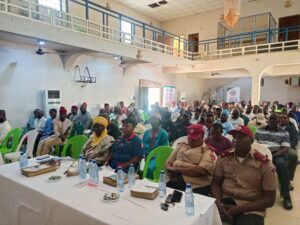
The News Agency of Nigeria (NAN) reports that stakeholders at the engagement included representatives of the Institute of Chartered Accountants of Nigeria (ICAN), Federal Road Safety Corps (FRSC), Chartered Institute of Taxation of Nigeria (CITN) and Kaduna State Traffic Law Enforcement Agency, among others. (NAN)