A person with special need, Hamza Isa-Baffa, says living with disability has been a blessing, as inclusive development programmes have enabled him to achieve milestones beyond his family’s expectations.
“As a person with special need, I can say that it is a blessing to me to live with disability because, in my entire family, nobody had ever travelled to the United Kingdom before me,” he said.
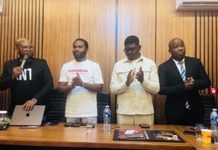
The News Agency of Nigeria (NAN) reports that Isa-Baffa, a Kano indigene, spoke while making a presentation during a two-day Media Partners’ Engagement Meeting held in Kano.
He said he had travelled internationally, acquired professional skills, secured employment and ventured into entrepreneurship through opportunities created by disability-inclusive interventions.
According to him, his journey, however, began with challenges after he became physically challenged at the age of three.
Born without a physical disability, Isa-Baffa said his condition did not stop him from pursuing education and seeking opportunities to become self-reliant.
After graduating from university and completing his National Youth Service Corps (NYSC) programme in Ogun State, he encountered difficulties securing employment.
He said his fortunes began to change when he was introduced to inclusion work through an engagement with an organisation working with persons with special needs.
“The experience exposed me to further learning opportunities, including computer science training, and subsequently an engagement with the British Council as a trainer.
“My major breakthrough came through the Information and Communication Technology (ICT) Bridge Academy, an initiative supported by Sightsavers International.
“The programme, implemented in Kano and Lagos in collaboration with the Digital Bridge Institute (DBI), provided persons with special needs opportunities to acquire industry-relevant digital skills,” he said.
He said participants from different states, including Kaduna, Jigawa and Katsina, benefited from the year-long programme.
According to him, the academy provided intensive training in computer networking and Cisco-related skills, equipping participants with knowledge required to compete in the technology sector.
He described the training as particularly significant because professional ICT certifications were expensive and beyond the financial reach of many families, especially in Nigeria.
Isa-Baffa said Sightsavers provided participants with accommodation, meals and monthly transport allowances throughout the training.
He added that the programme enabled participants to concentrate on learning without the financial pressures that often prevent persons with special needs from accessing professional training.
“The ICT Bridge Academy really opened our minds. It helped many of us understand what Cisco networking is all about,” he said.
NAN reports that the academy emerged from a strategic partnership involving Sightsavers, Cisco Networking Academy and DBI to address the digital skills gap among persons with special needs.
Its curriculum is built around the Cisco Certified Network Associate (CCNA) certification, adapted to accommodate learners with different physical and sensory deformity.
Beyond networking, the programme also incorporates digital marketing, data analysis and product management, alongside mentorship and interview preparation.
The initiative forms part of the wider Cisco Networking Academy programme, which announced in July this year that it had reached one million learners in Nigeria.
Cisco said the milestone reflected efforts to equip Nigerians with industry-relevant digital skills and create pathways into technology careers and entrepreneurship.
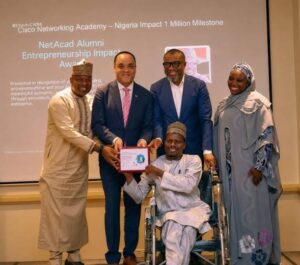
At a milestone celebration in Abuja on July 21, Cisco recognised key partners and beneficiaries for their contributions to the programme.
Among those recognised was Isa-Baffa, identified as a former student of the academy, who received a celebratory plaque alongside the University of Jos and the National Information Technology Development Agency (NITDA).
Isa-Baffa said the skills acquired through the academy subsequently opened doors to other professional engagements, including projects implemented by Sightsavers and its partners.
“One of such opportunities is the Disabled Inclusive Project, through which I work with an implementing partner as a project officer in Kano,” he said.
Isa-Baffa said the engagement provided his first direct experience in project implementation, including data collection, analysis, community mobilisation and monitoring of activities.
He explained that the experience strengthened his ability to identify appropriate beneficiaries, organise project information and track interventions to ensure effective implementation.
Isa-Baffa said his growing experience also earned him responsibilities beyond training, including advisory and supervisory roles.
According to him, the opportunities transformed his professional outlook and equipped him with skills to contribute to development programmes.
Isa-Baffa said he had also secured employment opportunities, including an engagement with the Enterprise Development Centre.
He stressed that such opportunities demonstrated the importance of assessing persons with special needs based on their qualifications, competence and experience rather than their physical conditions.
“They did not select me just because of my disability. I went through interviews and screening, and they considered my skills and experience.
“The experience had strengthened my confidence and convinced me that persons with special needs could perform effectively when given equal opportunities.
“Beyond personal advancement, I have become involved in efforts to extend the benefits of digital-skills training to other young persons with special needs,” he noted.
Isa-Baffa disclosed that, as part of the sustainability plan for the intervention, he and other beneficiaries established an organisation known as Ability First Tech.
He said the organisation was established to train young persons with special needs, particularly young women, in digital skills, including digital marketing.
According to him, the initiative is designed to ensure beneficiaries become agents of change by sharing their knowledge and creating opportunities for others.
Baffa said his experience had also equipped him with the ability to develop business proposals, prepare budgets and generate ideas for potential projects.
“I can develop a proposal worth millions of Naira, prepare the budget and develop the ideas because of the knowledge I have acquired,” he said.
He said the recognition he received from Cisco in Abuja was particularly significant, as it reflected the opportunities created through inclusive digital-skills training.
For Baffa, the recognition represented more than personal achievement, highlighting the potential of persons with special needs when provided with appropriate support.
He urged development organisations to sustain investments in education, professional training and employment opportunities for persons with special needs.
He also encouraged young persons with special needs to take advantage of available opportunities and use their acquired knowledge to support others.
“Once you support a person with special need, that person can go ahead and support many others. We are supposed to help others to grow because somebody invested in us,” he said.