Decentralisation should drive investment, not fragmentation- NISO MD
Investment
The Nigerian Independent System Operator (NISO) says decentralisation of Nigeria’s electricity sector should promote investment and growth rather than lead to fragmented infrastructure and poorly coordinated development.
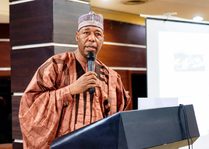
Mr Bili Akai, Assistant General Manager, Corporate Communication, NISO, said in a statement that Mr Bello Mohammed, Managing Director, said this on Wednesday at the ongoing Africa Energy Leadership Summit 2026 in Lagos.
Mohammed called for stronger collaboration among stakeholders in the Nigerian Electricity Supply Industry (NESI).
He said that Nigeria’s evolving electricity market required coordinated infrastructure planning, system operations and information management as more states established their electricity markets and regulatory institutions under the Electricity Act 2023.
According to him, the emergence of multiple electricity markets, independent transmission infrastructure providers, decentralised generation and new distribution networks is changing the demands on the country’s electricity system.
He said that NISO was expanding its role beyond conventional grid operations to serve as a neutral technical integrator, system coordinator and market facilitator.
Mohammed explained that NISO was providing the planning, operational and market coordination mechanisms needed to ensure that institutions and market participants operated efficiently within the wider electricity ecosystem.
He clarified that the evolving role did not make NISO a regulator of state electricity markets or diminish the statutory responsibilities of the Nigerian Electricity Regulatory Commission (NERC) and state electricity regulatory authorities.
He said that effective coordination was increasingly important as state electricity networks connected to the national transmission grid, exchanged electricity across state boundaries or relied on shared transmission infrastructure.
Mohammed warned that poorly coordinated investments could undermine the benefits of decentralisation.
To address the challenge, he said NISO was promoting Integrated Resource Planning methodologies to ensure that investments in generation, transmission and distribution complemented one another.
He said that the approach would help ensure that such investments were technically compatible, economically justified and aligned with the industry’s long-term development needs.
Mohammed identified digitalisation and access to reliable industry data as essential to improving coordination, transparency and investor confidence.
He disclosed that NISO was pursuing the development of a centralised NESI data infrastructure to consolidate, validate, manage and share critical industry information.
He said that the vision was to build an electricity industry that offered decentralised development opportunities, integrated infrastructure planning, coordinated operations, transparent market administration and an enabling environment for sustainable private investment.
Mohammed urged state governments, regulators, investors and technology providers to collaborate with NISO to translate the opportunities created by the Electricity Act into measurable improvements in electricity access, reliability, affordability and economic development. (NAN)