The Nigeria Employers’ Consultative Association (NECA) and Industrial Training Fund (ITF) have sought for stronger support from the Bank of Industry (BOI) and other stakeholders to tackle unemployment through technical and vocational skills.
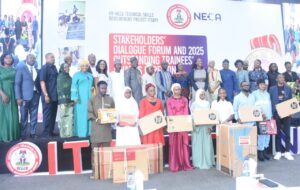
NECA Director-General, Mr Adewale-Smatt Oyerinde, made the call while speaking on behalf of the organisations at the ITF-NECA Technical Skills Development Project Stakeholders’ Dialogue Forum and outstanding trainee awards on Thursday in Abuja.
The News Agency of Nigeria (NAN) reports that the event marked the 17th anniversary of the partnership established in 2009, to improve Nigerians’ employability through development of technical and vocational skills.
Oyerinde said the partnership had helped thousands of Nigerians acquire practical skills but required additional support to expand its impact.
He appealed to BoI and other stakeholders to support the initiative, particularly by providing the resources needed to help the trainees to become entrepreneurs.
“We need to equip our trainees with the necessary tools and resources to translate their skills into viable businesses and reduce dependence on paid employment,” Oyerinde said.
He said the support should include funding, equipment and infrastructure to enable trainees to establish businesses and become self-reliant.
“We need laptops, sewing machines, cookers and electrical and electronic equipment to enable our trainees to start businesses, even from their homes,” he said.
Oyerinde urged government agencies, development partners and private-sector organisations to strengthen collaboration with the project, stressing that sustained investment was essential to bridging skills gaps and addressing unemployment.
The NECA boss said the project’s next phase, through the Skills-Up Artisans initiative, would significantly improve the competencies of artisans, including plumbers and carpenters.
He said the initiative would enhance artisans’ employability, support the establishment of sustainable businesses and address shortages of skilled workers in the country.
Oyerinde said the project’s selection process was transparent, involving public advertisements, interviews and tests to identify participating organisations and suitable trainees.
“We advertise for participating organisations and trainees, conduct interviews and tests, and select candidates based on merit. It is not a question of who knows whom,” he said.
He cited the participation of Field of Skills and Dreams, Lagos, as an example of an organisation assessed before being accepted into the programme.
Oyerinde also disclosed that an Artificial Intelligence (AI) training programme implemented in collaboration with the International Organisation of Employers and Microsoft had recorded significant participation.
“Within six months, 101,000 Nigerians registered for the AI course and more than 87,000 obtained certificates,” he said.
He said the figures demonstrated Nigerians’ interest in digital skills and the need to expand access to training opportunities that respond to changing workplace demands.
Earlier, Dr Vanessa Phala, Country Director of the International Labour Organisation, said skills development remained critical to employability, entrepreneurship and decent work.
Phala urged stakeholders to promote inclusive training in digital, green, agricultural and healthcare skills, alongside soft skills needed in an evolving labour market.
In his remarks, BOI Managing Director, Dr Olasupo Olusi, stressed the importance of partnership between industry and training institutions.
Olusi, represented by Mr Taiwo Kolawole, the bank’s Chief Financial Officer, said training programmes should respond to industry needs, adding that practical skills, innovation and collaboration could improve productivity and contribute to economic growth.
Ms Zeenatudeen Yusuf, who spoke on behalf of the awardees, commended the organisers for the programme’s impact.
“Our lives have been transformed, and our future is bright. We have been moved out of the labour market,” she said.