Agriculture
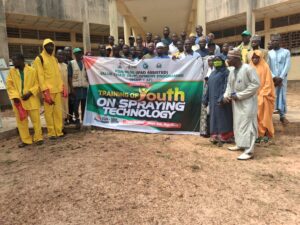
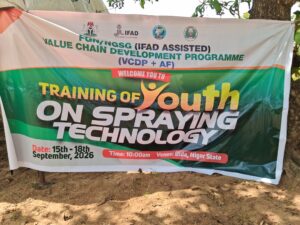
The International Fund for Agricultural Development-Value Chain Development Programme (IFAD-VCDP) has trained 50 youths in agrochemical spraying technology to boost crop production.
Dr Lawal Muhammad, Agricultural Production Officer, IFAD-VCDP, made the disclosure during the training in Bida on Tuesday.
Muhammad said herbicides were critical inputs in rice and cassava production, stressing the need for correct application to achieve the desired results.
He said the training aimed to equip the youths with skills to become agrochemical spraying entrepreneurs, create jobs, increase productivity and reduce production costs.
According to him, the programme also seeks to promote environmental protection and human safety through the proper handling and application of agrochemicals.
He said improper application of agrochemicals could contribute to air and water pollution and harm fish and other aquatic organisms.
Muhammad said effective weed control was essential to improving agricultural productivity, adding that the training also covered pest control.
He said the participants would receive personal protective equipment (PPE) and sprayers at the end of the training to support the safe application of agrochemicals.
Dr Gana Andrew, Director and Head of the Research Outreach Department, National Cereals Research Institute (NCRI), Badeggi, who facilitated the training, said weed infestation remained a major challenge to crop production.
Andrew said herbicides were important for weed control and that farmers and spraying operators need to understand their correct use.
He explained the different categories of herbicides, including pre-emergence and post-emergence herbicides, and their application methods.
Andrew also taught the participants how to calibrate spraying equipment, calculate herbicide quantities and apply the chemicals correctly to minimise waste and avoid damage to crops.
He advised the trainees to observe safety precautions when handling herbicides, including wearing appropriate protective equipment, avoiding spraying against the wind and following product-label instructions.
He also cautioned against applying herbicides during rainfall, explaining that rain could wash away the chemicals and reduce their effectiveness.
One of the participants, Gloria Gana, said she had not previously known how to operate a herbicide sprayer correctly.
Gana said she had learnt how to use the equipment and calculate the quantities of herbicides required, including wettable powder (WP) and wettable dry powder (WDP) formulations.
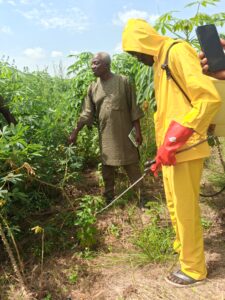
The News Agency of Nigeria (NAN) reports that the training featured a practical demonstration at a cassava field, where participants were exposed to herbicide application techniques.
NAN also reports that the training is expected to equip the youths with practical skills to provide agrochemical spraying services to farmers and contribute to improved agricultural productivity.