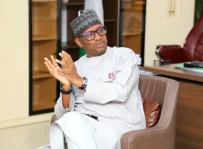
Nigeria has unveiled 65 investment opportunities across key sectors to attract domestic and foreign investments, create jobs and accelerate economic growth.
The opportunities were presented at the ongoing IMF-World Bank Annual Meetings in Bangkok.
The Minister of Finance and Coordinating Minister of the Economy, Mr Taiwo Oyedele, and the Governor of the Central Bank of Nigeria (CBN), Mr Olayemi Cardoso did the presentation.
Oyedele said the projects covered oil and gas, power, transport, agriculture, manufacturing, mining, technology, healthcare and urban services.
He said a dedicated deal room had been established to provide investors with project details, funding requirements and direct access to relevant authorities.
The minister said further reforms would address electricity pricing, transmission constraints, agricultural productivity and regulatory inefficiencies to improve the business environment.
He identified lower inflation, reduced borrowing costs and improved fiscal and monetary coordination as essential to achieving sustainable economic growth.
Oyedele also highlighted the Economic Development Incentive, which provides tax credits to qualifying businesses under the reformed tax framework.
He urged investors to prioritise long-term investments in productive sectors capable of creating jobs and expanding domestic capacity.
In his remarks, Cardoso said reducing inflation was crucial to protecting household purchasing power, particularly among low-income Nigerians.
The CBN governor said monetary and structural reforms had improved capital market performance and strengthened confidence in Nigeria’s financial system.
He said that banks raised about N4.6 trillion during the recapitalisation exercise, with approximately 72 per cent of the funds sourced from the domestic capital market.
According to him, Nigeria is targeting economic growth of seven per cent by 2027/2028, alongside increased oil production and expanded infrastructure investment.
“The country plans to raise oil production to three million barrels per day and increase its infrastructure stock to 75 per cent of Gross Domestic Product (GDP).
“Stronger external reserves have also improved Nigeria’s capacity to withstand external economic shocks,” he said.(NAN)