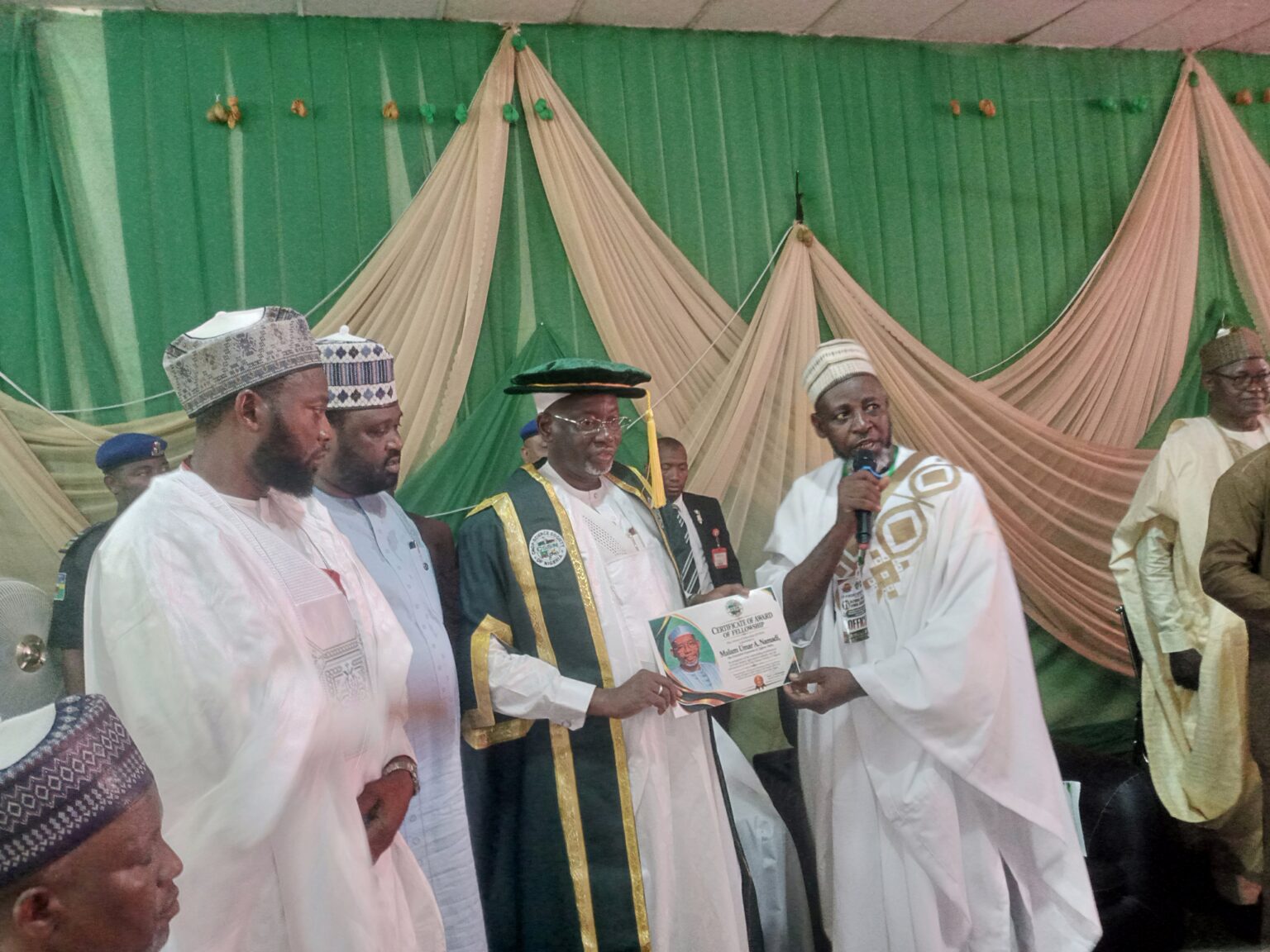
Gov. Umar Namadi of Jigawa has urged researchers to prioritise practical studies to tackle climate challenges, boost crop production and enhance food security.
Namadi stated this on Monday at the 11th National Conference & Annual General Meeting of the Crop Science Society of Nigeria (CSSN), hosted by the Federal University Dutse (FUD).
The theme of the conference is: “Advancing Sustainable Crop Production and Climate-Smart Technology for Food Security and Economic Growth.”
Namadi tasked researchers to focus on encouraging development of drought-tolerant crop varieties; restore soil health, improve access to certified seeds, reduce post-harvest losses and investigate why farmers fail to adopt proven technologies.
He stressed the need for quality studies on crops such as sorghum, millet, cowpea, maize, wheat and rice, to help farmers cope with shorter, hotter and less predictable growing seasons.
The governor underscored the importance of soil mapping, site-specific fertiliser recommendations and biological solutions to declining soil fertility.
Namadi urged them to develop affordable preservation and processing technologies, as well as a better system for delivering quality seeds to farmers.
He also enjoined researchers to examine ways to build farmers’confidence in new technologies and encourage young people to take up agribusiness.
“A farmer with a hoe and old seed cannot outproduce climate change,” he said.
Namadi identified leadership, research and investment as the three pillars of agricultural transformation, adding that farmers need access to irrigation, mechanisation, finance and markets.
He said that the Jigawa Agricultural Policy 2024 – 2030 prioritised climate-smart production, irrigation, mechanisation, improved seed system, value addition and market access.
The governor said that the state government deployed 450 tractors, 70 combine harvesters and established 60 mechanisation centres through its farm mechanisation company.
According to Namadi, the state is working with the Federal Government to develop 18,000 hectares and deploy 600 solar water pumps in the Hadejia Valley for upland irrigation.
He added that the state government targeted 90,000 farmers for fertiliser distribution during the 2026 wet season activities.
Namadi said the government also deployed 1,700 extension agents and 1,185 motorcycles, to enhance farmer support services.
“The Jigawa wheat value-chain research supported 10 PhD and master’s degree researchers, and 80 academics are pursuing postgraduate studies abroad.
“We are also developing 200 integrated rice processing clusters and supporting investment in rice, sesame, hibiscus and wheat processing,” he said.
The Vice-Chancellor, Prof. Ahmad Gumel, said that the impact of climate change was disrupting rain patterns, increasing temperatures and threatening agricultural productivity.
“Climate-smart agriculture is not merely an option, it is an imperative for food security, economic growth and national stability,” he said.
He called for collaboration among universities, government, research institutes, farmers and the private sector to translate research findings into practical solutions.
The President of CSSN, Prof. Aminu Ahmad, said that climate variability, declining soil fertility, pests and diseases, and rising production costs remained major challenges to crop production.
Ahmad tasked members of the association to develop improved varieties, efficient soil and water management technologies to increase crop yield.
He said that the conference provided a platform to exchange ideas and develop recommendations for sustainable crop production. (NAN)