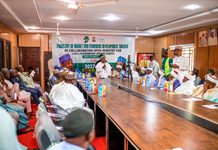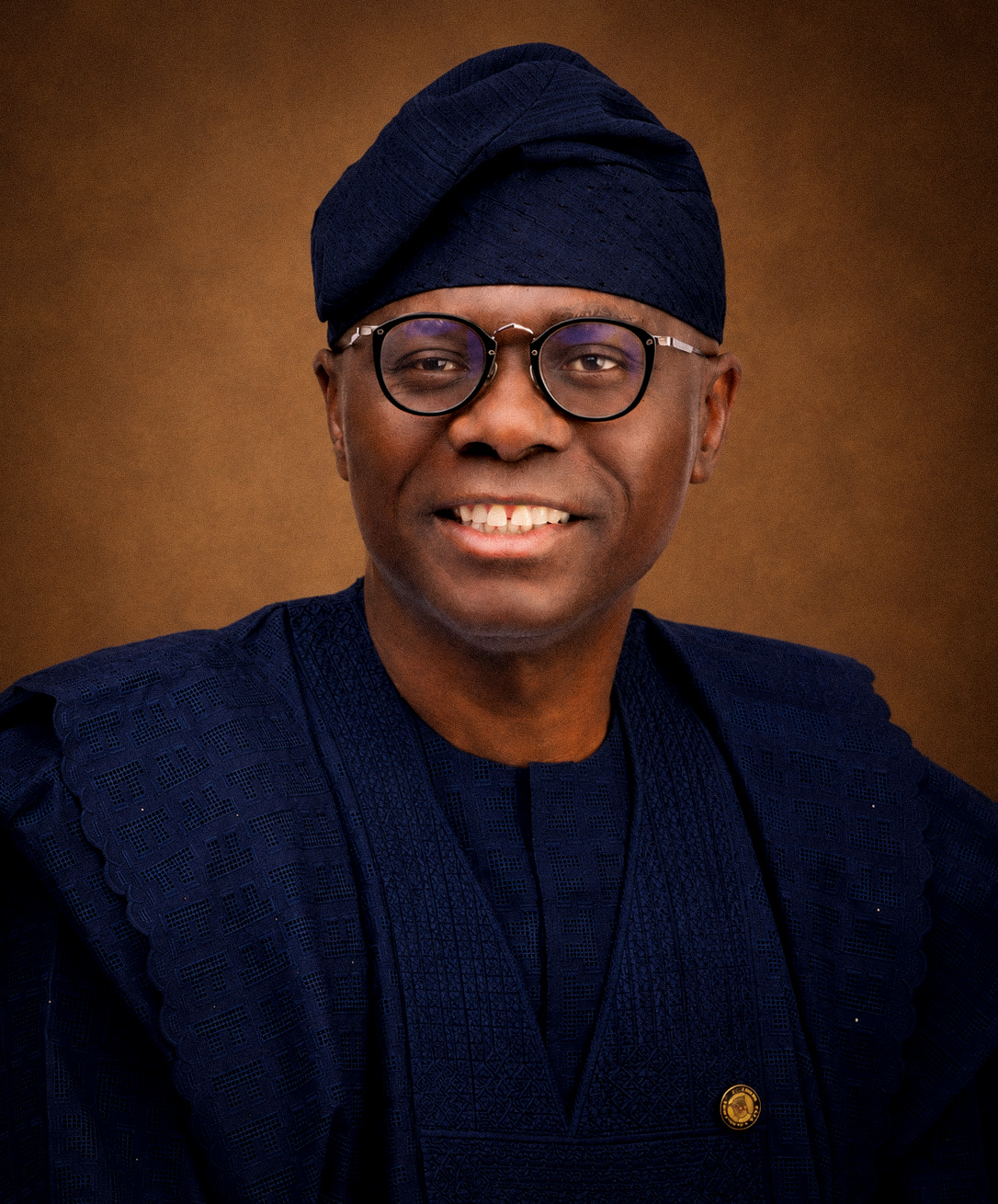
Governor of Lagos, Mr Babajide Sanwo-Olu and economic stakeholders have called for deeper Nigeria-Britain cooperation in the energy sector to enhance energy security and accelerate Nigeria’s transition to cleaner energy.
They made the call at the 26th Annual Lecture Series of the Nigeria-Britain Association (NBA) in Lagos on Thursday.
The event had the theme: “Global Energy Crises and the Transition to Green Power: Implications for Nigeria and Britain.”
Sanwo-Olu, represented by Mr Kamaldeen Balogun, Managing Director, Lagos State Electrification Agency, said practical cooperation between Nigeria and Britain in energy, trade, technology and skills was increasingly important.
He said Britain’s Clean Power 2030 Action Plan and Nigeria’s energy challenges underscored the importance of energy security to economic sovereignty.
He noted that Lagos had adopted embedded power generation as part of efforts to provide reliable electricity closer to where it was needed.
According to him, the state had signed power purchase agreements covering its embedded power plants, with generation capacity projected to rise to between 2,000 megawatts and 4,000 megawatts within two to three years.
He said a 12.16-megawatt plant had been powering the main water intake facility of the Lagos Water Corporation, while a 30-megawatt embedded plant was under construction in Victoria Island.
“The Victoria Island project is designed to provide round-the-clock electricity to the business district and eliminate the need for more than 3,000 diesel generators in the area.
“A joint study commissioned with C40 Cities showed that Lagos has the potential to generate about 25 gigawatts of local renewable energy by 2050, primarily from solar.
“Solar power combined with battery storage could meet about two-thirds of the state’s projected mid-century energy demand,” he said.
Sanwo-Olu called on British partners to support the establishment of a dedicated Lagos clean-power investment vehicle, anchored by British institutional capital and Nigeria’s private sector.
He said the vehicle would finance the next phase of embedded and renewable power generation, beginning with distributed solar and battery storage for commercial districts and public institutions.
Mr Akin Olateru, Chairman, OMNI-BLU Aviation Ltd., said the global energy system was being rewritten, with energy policy now driven by the need to balance security, affordability and sustainability.
Olateru noted that while Nigeria and Britain were at different stages of the energy transition, their economies remained interconnected, creating opportunities for cooperation.
He listed gas flaring, grid instability and inadequate access to reliable electricity among Nigeria’s major energy security challenges.
He described gas as Nigeria’s “genuine bridge fuel”, saying its increased utilisation could provide more reliable power while renewable energy sources were scaled up.
Olateru urged the Federal Government to accelerate domestic gas production and utilisation, expand decentralised and off-grid renewable solutions, and empower states and private companies to generate and distribute electricity.
He also called for the establishment of a formal Nigeria-UK energy security dialogue to facilitate the exchange of expertise in grid management and energy transition.
He proposed a joint Nigeria-UK green investment facility with clear regulatory guarantees to de-risk early-stage clean-energy and clean-transport ventures.
The aviation expert further advocated a Nigeria-UK skills and technology transfer partnership focused on vocational training and university research to develop local capacity.
“Energy transition should create jobs through opportunities in solar assembly, electric vehicle manufacturing and maintenance, green hydrogen and carbon-market services.
“The transition should be viewed as a bridge rather than a race, stressing that Nigeria and Britain were better positioned to pursue energy security and sustainability together,” he said.
Mr Ademola Sanya, President, Nigeria-Britain Association, said energy was no longer simply a question of powering homes, businesses and industries, but one of economic competitiveness, national security, climate resilience and the quality of life of people.
Sanya noted that recent global developments reminded people of how vulnerable economies could be when energy supply became disrupted, prices unpredictable and when countries became overly dependent on external sources of energy.
He said with the world moving towards cleaner and more sustainable sources of power, Nigeria’s question should be how to build an energy system that is reliable, affordable, commercially viable and increasingly sustainable.
“For the Nigeria-Britain Association, there is an additional dimension to this conversation.
“Our association exists to strengthen the relationship between Nigeria and Britain and to provide a platform for meaningful engagement between our two communities.
“The energy transition provides an enormous opportunity for that relationship to evolve with opportunities in investment, renewable energy, technology, infrastructure, research and innovation, electric mobility, energy efficiency among others,” he said.(NAN)