Ties
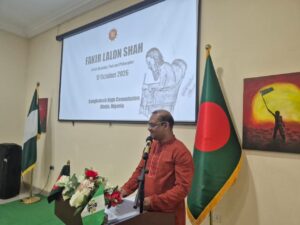
Bangladesh High Commissioner to Nigeria, Miah Kabir, says the legacy of folk musician and mystic, Fakir Lalon, is crucial for strengthening cultural ties and promoting peaceful coexistence between Nigeria and Bangladesh.
Kabir stated this at an event in Abuja on Saturday to celebrate Lalon’s legacy and teachings on humanity, brotherhood and equality.
Lalon, believed to have lived from about 1774 to 1896 in Kushtia, Bangladesh, challenged religious and caste divisions through folk songs performed in the everyday language of village communities.
“He always campaigned that we should not be divided based on caste, religion or practices, but believe in humanity and promote brotherhood and equality,” Kabir said.
He said Lalon’s philosophy remained relevant at a time when “humanism is being threatened by violent fanaticism.”
The envoy said Lalon’s experiences, having been born into a Hindu family and raised by a Muslim family, influenced his views on religious tolerance and social inclusion.
He described Nigeria as a country of “extraordinary diversity”, with hundreds of ethnic groups, languages and religious traditions.
According to him, managing such diversity requires sustained efforts to promote mutual respect and peaceful coexistence.
“This is where Lalon Shah’s philosophy offers valuable food for thought for all of us,” he said.
Kabir also said Lalon’s emphasis on self knowledge offered lessons for young people navigating the internet, urging them not to accept everything they encountered online without questioning it.
On cultural exchange, he said Bangladesh’s Baul musical tradition offered opportunities for collaboration with Nigeria, where music also serves as a means of preserving history and expressing identity.
He invited Nigerians to visit Bangladesh to experience its folk culture, while noting that an annual festival and fair, the Lalon Mela, was held at the mystic’s shrine in Kushtia around his death anniversary.
Also speaking, the Deputy High Commissioner, Mr Faruk Hossain, said Lalon’s experience of exclusion as a child shaped his rejection of religious and caste divisions.
Hossain said UNESCO in November 2005 proclaimed Bangladesh’s Baul songs and Nigeria’s Ifa divination system among the Masterpieces of the Oral and Intangible Heritage of Humanity.
“Both are carried in human memory,” he said, adding that both traditions passed “from teacher to students and from voice to voice.”
Dean of the Faculty of Social Sciences, National Open University of Nigeria (NOUN), Prof. Kamal Bello, said Lalon’s ideology explained why he continued to be remembered long after his death.
Bello said Lalon’s philosophy of humanity rejected distinctions based on race, religion, class and political affiliation.
“Religion should be for peace,” he said.
He said Lalon’s opposition to identity politics also offered lessons for Nigeria.
“Most of our campaign is on identity politics,” Bello said.
The News Agency of Nigeria (NAN) reports that the event was the first time the High Commission organised a programme dedicated to Lalon Shah.
The Bangladesh Embassy explained that the programme aimed at deepening cultural ties between Nigeria and Bangladesh and enabling both countries to learn from each other.
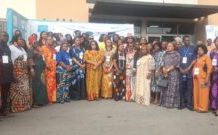
The event was attended by academics, journalists and young people, among others. (NAN)