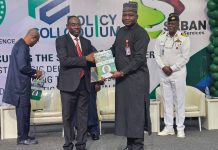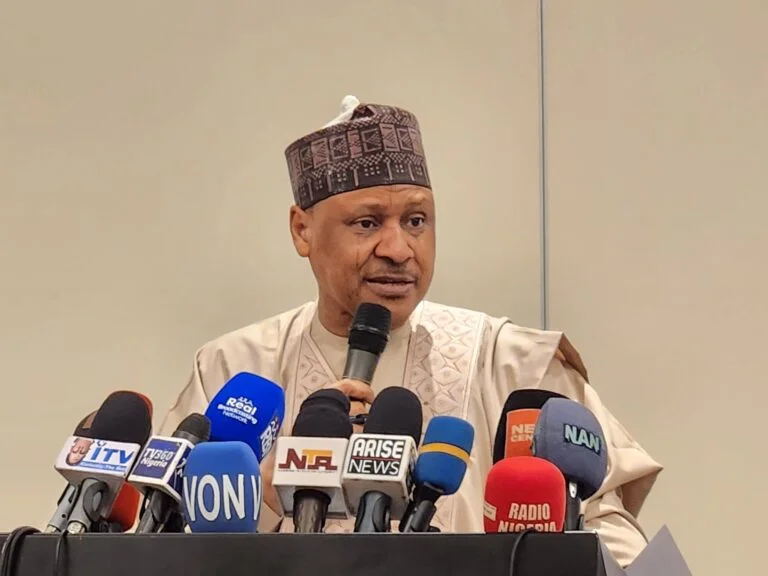
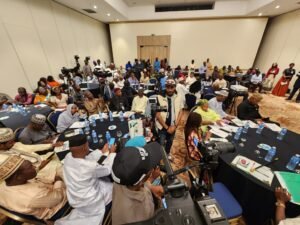
The Minister of Information and National Orientation, Mohammed Idris, made the appeal on Thursday in Abuja at a two-day National Security Summit organised by the Nigeria Union of Journalists (NUJ).
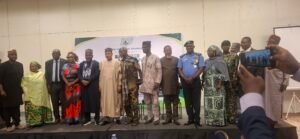
The summit organised in collaboration with the Department of State Services (DSS) has as its theme: “Media and Security Agencies as Partners in Nation Building.”
Idris said that while the federal government under President Bola Tinubu remains fully committed to upholding press freedom, responsible journalism must be exercised to avoid glorifying crime.
”Yes, we have to do our work, we have to report whatever happens, but you must know that the best reporter, the best editor, is the one that knows what not to report in the interest of nation-building.
”Please, take these terrorists and criminals off your front pages. This is what they crave for, free of charge.
”It saddens my mind when I see our front pages, when I see our headlines, reporting the activities of these criminals and underplaying the ones by security agencies,” the minister said.
He noted that without a secure and peaceful country, the media itself would not have an enabling environment to operate,.
Idris urges editors to celebrate the sacrifices of young men and women in uniform, unstead of giving free publicity to insurgents.
”We must have a Nigeria to report first before we can even have a union or any other media organisation.
“Please, let’s have that at the back of our minds. It is our collective responsibility to ensure that this nation survives,” he said.
The minister stated that beyond kinetic military operations, the Tinubu administration is using non-kinetic tools to combat insecurity by addressing its root causes.
According to him, over 1.3 million Nigerian students are currently accessing higher education through the newly instituted National Education Loan Fund (NELFUND), ensuring that financial constraints do not keep youths out of school.
He also hinted that the federal government is working behind the scenes to roll out enhanced welfare packages for media workers in the country to boost their morale and economic well-being.
Idris commended the collaborative efforts of the media and the broadcast sector, noting that the historic launch of the digital switchover after 15 years was a testament to what strategic partnership can achieve despite remaining challenges.
In his remarks, the National President of the NUJ, Mr Alhassan Yahya, stated that the summit was conceptualised to foster closer ties between journalists and security agencies to promote democracy and public interest.
Yahya praised the leadership of the DSS under its Director General, Mr Adeola Ajayi, noting that the relationship between the secret service and the press has significantly improved.
”The Honourable Minister, it may interest you to know, in the last one and a half years, there has been no record of intimidation or harassment by state services in this country.
”It is our hope and prayer that other security agencies will emulate the model adopted by NUJ and DSS to work as partners towards taking our country to a greater height,” Yahya said.
He also commended the recent successful launch of the broadcast digital switchover, describing it as an innovation that would add immense value to the media industry and enhance the nation’s security architecture.
Also speaking, the President and Chairman of the Governing Council of the Nigerian Institute of Public Relations (NIPR), Dr Ike Neliaku, emphasided that media and security are the two vital pillars holding up the country’s democracy.
Neliaku announced that Nigeria, with the support of the ministry, has secured the hosting rights for the World Public Relations Forum in November 2026.
He noted that it would be the first time Sub-Saharan Africa is hosting the global event, which is expected to bring communication professionals from 126 countries to Nigeria
Contributing to the discussion, the President of the Nigeria Chapter of the International Press Institute (IPI), Mr Musikilu Mojeed, noted that the debate between national security and press freedom should not be treated as a choice between two competing values.
According to Mojeed, a democratic society inherently requires both to survive, as security without accountability risks secrecy and abuse, while freedom without security cannot be meaningfully sustained.
”The conflict between security agencies and the media arises because our objectives are fundamentally different.
“More often, this conflict also results from inadequate communication, mistrust, and the failure to utilise existing mechanisms for resolving disagreements.
”Alternative downward self-regulatory processes, professional accountability mechanisms, and judicial channels address disputes more effectively than raids, arrests, detention, and intimidation.
”The task before democratic institutions is therefore not to eliminate tension, but to manage it responsibly.
“National security and press freedom are not opposing goals; they are mutually reinforcing pillars of democratic governance,” Mojeed said.
He assured that the IPI would remain consistent in its pursuit of press freedom and the total security of the country.
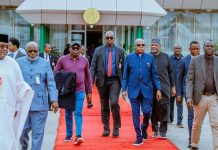
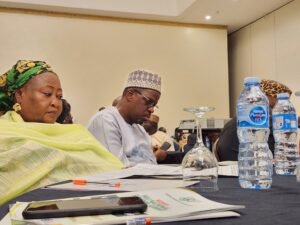
The summit was attended by heads of various security agencies, including representatives of the Inspector General of Police, past presidents of the NUJ, and executives of other media and public relations bodies.(NAN)