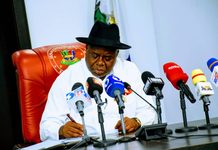
Mr Ayoola Lawal, former secretary, APC Committee of Diaspora Chairmen has called for creation of Special National Security Courts to help fast track matters on terrorism, kidnapping, rituals, and human organ harvesting among others.
Lawal in a statement on Thursday, noted that the normal courts alone would be overwhelmed by the number of security breach cases hitting Nigerian courts daily and therefore, needed specialised courts to stop litigation delays.
“There are so many criminals, kidnappers ritualists caught in the act that ought to have been sentenced. Delaying them is unfair to families of victims.
“The moment these criminals are handed either death sentences or life imprisonment on monthly basis, it will be a major deterrent.
“The worsening security situation across Nigeria continues to generate concerns among Nigerians both at home and in the diaspora.
“We must get our court processes right to enable the outside world view our security fights with the seriousness it deserves.
“Nigeria cannot be seen to be feeding obvious criminals in jail with tax payers money. Justice delayed is justice denied,” he stated.
Lawal, a former chairman of the APC in Scandinavian Countries lamented that in spite of the huge fight by Nigeria’s security agencies and networks, the challenges persisted and getting worse.
He said as someone, who regularly engaged with policymakers, business leaders, and members of the international community, he had observed that questions relating to terrorism, kidnapping, banditry, ransom-taking, and violent crimes increasingly dominated discussions about Nigeria.
Lawal said this reality was both troubling and disappointing, adding that It often overshadowed the achievements of millions of hardworking Nigerians, who continued to make meaningful contributions across various sectors around the world.
He said it was, therefore, unsurprising that respected Nigerians such as Wole Soyinka, Femi Falana, Pat Utomi, Chidi Odinkalu, Retired Colonel Lam Sambo, and Afe Babalola had repeatedly expressed concerns over the growing insecurity confronting our nation.
According to him, their interventions reflect the concerns of millions of citizens, who desire a safer, more stable, and more prosperous Nigeria.
Lawal acknowledged efforts being made by President Bola Tinubu’s administration, the Armed Forces, intelligence agencies, the Nigeria Police Force, and other security institutions in addressing these challenges.
He said the sacrifices being made daily by the security personnel deserved recognition and support, adding that however, security operations alone cannot deliver lasting peace and security.
Lawal said: “The fight against insecurity must be supported by a judicial system that is efficient, responsive, and capable of ensuring swift accountability for criminal acts.
“While security agencies are responsible for arresting suspects and conducting investigations, the judiciary ultimately determines whether justice is served.
“This is why I strongly advocate for the establishment of special national security courts dedicated exclusively to cases involving terrorism, banditry, kidnapping, ransom collection, mass murder, illegal arms trafficking, and other serious crimes against national security.”
According to him, the specialised courts should be equipped with trained judges, prosecutors, investigators, and support personnel capable of handling complex security-related cases with speed and professionalism.
Lawal said in addition, clear statutory timelines should be introduced to ensure that such cases do not remain in the judicial system indefinitely, including, filing of charges within 30 days after the conclusion of investigations.
He said the timelines should include commencement of trial within 30 days of arraignment, completion of trial within 180 days, and delivery of judgment within 30 days of final submissions.
Lawal said appeal should be resolved within 90 days, final determination of all proceedings within a maximum period of 12 months, except in exceptional circumstances authorised by the court.
He explaied that such reforms would strengthen deterrence, improve public confidence in the justice system, reduce unnecessary delays, support the work of security agencies, and reinforce the principle that criminal conduct attracts swift and certain consequences.
Lawal said the proposal was not intended to undermine constitutional rights or judicial independence, saying that rather, it sought to strengthen both by ensuring that justice is delivered fairly, transparently, and within a reasonable timeframe.
He noted that a stronger judicial response remained a critical component of any comprehensive national security strategy.
Lawal said the country deserved a justice system that matches the courage of its security personnel and the aspirations of its people. (NAN)