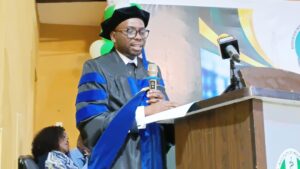
A medical researcher, Dr Aigbe Ohihoin, has warned that eclampsia could claim the lives of one in four affected women, citing findings from his research.
Ohihoin, Director of Maternal and Reproductive Health Research, Nigerian Institute of Medical Research (NIMR), disclosed this on Thursday in Lagos.
He spoke at the institute’s 15th inaugural lecture, titled: ‘All for the Woman, Her Baby and Her Health.’
The consultant obstetrician and gynaecologist identified excessive bleeding after childbirth, eclampsia and pre-eclampsia among major causes of maternal mortality requiring urgent attention.
He explained that pre-eclampsia was associated with high blood pressure during pregnancy, while eclampsia involved seizures that could endanger maternal and infant lives.
Ohihoin said findings from his published research indicated a 25 per cent mortality rate among women affected by eclampsia.
“These conditions are deadly, some women might not know they have it until high blood pressure is detected during antenatal visits,” he said.
He identified headaches and blurred vision as other warning signs, noting that the condition might have progressed considerably before such symptoms appeared.
The researcher said maternal mortality resulted from direct and indirect causes, compounded by several socioeconomic factors.
He identified educational background, exposure, infrastructure and healthcare systems’ responsiveness to emergencies as factors influencing maternal mortality.
Ohihoin advocated increased investment in women’s education and financial empowerment to enable them to make informed decisions and access quality healthcare.
“Women need to access health information. And that information will empower them to make the right choices, make the right decisions.
“A healthy woman is a healthy family. A healthy family is a healthy nation. That’s why we must ensure that the woman is healthy,” he said.
Ohihoin emphasised the inseparable relationship between maternal and child wellbeing, advocating healthcare policies that prioritised women’s health, reproductive rights, choices and aspirations.
He said women should not be perceived merely as vessels for childbearing, stressing that their wellbeing extended beyond motherhood and their roles as sexual partners.
The researcher said his commitment to women’s education and reproductive rights was partly influenced by his mother’s experience of interrupting her education to raise him.
He said motherhood should not require women to abandon their educational aspirations or sacrifice personal development.
“A society that values women must create families, services and policies that allow women to care for others without sacrificing their own development,” he said.
On NIMR’s interventions, Ohihoin said Nigeria had recorded significant progress in preventing mother-to-child transmission of HIV.
He disclosed that no HIV transmission was recorded among the cohorts monitored by the institute.
The researcher attributed the achievement to public health interventions, government support, funding from development partners and the collective efforts of healthcare workers.
He acknowledged contributions from the U.S. President’s Emergency Plan for AIDS Relief (PEPFAR) and the Nigerian Government towards preventing mother-to-child transmission.
Ohihoin, however, called for increased investment in medical research, describing Nigeria’s current support for research activities and capacity development as inadequate.
He urged Nigerians to recognise women’s contributions to society and support initiatives promoting their health, quality of life and advancement.
The researcher also advocated equal treatment of male and female children, expressing concern over couples seeking sex selection because of their preference for boys. (NAN)