Bridge That Gap Hope for Africa Initiative (BTG) has faulted the outcome of COP31 over its failure to secure a quantified adaptation finance target of 120 billion dollars annually for Africa by 2035.
The organisation said the conference ended in Antalya, Türkiye, on November 22 without agreement on its overarching political decision, the proposed Antalya Pact.
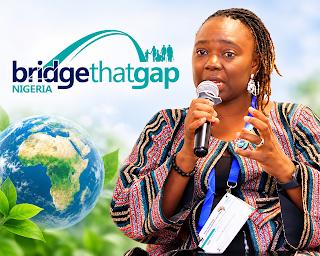
In a statement issued to newsmen on Wednesday in Kaduna, BTG Executive Director, Ms Gloria Bulus, described the outcome as disappointing for vulnerable African communities already experiencing the effects of climate change.
She said the conference ended after nearly two days of overtime, making it the longest climate summit on record, without governments reaching a common political agreement.
Bulus said the failure to establish a quantified adaptation finance target represented another setback for African countries seeking resources to address climate-related challenges.
She explained that at COP30 in Belém, parties agreed to at least triple adaptation finance by 2035.
According to her, an earlier version of the COP31 presidency-led draft proposed at least 120 billion dollars annually by 2035, based on a 40-billion-dollar baseline.
However, she said the figure was subsequently removed, while the final outcome retained the commitment without establishing a baseline or quantified annual target.
She said the absence of a defined starting point, clear milestones and delivery plan would make it difficult to measure progress and hold governments accountable.
Bulus said the African Group of Negotiators had expressed concern over the development during the closing plenary.
She quoted Ghana’s Minister of Environment, Science and Technology, Dr Zanetor Agyeman-Rawlings, as saying Antalya should have delivered on the promise made to vulnerable countries at Belém.
The BTG executive director said the organisation fully supported the African Group’s position, stressing that climate finance was essential to protecting vulnerable communities.
She also expressed concern that language on transitioning away from fossil fuels was removed from the final draft.
She noted that the commitment made at COP28 in Dubai remained in place, but COP31 failed to build on it.
The statement cited UN Secretary-General António Guterres as warning that the world could not put out the fire while continuing to pour fuel on it.
On loss and damage, BTG said developing countries submitted approximately 2.8 billion dollars in funding requests under the Fund for Responding to Loss and Damage’s initial Barbados Implementation Modalities.
However, it said the allocation stood at only 342 million dollars, highlighting the gap between the needs of affected countries and available resources.
The organisation further disclosed that as of July 31, 2026, only 485.77 million dollars of the 822.71 million dollars pledged to the fund had been received.
It said communities experiencing irreversible climate-related losses could not afford further delays in accessing the necessary support.
On just transition, BTG acknowledged the agreement to operationalise the new mechanism through a phased approach, with further work expected ahead of its adoption at COP32.
It also noted the decision to extend the UAE Just Transition Work Programme for another three years with strengthened modalities.
However, it said the mechanism’s practical design, funding and capacity to support affected workers and communities remained unresolved.
The organisation called for a transition that would include African workers, women and young people and deliver tangible benefits.
On trade, BTG said concerns raised by developing countries over carbon border measures remained unresolved.
It warned that such measures could penalise African exports without significantly addressing emissions on the continent.
Despite the setbacks, the organisation acknowledged decisions reached on specific negotiating issues, including the Global Goal on Adaptation and the climate finance work programme.
It also recognised progress on the UAE Just Transition Work Programme and the 59 Belém Adaptation Indicators.
According to the statement, parties established a dedicated task force to improve the indicators’ methodologies and metadata.
The task force would also provide countries with opportunities to share experiences, challenges, gaps and needs arising from voluntary testing.
However, BTG said improved indicators alone would not protect vulnerable communities without adequate financing to implement adaptation measures.
It described the development as giving Africa a better thermometer without providing the medicine needed to address its climate challenges.
The statement quoted Byron Zamasiya, Practical Action’s Climate Resilience and Disaster Risk Reduction Lead for Africa, as saying vulnerable countries could not build resilience on promises of future discussions.
The organisation said African governments and communities were already taking steps to address climate change despite limited domestic resources and institutional capacities.
It identified Kaduna State as an example of subnational climate leadership through its policies and institutional frameworks.
According to BTG, Kaduna introduced a 10-year Climate Change Policy in 2024 to provide a framework for low-carbon, climate-resilient, gender-responsive and sustainable development.
It said the state subsequently developed a Climate Change Policy Implementation Framework to translate policy commitments into institutional responsibilities, sectoral priorities and measurable actions.
The organisation also noted the establishment of a dedicated department within the Ministry of Environment and Natural Resources to strengthen coordination and institutional oversight.
It said Kaduna had integrated climate considerations into public financial management through climate budget tagging.
The initiative identified adaptation- and mitigation-related allocations in the state’s 2025 approved budget.
BTG further disclosed that Kaduna strengthened its climate governance framework in 2026 through the enactment of the Kaduna State Climate Change Advisory Board Law.
The law established a mechanism for coordinated climate governance, policy oversight and mobilisation of climate finance.
The organisation said farmers’ groups, women’s cooperatives, community organisations and local institutions across Nigeria were also restoring land, managing water and promoting cleaner energy.
It added that communities were preparing for climate-related disasters, often with limited external support.
BTG said these efforts demonstrated Africa’s willingness to invest in resilience and develop locally driven responses.
However, it stressed that domestic commitment and action could not replace the international climate finance obligations of developed countries.
The organisation said it would assess progress towards COP32, scheduled to hold in Addis Ababa, Ethiopia, in 2027, against five key priorities.
It called on developed countries to establish a transparent baseline, quantified annual adaptation finance target and interim milestones towards at least 120 billion dollars annually by 2035.
It also demanded that adaptation finance should be new, additional and grant-based, warning against counting relabelled aid and market-rate loans.
According to BTG, climate finance arrangements must not deepen Africa’s debt burden.
The organisation further called for increased resources for the Loss and Damage Fund to match the requests already submitted by developing countries.
It advocated simplified direct access to the fund for national and local actors, including women-led and community-based organisations.
It also demanded a monitored share of adaptation and loss-and-damage financing for local communities where climate-related losses occurred and adaptation activities were implemented.
On transition, BTG called for the mechanism to become operational by COP32, with dedicated financing and protection for affected workers and communities.
It also advocated support for African value addition in critical minerals rather than continued dependence on raw mineral extraction.
The organisation urged developed countries to honour the COP28 commitment on transitioning away from fossil fuels by reducing their own emissions faster.
It also called for financing clean and affordable energy for hundreds of millions of Africans who still lacked electricity.
BTG called on the Federal Government, through the National Council on Climate Change, to translate Nigeria’s Nationally Determined Contribution (NDC) 3.0 into a cost implementation and financing plan.
It said the plan should contain clear budget lines to enable Nigeria to demonstrate its commitments and climate finance requirements ahead of COP32.
The organisation also urged the Federal Government to strengthen support for subnational governments, particularly states such as Kaduna, which had established legal frameworks for climate action.
It said such states required adequate resources to implement their climate policies and programmes.
BTG further called for broader Nigerian participation in climate negotiations and preparatory processes.
It said civil society organisations, women, young people and community representatives should be included.
The organisation urged the African Group of Negotiators to remain united and firm, insisting that COP32 should be the conference where Africa sets the agenda rather than reacts to it.
Bulus said BTG would work with partners and networks across Nigeria and Africa to document the effects of delayed climate financing on communities.
She said the organisation would amplify the voices of women and frontline communities and present evidence to negotiating platforms ahead of COP32.
The executive director said the outcome of COP31 should serve as a reminder that climate negotiations must translate into tangible benefits for vulnerable populations.
“Antalya counted the hours. Addis Ababa must count the lives,” she said.(NAN)