Nigeria has called on African countries to break dependence on foreign military equipment and strengthen indigenous defence industries as well as unite against terrorism and transnational crimes threatening the continent.
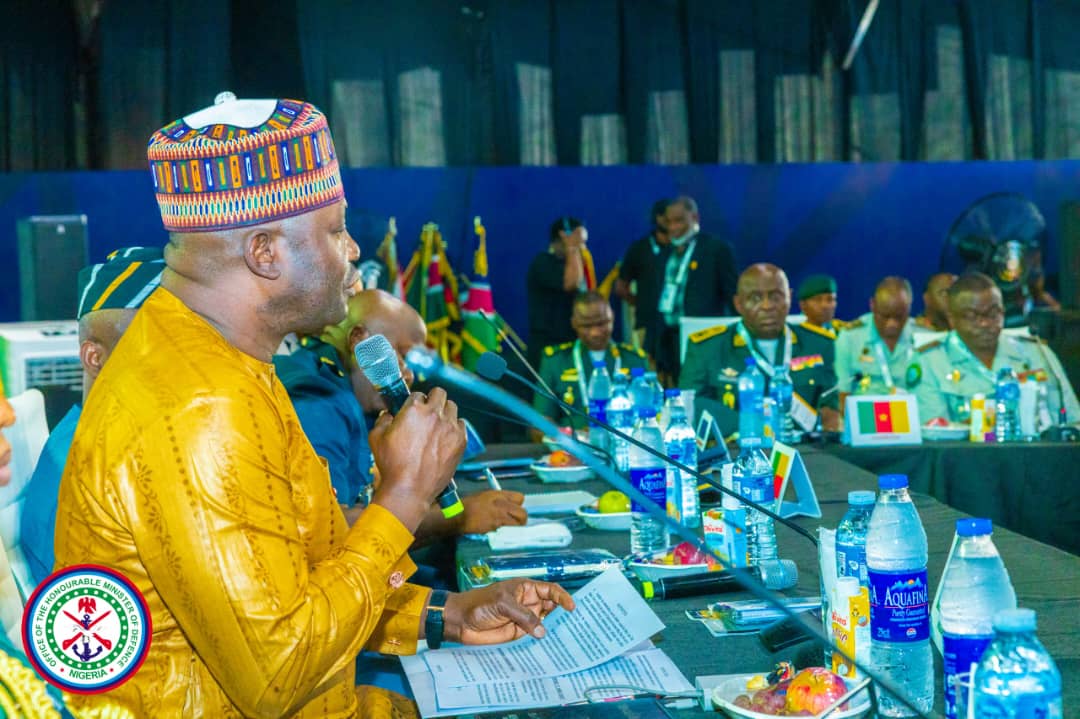
The Minister of Defence, retired Gen. Christopher Musa, made the call during a strategic engagement with African Ministers of Defence and Chiefs of Defence Staff at the Africa International Defence Exhibition and Conference (AFRIDEX 2026) in Lagos.
Musa said Africa must transition from being a theatre of competing geopolitical interests to becoming an influential actor capable of shaping global security decisions.
He also said the continent could achieve this through strategic autonomy, collective security arrangements and mutually beneficial international partnerships that respected national sovereignty.
“Africa must move beyond being a theatre of competing geopolitical interests to becoming an influential actor in shaping global security decisions,” he said.
The minister stressed that defence partnerships should reflect African priorities rather than perpetuate strategic dependence or undermine the sovereignty of individual countries.
He noted that growing geopolitical competition, external interference and shifting international security alliances had made it imperative for African nations to develop a common position on continental security.
Musa therefore called for stronger African representation in global security decision-making and greater coordination among continental, regional and national defence institutions.
He reaffirmed Nigeria’s commitment to the African Union Peace and Security Architecture as a framework for addressing the continent’s evolving security challenges.
The minister said terrorism, violent extremism and organised crime had become increasingly transnational, making fragmented national responses inadequate.
He identified the Sahel, Lake Chad Basin, Horn of Africa and parts of Central and Southern Africa as regions requiring stronger cooperation to contain insecurity.
According to him, intelligence sharing, mutual trust and collective responsibility are critical to preventing terrorist groups and criminal networks from exploiting national borders.
“Terrorism, violent extremism and organised crime increasingly transcend national boundaries, while fragmented national responses allow threats to migrate across regions.”
Musa urged the Economic Community of West African States (ECOWAS) and the Alliance of Sahel States (AES) to sustain practical security cooperation in spite of prevailing political differences.
He said neighbouring countries should strengthen intelligence exchange, border coordination and counterterrorism operations in recognition of their shared security interests.
The minister also called for stronger African diplomatic engagement to address the protracted conflicts in Sudan and the eastern Democratic Republic of the Congo.
He added that coordinated peacebuilding and conflict-prevention initiatives were necessary to complement military operations and reduce the humanitarian consequences of prolonged instability.
He also emphasised that military action alone could not deliver lasting peace without effective governance, economic opportunities and public confidence in state institutions.
“Military operations alone cannot deliver lasting security without effective governance, economic opportunities and public confidence in state institutions,” he said.
He advocated integrated approaches that addressed the underlying causes of conflict while strengthening civilian protection and post-conflict stabilisation.
Addressing Africa’s dependence on foreign military equipment, spare parts and technical support, Musa described the situation as a strategic vulnerability that required urgent attention.
He urged African countries to move beyond conventional military procurement towards local production, technology transfer, indigenous maintenance and sustainable defence industrial development.
“Africa’s continued dependence on external military equipment, spare parts and technical support constitutes a strategic vulnerability,” he said.
The minister called for stronger collaboration among African defence industries through joint ventures, collaborative research, standardisation and regional production arrangements.
He urged countries to leverage existing industrial capabilities to reduce duplication, conserve scarce resources and build sustainable local manufacturing capacity.
Musa identified the Defence Industries Corporation of Nigeria (DICON) as a potential platform for developing practical partnerships with African defence institutions.
He said the partnerships could focus on joint production, technical training, technology transfer and indigenous maintenance in areas of mutual interest.
The minister also highlighted the growing importance of unmanned systems, counter-drone technology, artificial intelligence, cybersecurity and integrated command-and-control capabilities in contemporary warfare.
He called for collaborative African investment in emerging technologies, research institutions and indigenous innovation to reduce reliance on external suppliers.
According to him, sustainable defence capability requires more than the acquisition of military hardware.
He said African countries must also invest in equipment maintenance, professional military education, research and the development of skilled technical personnel.
Musa said terrorist and criminal networks were becoming more sophisticated, exploiting drones, improvised explosive devices, digital platforms and illicit financial networks.
He called for stronger intelligence fusion, early-warning systems, counter-drone capabilities and specialised training to improve the continent’s ability to detect and respond to emerging threats.
The minister also advocated enhanced border surveillance, timely intelligence exchange and effective liaison arrangements among neighbouring countries.
“African countries must ensure that national borders do not become operational sanctuaries for terrorist groups, arms traffickers and transnational criminal networks,” he said.
On maritime security, Musa highlighted the strategic importance of the Gulf of Guinea, the Red Sea and other vital sea routes to Africa’s economic and security interests.
He called for enhanced maritime domain awareness, coordinated naval exercises and intelligence cooperation to protect trade routes, energy infrastructure and the continent’s blue economy.
Musa further urged African countries to transform the African Standby Force (ASF) into a fully operational and responsive continental security capability.
He said the force required improved operational readiness, interoperability, strategic mobility and sustainable financing to support African-led peace operations.
He reaffirmed Nigeria’s commitment to regional peacekeeping and collective security, urging African military institutions to strengthen cooperation through joint exercises, professional exchanges and shared operational experiences.
To ensure that the commitments made at AFRIDEX translated into practical outcomes, the minister proposed a structured follow-up mechanism involving participating African defence institutions.
He said the mechanism should identify priority areas for intelligence cooperation, joint training and defence industrial partnerships, with clearly defined responsibilities and measurable outcomes.
According to him, such an arrangement will help sustain cooperation beyond the exhibition and ensure that discussions produced tangible security and industrial benefits.
“Africa’s security future must ultimately be determine by the collective resolve, capabilities and strategic choices of African nations,” Musa said.
He also reaffirmed Nigeria’s readiness to work with African partners towards building a secure, united and self-reliant continent.
Other African defence leaders at the meeting commended Nigeria for the successful hosting of the event, pledging to ensure implementation of key recommendations and resolutions.
AFRIDEX 2026 brought together defence and security stakeholders to explore technological innovations, strengthen military cooperation and promote partnerships aimed at addressing Africa’s evolving security challenges.(NAN)