The Gulf of Guinea Commission (GGC) has appointed Nigeria to lead the development of a regional marine and blue economy policy for nine member states.
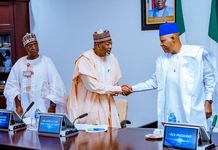
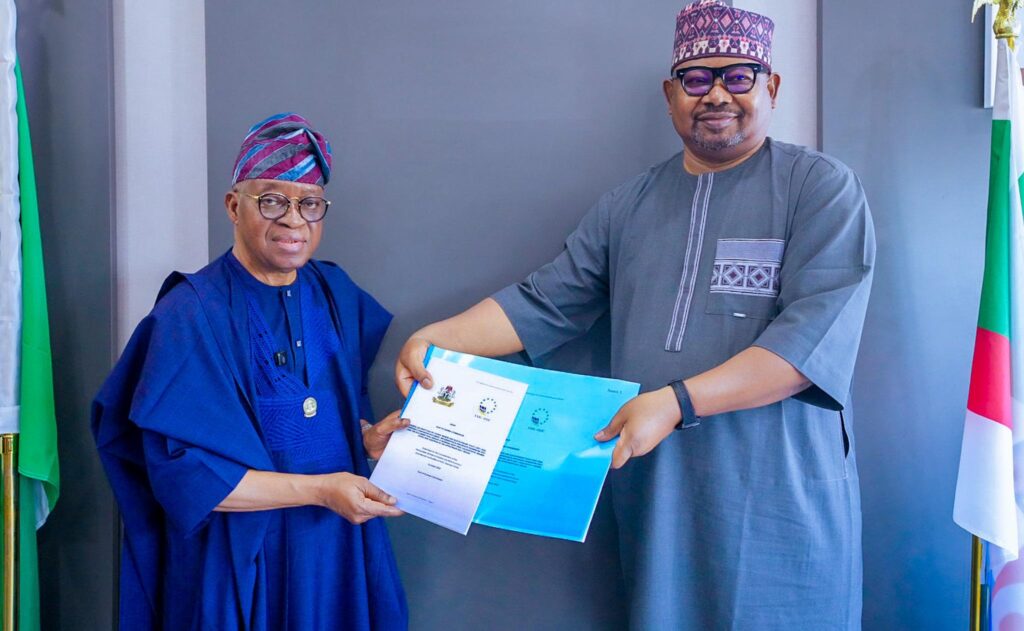
The commission’s Executive Secretary, Mr José Abeso, announced this during a meeting with the Minister of Marine and Blue Economy, Dr Adegboyega Oyetola, in Abuja on Tuesday.
Represented by Deputy Executive Secretary, Mr Obinna Agbugba, Abeso said the initiative would strengthen maritime security, promote sustainable ocean governance and deepen regional economic cooperation.
The nine member states are Angola, Cameroon, Congo, the Democratic Republic of the Congo, Equatorial Guinea, Gabon, Ghana, Nigeria, and São Tomé and Príncipe.
Abeso said Nigeria’s development and approval of its first National Policy on Marine and Blue Economy had inspired the commission’s regional initiative.
He commended Oyetola for spearheading the national policy and expressed confidence in his ability to lead the regional effort.
“Nigeria’s initiative has provided an important foundation for the commission’s ambition to establish a regional policy on marine and blue economy.
“We appreciate the minister’s contributions to the sector and his acceptance to lead this process.
“We are confident that his experience will contribute significantly to advancing regional cooperation and sustainable ocean governance,” he said.
Responding, Oyetola thanked the commission for the confidence reposed in him, describing the assignment as an opportunity to strengthen regional cooperation and sustainably manage shared marine resources.
He said the commission formally requested his leadership in a letter dated May 7, prompting him to establish a multi-stakeholder committee.
According to him, the committee comprises technical departments of the Federal Ministry of Marine and Blue Economy and its Department of Planning, Research and Statistics.
Oyetola said the committee had developed two documents to guide the proposed policy and establish a framework for implementation.
The documents are the draft Strategic Plan for the Development and Operationalisation of a GoG Commission Policy on Marine and Blue Economy (2026–2030).
The second is a draft Policy Framework and Strategy Template, outlining priorities, objectives, proposed actions, performance indicators, timelines, lead agencies and funding considerations.
Oyetola said: “Nigeria remains fully committed to the ideals of regional cooperation, sustainable ocean governance and the shared prosperity of the Gulf of Guinea.
“The proposed policy will provide a framework for addressing common maritime challenges, strengthening collaboration and ensuring our shared marine resources are sustainably managed.”
He said the drafts considered the 2025 Yaoundé Declaration and the work of the United Nations Task Force supporting the commission’s 2026 Work Plan.
Oyetola said the documents also aligned with the commission’s objectives and specific requests before being presented for consideration.
He stressed that effective coordination and broad participation would be essential to guide policy development and sustain stakeholder engagement.
The minister proposed a steering committee to oversee the process, coordinate consultations and ensure the participation of relevant institutions across the region.
He also recommended that the ministry serve as the committee’s secretariat to facilitate coordination.
Oyetola said inclusive consultations involving member states, relevant institutions and other stakeholders were necessary to ensure regional ownership of the proposed policy.
He advocated clear timelines and defined responsibilities for reviewing the draft documents and establishing the steering committee.
“A well-developed regional policy will strengthen collaboration among member states, address common maritime challenges, promote investment and support the fight against illegal, unreported and unregulated fishing.
“Through a coordinated regional approach, we can improve maritime governance, protect our marine resources and unlock the economic potential of the Gulf of Guinea,” Oyetola added. (NAN)