Prof. Jude Mbanasor, President, Agricultural Society of Nigeria (ASN), has advocated stronger partnerships to translate agricultural researches into practical solutions for food security, farmers’ prosperity and national development.
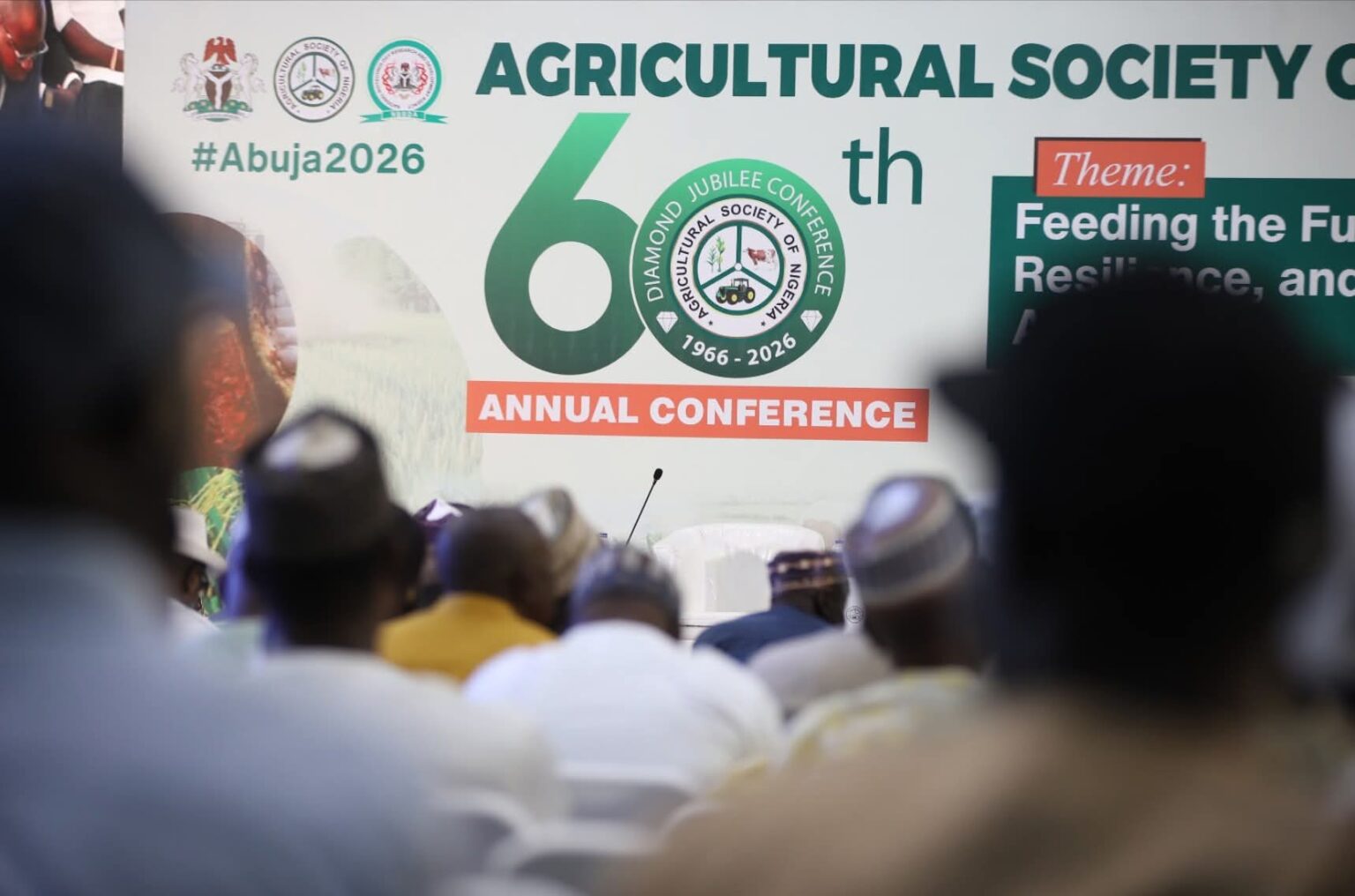
He made call on Tuesday in Abuja at the opening of its 60th Annual Conference and Diamond Jubilee of the society in Abuja.
During the conference stakeholders emphasised that innovation, resilience and collaboration as priorities for transforming Nigeria’s agricultural sector.
The conference, hosted by the National Biotechnology Research and Development Agency (NBRDA), had the theme: “Feeding the Future: Scaling Innovation, Resilience and Partnerships in Nigerian Agriculture.”
Mbanasor said agriculture should be recognised beyond food production, given its contributions to employment, livelihoods, nutrition, industrial raw materials, rural development and economic growth.
He said Nigeria needed an agriculture system capable of feeding its growing population, creating wealth for farmers and withstanding emerging economic and environmental challenges.
He urged participants to use the conference to develop practical solutions rather than limit discussions to research presentations, stressing the importance of policies, investments and partnerships in determining the future of agriculture.
“Feeding the future requires that we act today,” he said, noting that decisions taken now would shape the next generations of farmers, agricultural scientists and agribusiness entrepreneurs.
The ASN president called for an agricultural system in which Nigerian farmers could become more productive, prosperous and resilient.
Earlier, Prof. Abdullahi Mustapha, Director-General of NBRDA, said Nigeria’s challenge was not a lack of scientific ideas but the difficulty of scaling validated innovations for widespread adoption.
Mustapha said biotechnology could contribute to agricultural transformation through improved planting materials, rapid diagnostics for crop and livestock diseases, biofertilisers, biopesticides and technologies to reduce post-harvest losses.
He explained that research outcomes needed effective extension services, appropriate regulation, quality assurance, financing, infrastructure and local manufacturing to reach farmers and deliver measurable benefits.
“The central challenge is scale,” he said, urging research institutions, universities, government, private investors and development partners to strengthen collaboration in moving innovations from laboratories to farms and markets.
Mustapha also stressed the need to integrate resilience into agricultural production and distribution systems to address climate variability, emerging pests and diseases, land degradation, water stress and disruptions in global supply chains.
He called for greater investment in climate-smart agriculture, conservation of genetic resources, soil restoration, efficient water use and early-warning systems to strengthen the country’s food systems.
The NBRDA Director-General further urged stakeholders to create opportunities for young people in genomics, bioinformatics, precision agriculture, seed systems, digital extension and food processing.
He said farmers should be treated as partners in developing agricultural technologies rather than as mere recipients of innovations.
Also speaking, Dr Rose Gidado, the chairman of the Local Organising Committee (LOC), said the conference provided an opportunity to connect agricultural research with the practical needs of farmers, consumers and agribusinesses.
Gidado, also Director of NBRDA’s Agricultural Biotechnology Department, said the effectiveness of agricultural research should be measured by its ability to address farmers’ challenges, improve livelihoods and strengthen food security.
She identified quality seed as a critical starting point for crop production, calling for closer collaboration among researchers, breeders, seed producers, regulators, distributors and entrepreneurs to ensure farmers had access to reliable planting materials.
Gidado also urged scientists, policymakers, farmers and private-sector operators to strengthen engagement so that research findings could translate into better farming practices, improved processing, efficient storage and wider market opportunities.
She said the conference’s success would depend not only on the papers presented but also on the partnerships established and practical actions taken after the meeting.
The three-day conference, scheduled for Oct. 20 to Oct. 22, brings together researchers, farmers, policymakers, agribusiness operators, development partners and other stakeholders to deliberate on the future of Nigerian agriculture.. (NAN)