The third Russia-Africa Summit, scheduled to be held in Moscow from Oct. 28 to Oct. 29, continues to draw attention from diverse stakeholders regarding the prospects the high-level meeting could offer both parties.
Stakeholders including government officials and diplomats share conflicting views on how much Africa will actually benefit from Moscow’s proposals, keeping the outcomes of the 2019 and 2023 summits in mind.
They, however, express confidence that Moscow’s pitch would bolster mutual relations between the two parties in all spheres of economy.
This belief hinges on how Africa might benefit from Russia’s vast expanse. As the world’s largest nation, Russia straddles two continents and 11 time zones, offering a rich cultural mosaic, extreme landscapes, and iconic monuments.
For them, the high-level meeting is apt, coming amid ongoing transformation of the global system of international relations amid conflict situations, therefore, the need to develop a long term multi-sector Russia-Africa partnership.
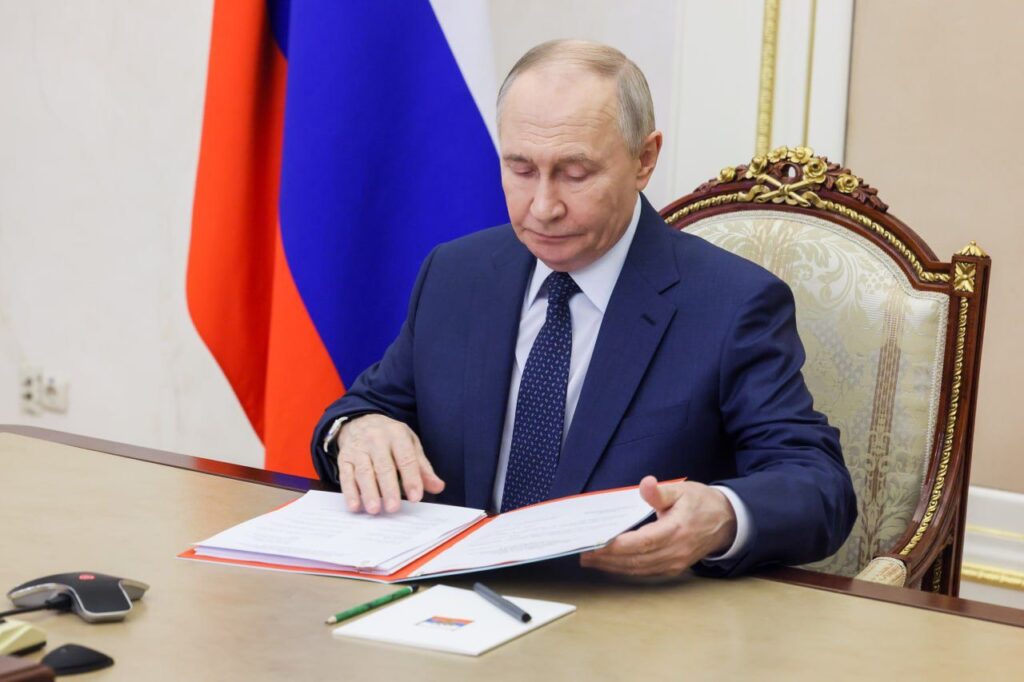
Recall, Russia President Vladimir Putin said the Russian Federation attached great importance to strengthening its long-standing friendly relations with African nations.
Putin in a congratulatory message to African Heads of State and Government on occasion of the 2026 Africa Day celebration, praised African countries for achievements across various sectors of their economies.
The Day often celebrated annually on May 25, marked the 63rd anniversary of the African Union’s establishment in 1963.
He affirmed that the third Russia-Africa Summit would create opportunities to expand mutually beneficial cooperation between Russia and African countries across different sectors.
According to Putin, African countries have recorded notable economic and social progress while gaining greater influence on key international issues.
“Constructive cooperation is expanding within the African Union and several subregional organisations.
“Mechanisms for collective response to local conflicts and crises are also being developed, while integration processes continue to advance steadily,” he said.
Amb. Andrey Podelyshev, Russian Ambassador to Nigeria, also recently espoused on Russia-Africa relations.
He identified economic and technological sectors as key priority areas Russia had advantages that could benefit Nigeria, and Africa at large in the long term.
Podelyshev told journalists, against the backdrop of the Russia Day anniversary commemorations on June 12, that those areas were only a small fraction of what Russia had to offer, showcasing the competencies its companies could bring to the global market, including Nigeria.
“The Russian economy is characterised by a very dynamic growth. As of the end of 2024, the country’s nominal GDP exceeded 201 trillion Rubles.
“This is equivalent to 2.5 trillion dollars at current exchange rate. Russia’s GDP at purchasing power parity reached almost 7 trillion dollars and foreign trade turnover in 2024 estimated at 717 billion dollars,” he said.
Some stakeholders hold the view that although the Russia–Africa Summit has never been held in Africa, it has become important for African leaders to prioritize tapping into Russia’s prospects—especially given the currently low trade volume between the two sides at 25 billion dollars, compared to other global partners.
For foreign affairs analysts, both parties should do more to align their trade volume, even though the total number of African countries participating in the summit has yet to be confirmed.
For context, EU-Africa trade is pegged at 350 billion dollars, and China-Africa trade at 280 billion dollars.
“Russia’s comparative advantage Africa could benefit from to include automobile manufacturing, electric power sector, nuclear energy, oil and gas sector, agricultural machinery, artificial intelligence, and information technology.
“Other areas driving the Russian economy include space exploration, aircraft engineering, oil production, refining and agriculture which have significant scientific and technical potential that should drive conversation during the summit.
“To ensure Africa processes its own products, Pan-African diplomatic engagement with Russia must prioritise diplomacy and trade facilitation. This includes expanding trade finance, enabling local-currency settlements, and co-investing in transport, energy corridors, and regional value chains,” an analyst said.
Nigeria’s Minister of State for Foreign Affairs, Amb. Sola Enikanolaiye, during a pan-African regional engagement, underscored the need for African governments to place trade and economic cooperation at the centre of Pan-African diplomacy.
The roundtable was attended by ministers of states, representatives of the African Union Commission, AUDA-NEPAD, the AfCFTA Secretariat, Afreximbank and the Regional Economic Communities, amongst other stakeholders.
According to the minister, for Nigeria, Africa is the centre piece of our foreign policy.
“We are the continent’s most populous nation, with a young and enterprising population of well over two hundred million people.
“Our stake in an integrated continent is, therefore, concrete. A larger, better-connected African market would be an opportunity for our manufacturers, farmers, innovators and service providers, and equally for theirs,” he said.
More so, Amb. Tunji Asaolu, Secretary-General of the United World Congress of Diplomats (UN-WCD), stressed the need for both parties to adequately invest in education sector, saying education was the most powerful weapon one could use to change the world.
According to him, this will help to improve both parties performance in the development of education programme exchange, cultural exchanges, diplomacy and research in general.
Meanwhile, Ras Mubarak, Leader of Trans-Africa Tourism and Unity Campaign, emphasised the need for visa-free operations across the continent, to foster regional integration, economic growth, and cultural exchange.
He said it had become important for African leaders to embrace a borderless future together, as means of making the dream of an open Africa a reality.
According to him, visa restrictions inhibit people from exploring the culture of different countries from accessing opportunities.
Mr Inusah Ziblim, then Minister-Consular Affairs, Ghana High Commission, Abuja, underscored the need for collaboration by African states to achieve set goals.
“This is not a movement that is looking up to politicians to get things done; if we have got the masses on our side, we would eventually have these things happen,” Ziblim said.
Analysts are of the view that the high-level meeting should help to strengthen strategic partnership between the two parties in multipolar world.
They say this partnership should foster peaceful coexistence, respect for cultural diversity, and mutual non-interference, while uniting both parties in their commitment to driving global economic growth within an emerging multipolar world order.
Notably, discussions during the summit will centre on evaluating the current state and future prospects of Russia-Africa cooperation across key economic sectors.
Specifically, the two sides aim to secure mutually beneficial diplomatic relations by advancing education, security, human capacity development, and energy.
For critical stakeholders, this will be achieved through knowledge and technology transfers, alongside people-to-people exchanges driven by collaborative educational programmes.(NANFeatures)