Prof. Sam Nuhu, a professor of Anaesthesiology at the University of Jos, Plateau, has urged anaesthetists across the country to prioritise patient safety while performing their duties.
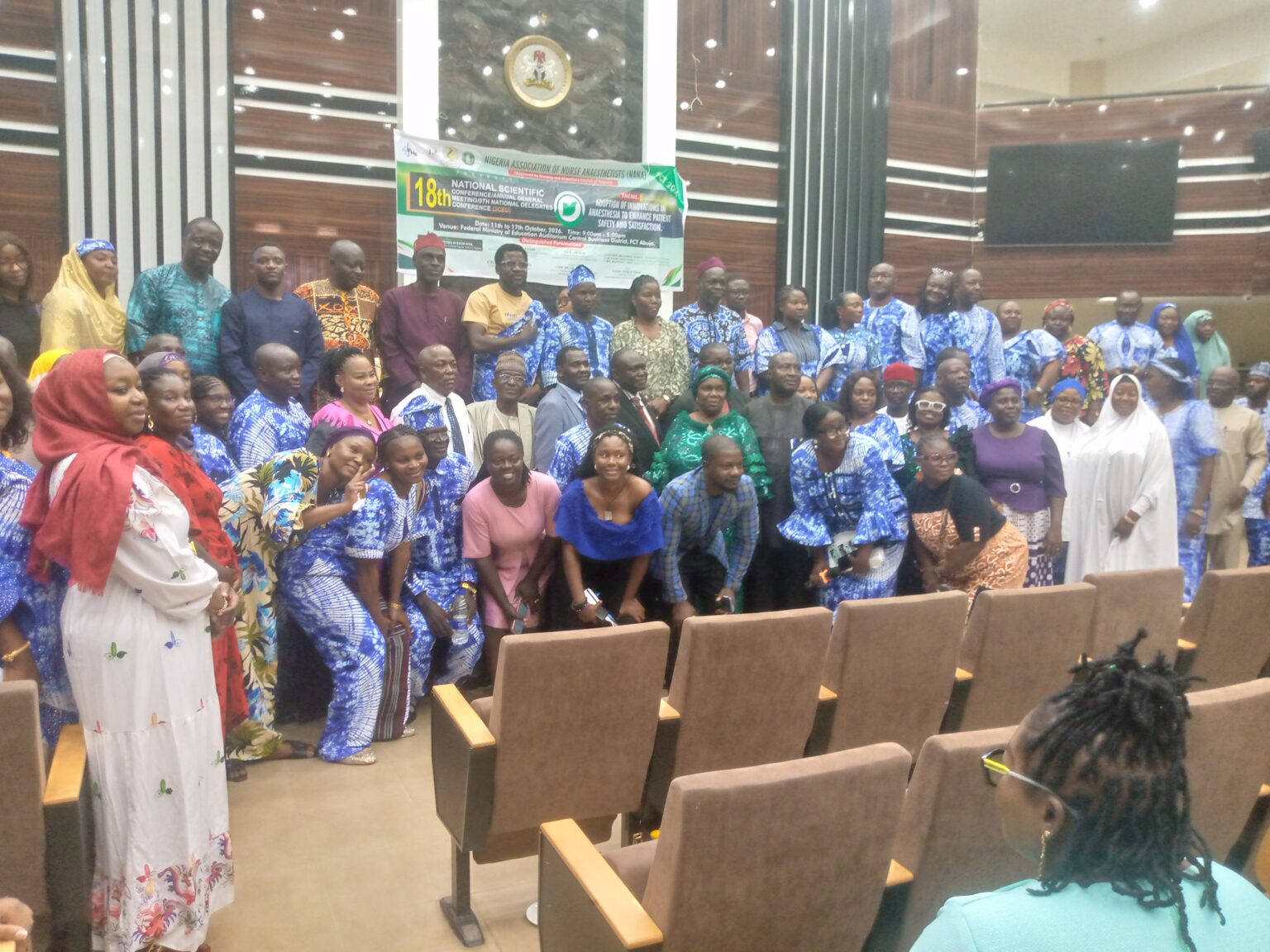
Nuhu gave the advice on Tuesday in Abuja while delivering a keynote address at the 18th National Scientific Conference and Annual General Meeting of the Nigeria Association of Nurse Anaesthetists (NANA).
The News Agency of Nigeria (NAN) reports that the conference coincided with the association’s 9th National Delegates Conference (3CEU), with the theme, “Adoption of Innovations in Anaesthesia to Enhance Patient Safety and Satisfaction”.
Nuhu said anaesthetists were required to make critical decisions while on duty, adding that innovation was sometimes wrongly equated with sophisticated equipment.
“Sometimes innovation is using what we have already, more consistently and more intelligently. Technological innovation has helped to improve anaesthesia. The adoption of technology must be matched by competency.
“Innovation in oxygen therapy is important. Oxygen is one of the most important therapeutic resources in anaesthesia and critical care. Oxygen is a medication for patients and must be administered appropriately.
“Digital technology and Artificial Intelligence can help with electronic anaesthesia records, improve documentation, facilitate audits and make important clinical information more accessible.
“Patients must be satisfied with our adoption of innovation. We must promote professional development, research and equipment maintenance. We must also promote patient-centred care and multidisciplinary collaboration,” Nuhu said.
He urged nurse anaesthetists to always give their best towards the overall development of the healthcare sector.
Dr Adedolapo Fasawe, Mandate Secretary of the FCT Health Services and Environment Secretariat (HSES), said anaesthesia care was fundamental to the success of surgical procedures.
Represented by Mrs Jimi-Bada Chinelo, Director of Nursing, HSES, Fasawe said the rapid growth of digital health had driven innovations in anaesthesia, including modern monitoring equipment, improved airway-management techniques and ultrasound-guided regional anaesthesia.
She said other innovations included effective pain-management strategies, digital health tools and simulation-based professional training.
“However, as we embrace these innovations, it is necessary to appreciate that technology alone does not guarantee safety. Its benefits depend on proper implementation, adequate training and regular maintenance.
“Appropriate clinical protocols and the continued vigilance of skilled professionals are also essential. As healthcare continues to evolve, we must continually explore innovative approaches that make anaesthesia safer, more effective, more accessible and more responsive to patients’ needs.
“Innovative procedures should be guided by evidence, professional standards, risk assessment and the specific needs of our patients and healthcare institutions. Therefore, patient safety must be at the centre of every innovation we adopt,” Fasawe said.
She said innovation should not be adopted merely for its novelty but for its value in improving healthcare delivery and patient outcomes.
On his part, NANA National President, Mr Ejigah Friday, said the association was a professional body dedicated to advancing safe anaesthesia care and providing pain management.
He said the association also administered basic and advanced life support and conducted cardiopulmonary resuscitation during disasters.
“With more than 1,550 members across the nation, we work in all levels of health facilities.
“Simply, behind every surgery or operation in the operating theatre is the anaesthetist who puts you to sleep or keeps you awake, depending on the appropriate technique, but ensures you feel no pain and can become healthier.
“Nurse anaesthetists were brought into the anaesthesia family in the 1970s as a result of an acute shortage of anaesthetists, which still persists today,” Friday said.
Friday said nurse anaesthetists ensured round-the-clock anaesthesia services by working shifts and attending to emergency cases.
He added that nurse anaesthetists played important roles in disaster management, noting that they had previously served as members of the National Emergency Management Agency (NEMA) Corps in the FCT.
Friday said they were often called upon to provide resuscitation during disasters.
He said nurse anaesthetists had also contributed to the training and retraining of other medical personnel during anaesthesia postings.(NAN)