President Bola Tinubu on Sunday called for an urgent overhaul of global governance structure and international financial institutions.
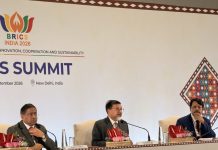
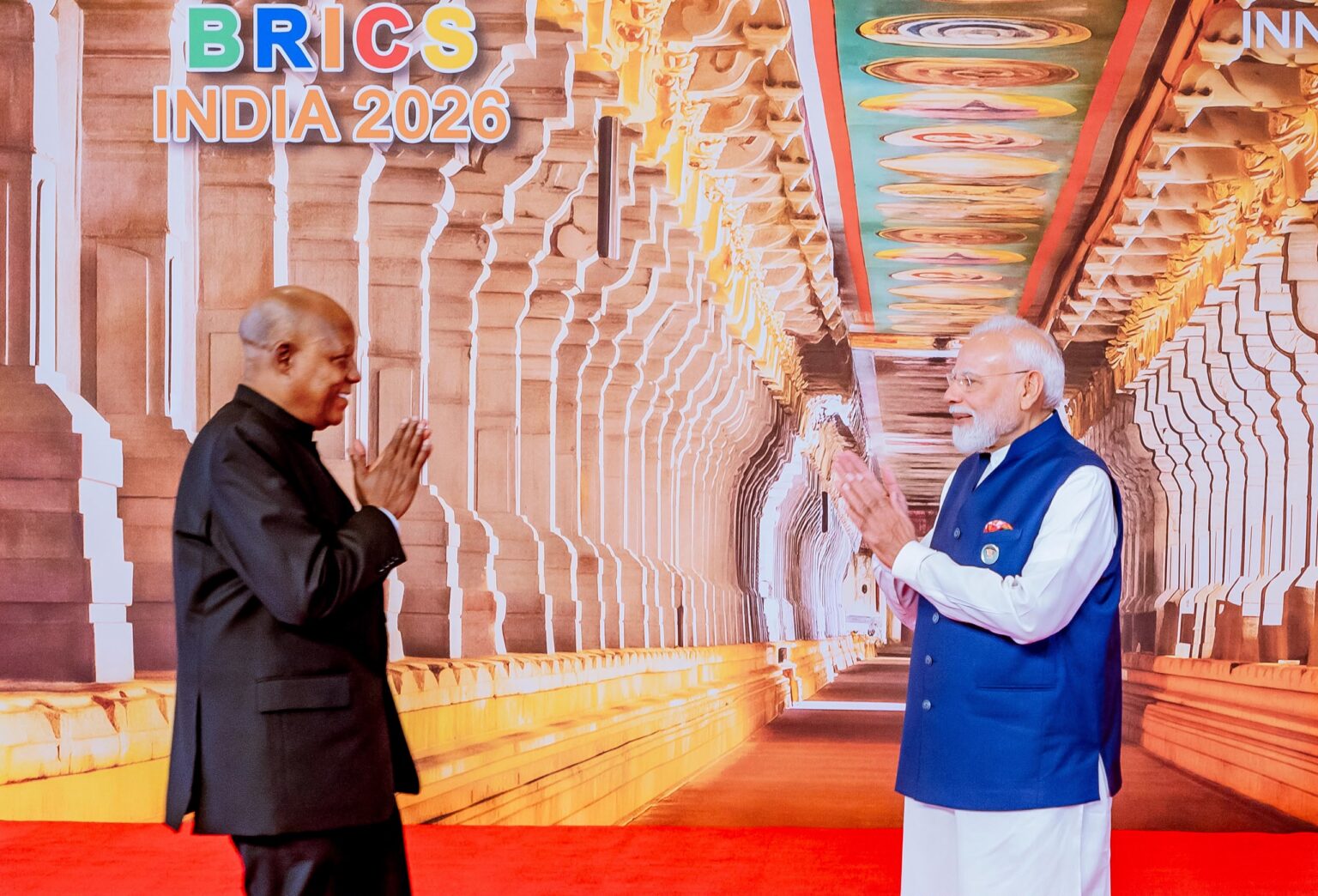
Tinubu, represented by the Vice President Kashim Shettima, made the call at the ongoing 18th BRICS Leaders’ Summit in New Delhi, India.
The News Agency of Nigeria (NAN) reports that Nigeria participated in the session as a BRICS Partner Country, alongside Cuba, Uganda, Belarus, Bolivia, Kazakhstan, Malaysia, Thailand, Uzbekistan and Vietnam.
The session provided an expanded platform for countries outside the core membership to participate in discussions on economic cooperation, development, technology, trade, resilience and sustainable growth.
Speaking at the session, President Tinubu called for more representation, equitable and responsive global governance architecture and international financial system.
The president restated the country’s support for institutions that reflected contemporary economic and demographic realities.
Tinubu said the transformation championed by BRICS must also extend to international system.
“Nigeria supports a more representative, equitable and responsive global governance architecture, including reform of the United Nations Security Council and the international financial system.
“BRICS amplifies the voice of the Global South and advances a more inclusive international order, consistent with Nigeria’s call for institutions that reflect contemporary economic and demographic realities,” he said.
He also presented Nigeria’s case for “a BRICS partnership that moves from dialogue to delivery, from commitments to implementation, and from cooperation to measurable development outcomes.”
Tinubu, while urging foreign investors to take advantage of Nigeria’s investment opportunities, tasked them to view the country “as a gateway to Africa’s expanding market under the African Continental Free Trade Area (AfCTA).”
The president said that Nigeria was resilience in building an economy capable of withstanding global shocks while creating sustainable opportunities for its citizens.
This, he noted, was embedded in his administration’s Renewed Hope Agenda through reforms aimed at strengthening macroeconomic stability, diversifying production, raising productivity, expanding infrastructure and human capital.
“We welcome BRICS cooperation in trade, agriculture, food security, energy, infrastructure, manufacturing, healthcare and critical minerals, especially partnerships that advanced technology transfer, value addition, and employment,” he added.
Tinubu said Nigeria’s young and dynamic population was one of its greatest assets, saying its creativity and enterprise were driving the country’s innovation agenda.
The president outlined key areas of investment to include digital skills, entrepreneurship, research, Artificial Intelligence (AI), and technology-enabled businesses.
“We welcome deeper BRICS cooperation in artificial in AI, digital public infrastructure, fintech, telecommunications, cyber security, biotechnology and advanced manufacturing.
“This is because developing countries must produce technology, create knowledge and own intellectual property. A nation that owns no technology risks renting its future.
“Nigeria sees cooperation with BRICS as a practical opportunity for trade, investment, technology transfer, and human-capital development.
“We support partnerships in infrastructure, connectivity, energy, agriculture, healthcare, education, and industrialisation backed by development finance. “
He also emphasised cooperation in renewable energy, gas, clean technologies, climate-smart agriculture, sustainable infrastructure, and responsible critical-mineral development.
This, according to him, will ensure that climate responsibility drives broader economic growth.
Tinubu expressed Nigeria’s readiness to contribute to a BRICS partnership that was resilient enough to withstand global shocks.
According to him, our partnerships must create jobs, expand trade, transfer technology, and strengthen our nations’ productive capacity.
“We must build a future in which Africa moves from the margins of global development to the frontiers of global growth and innovation,” he maintained.
Earlier, Indian Prime Minister Narendra Modi in his opening address, said confidence in BRICS among countries of the Global South had increased.
“This is because their voices are being heard, their experiences respected and solutions developed with them rather than for them.”
Modi said the strength of BRICS lies in its diversity and cooperation, noting that the bloc was also expanding participation beyond governments to entrepreneurs, farmers, researchers, women, and young people.
“We may be rooted in different realities, but together, we rise through cooperation and blossom for humanity,” he said.
He added that initiatives such as BRICS CONNECT, the BRICS MSMEs Cooperation Portal, and the BRICS Urban Mobility Hub were designed to promote skills, employment, enterprise development and knowledge-sharing among member and partner countries.
The Indian prime minister also stressed the need to balance development with environmental responsibility, saying sustainability must remain central to BRICS cooperation and the interests of future generations. (NAN)