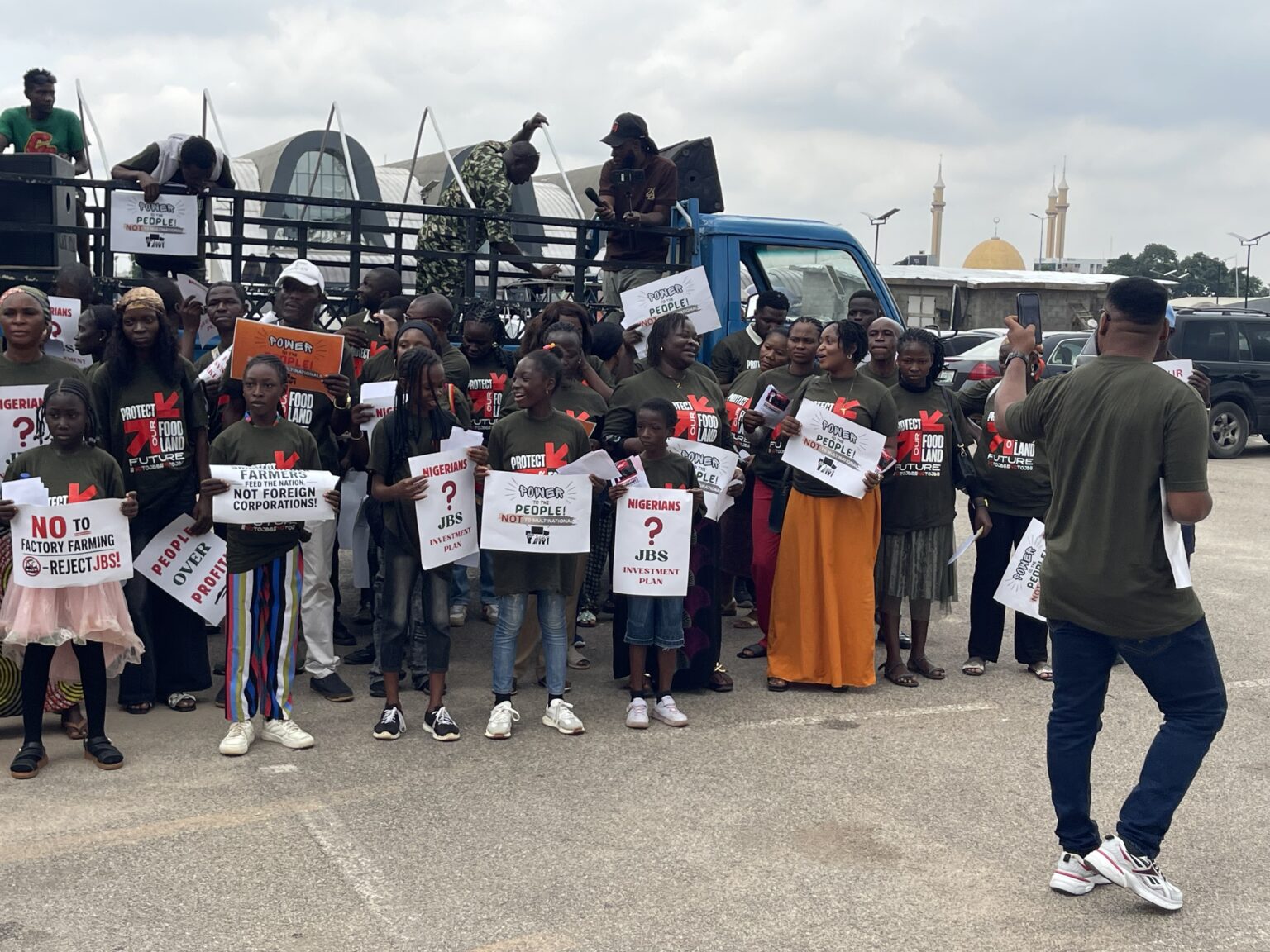
A coalition of Civil Society Organisations (CSOs) has urged the ECOWAS, the African Union, and governments across Africa to prioritise local livelihoods, environmental protection and food sovereignty in investment agreements with multinational companies.
They made the call in an interview with newsmen on the sidelines of a rally on food sovereignty and ecological justice in Abuja.
Mrs Joyce Brown, Programmes Director, Health of Mother Earth Foundation (HOMEF), said governments must look beyond the financial value of foreign investments and consider their potential impact on local economies and communities.
Brown, while speaking on some proposed investment by global business giants company in the continent, said that the government must determine how the deal would affect smaller businesses and other local production.
“It is important that our government looks critically at foreign investment. We must look beyond the financial statements and figures to how our local economies will be affected,” she said.
“Governments and regional bodies must put policies and structures in place to ensure that local producers could continue their businesses and earn sustainable livelihoods despite the entry of multinational companies.
“We call for environmental and social impact assessments to be conducted before such investments were approved,” she said.
Brown urged ECOWAS, AU and other regional institutions to work with national governments to develop policies that would prevent multinational corporations from exerting undue influence capable of placing local communities and food producers at a disadvantage.
She, however, warned that allowing such investments to proceed without adequate accountability and transparency in the continent, could have implications for sovereignty across Africa.
Mrs Mariann Bassey-Olsson, Executive Director, Environmental Rights Action/Friends of the Earth Nigeria (ERA/FoEN), said the CSOs were not opposed to foreign investment but insisted that investments must protect public interests.
She said that such investments should not be assessed merely in terms of jobs, infrastructure and economic growth but also on social and environmental impact.
Bassey-Olsson demanded the disclosure of the Memorandum of Understandings (MoU) for public scrutiny and stakeholders input
“We want to know what the terms of investments are, what lands size will be required, and if environmental impact assessment has been done, in addition to the consequences in water, land and other resources.
She said that transparency was not an indication of opposition to investment, but was necessary to establish the legitimacy and public value of the project.
Bassey-Olsson further expressed concern about the environmental possibility that large-scale investments could have effects on resources in neighbouring countries.
The activist urged African governments to ensure that the locals and indigenous livelihoods do not become spectators in their own land as multinational companies expand across the continent.
She said the issue should therefore be treated as a continental concern, stressing that developments in one African country could influence investment and food-system policies in others. (NAN)