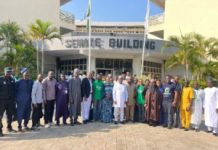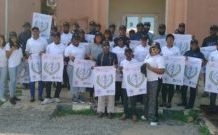
The World Health Organisation (WHO) and stakeholders in Nigerian natural medicine have called for stronger regulation, better documentation, and the integration of traditional medicine into the country’s healthcare system to improve safety, quality, and access to care.
The call was made during the 2026 African Traditional Medicine Day celebration in Lagos on Monday.
The event had the theme: “Reflection of Research and Development Efforts of Traditional Medicine Toward Achieving Universal Health Coverage in the African Region”.
Speakers at the event highlighted the need for closer collaboration between traditional medicine practitioners and conventional medical professionals.
Dr Kim Sungchol, Head of WHO’s Traditional, Complementary and Integrative Medicine (TCIM) Unit, noted that Nigeria has a rich heritage in traditional medicine and strong potential to improve the health and well-being of its people.
He said traditional medicine is already widely used globally.
He noted that a large proportion of WHO member states recognise its use among their populations.
Sungchol disclosed that WHO had adopted the Global Traditional Medicine Strategy 2025–2034.
He said the strategy aimed to promote traditional medicine through evidence-based approaches, stronger regulatory mechanisms, and its appropriate integration into national health systems.
He said the strategy guides governments, researchers, traditional medicine practitioners and other stakeholders on maximising the benefits of traditional medicine.
According to him, it also emphasises that services and products must be safe, effective, and meet quality standards.
He said African Traditional Medicine Day could serve as an important platform for implementing the global strategy on the continent by bringing governments, research institutions, practitioners and other stakeholders together.
According to Sungchol, stakeholders must work more closely to generate evidence on traditional medicine and create clear pathways for integrating appropriate services into national healthcare systems.
He added that for Nigeria, documenting traditional medicine practices was an urgent priority.
He said many traditional medicine practitioners operated at the community level, adding that it was important for Nigeria to systematically document their practices and the herbal medicines used by local communities.
Such documentation, he explained, would provide a foundation for assessing the quality and safety of herbal medicines and determining how they could appropriately contribute to healthcare delivery.
Sungchol also recommended capacity-building programmes for traditional medicine practitioners, particularly in areas such as infection prevention and control.
He said combining relevant aspects of biomedical training with traditional medicine practice could strengthen practitioners’ capacity and address concerns about patient safety.
He further called for clear government policies and regulatory mechanisms covering traditional medicine products and practitioners.
According to him, Nigeria should establish or strengthen mechanisms for licensing traditional medicine practitioners and ensuring that they meet defined standards before their services are incorporated into the national healthcare system.
He said effective regulation would ultimately make it possible to integrate safe and quality-assured traditional medicine services into national healthcare delivery and contribute to the achievement of universal health coverage.
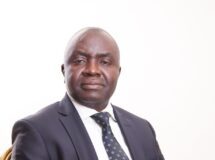
Prof. Martins Emeje, Director-General of the Nigeria Natural Medicine Development Agency (NNMDA), said Nigeria’s hosting of a WHO traditional medicine specialist was significant.
He described it as recognition of the country’s important role in Africa and its long-standing traditional medicine practices.
According to him, traditional medicine and conventional or Western medicine are not rivals.
Both, he said, could complement each other to better address the country’s healthcare needs.
He said the major challenge was not opposition from medical doctors to traditional medicine, but ensuring that traditional medicine practices are properly regulated and backed by scientific evidence.
He noted that the keynote speaker at the event was a medical doctor and consultant endocrinologist.
He described the speaker’s participation as an opportunity to challenge the perception that doctors are inherently opposed to traditional medicine.
Emeje said traditional medicine practitioners should not operate without proper standards.
He added that there was a need for evidence to support the safety and effectiveness of traditional treatments.
He advocated cooperation between conventional medical practitioners and traditional medicine practitioners.
He said neither group should seek to dominate the other.
“Conventional and traditional medicine must work together for the good of our people,” he said.
He added that the priority should be the well-being of patients, not rivalry between the two systems.
He added that practitioners of both systems should understand the limitations and strengths of their respective fields and work within appropriate regulatory frameworks.
Reacting to Sungchol’s presentation, Prof Emeje described his recommendations as a “blueprint” for strengthening traditional medicine in Nigeria, particularly his emphasis on documentation as the starting point.
He thanked the WHO specialist for providing practical recommendations that could guide the development and regulation of traditional medicine in the country. (NAN)