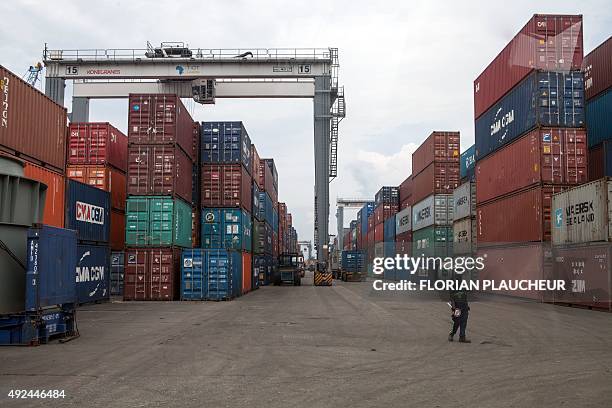
APM Terminals Apapa, Nigeria’s largest container terminal, recorded a six per cent increase in export volumes in the first half of 2026.
The Terminal Managing Director, Mr Kamal Alhraishat, disclosed this in a statement made available to the News Agency of Nigeria (NAN) on Sunday in Lagos.
Alhraishat attributed the growth to the resilience of Nigerian exporters and improvements in terminal operations.
He said exports through the terminal had maintained positive growth over the past five years, reflecting exporter resilience and targeted improvements to facilitate trade.
He said the improvements were aimed at simplifying cargo flows, reducing bottlenecks and improving Nigerian businesses’ access to competitive international markets.
According to him, the markets cover key agricultural commodities and solid minerals.
To encourage exports, Alhraishat said the terminal introduced dedicated export lanes at the gate to accelerate truck entry and reduce waiting times.
“Our role goes beyond handling containers. We aim to make it easier, faster and more competitive for Nigerian exporters to access global markets,” he said.
He identified rail connectivity as key, noting that the Lagos-Moniya service operates three times weekly, providing exporters with an alternative to road haulage.
Alhraishat said the rail option reduced reliance on trucks, improved cargo movement predictability and helped exporters meet vessel cut-off times more consistently.
He added that the terminal received cargo through the Ebute Metta rail corridor, which moved export containers from various parts of Lagos.
According to him, the rail corridor also helps exporters avoid road congestion and improve cargo movement.
Alhraishat said the terminal would continue to create platforms for collaboration across the export value chain to address challenges affecting exporters and logistics service providers.
He said the Exporters Forum, now in its third year, brings together exporters, government agencies, shipping lines and logistics partners.
He said the forum was designed to resolve practical challenges affecting the export process.
“The objective is to translate feedback into practical actions that make Nigerian exports more efficient and competitive. Our next session holds on September 2,” he said.
The Head of Commercial of APM Terminal, Mr Kayode Olufemi-Daniel, said the forum aligned with the Federal Government’s export-led economic drive.
Olufemi-Daniel noted that time was critical for agricultural products, adding that delays could affect their competitiveness in international markets.
He said APM Terminals Apapa remained committed to working with customers and government to reduce delays and strengthen Nigeria’s export ecosystem.
NAN reports that major export commodities handled include soybeans, cashew nuts, cocoa, hibiscus flowers and solid minerals.
These commodities reflect Nigeria’s growing non-oil export base through the Apapa gateway.