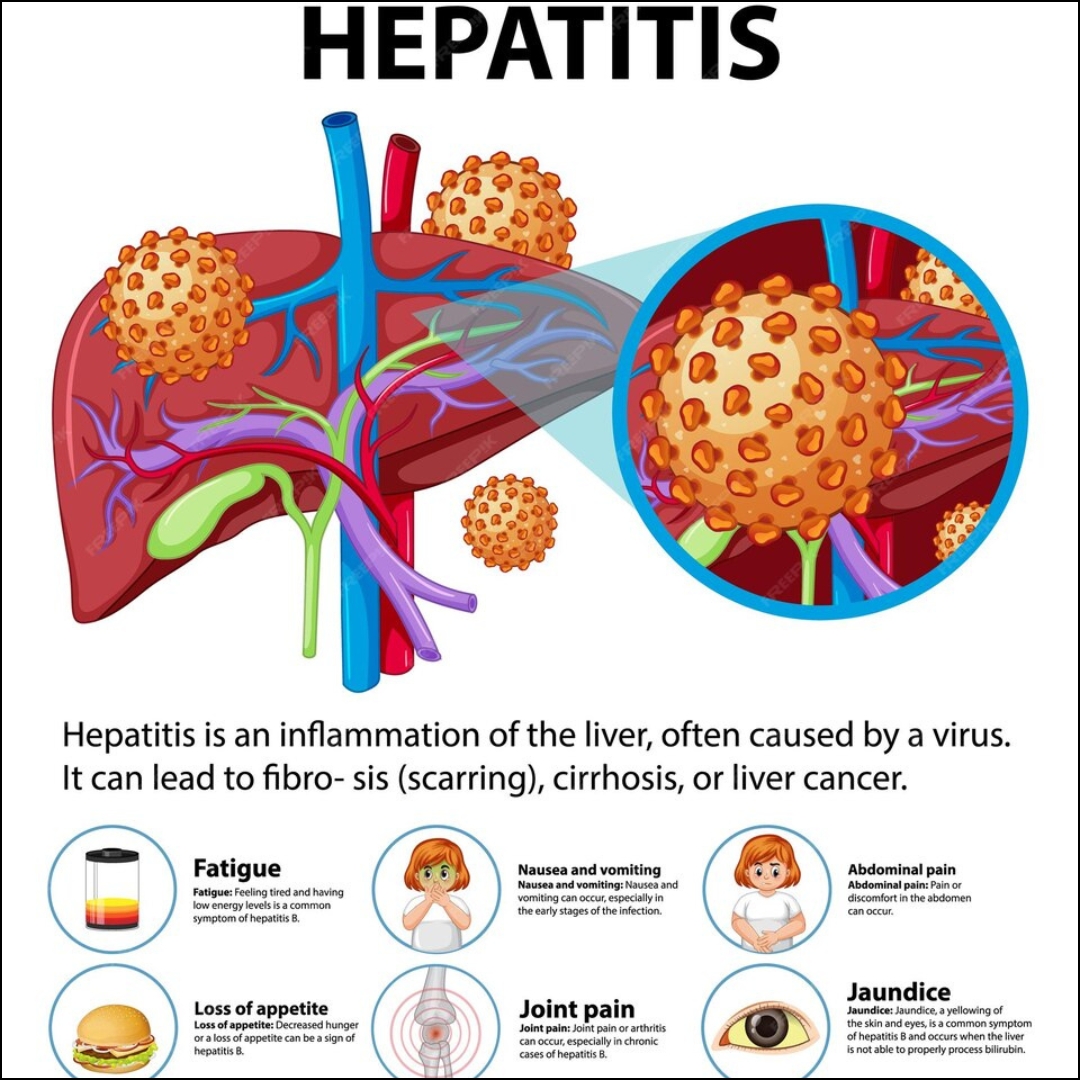
The Kwara Government on Monday in Ilorin inaugurated a comprehensive Viral Hepatitis Elimination RoadMap aimed at eliminating viral hepatitis as a public health threat in the state.
The Kwara Commissioner for Health, Dr Amina El-Imam, said the inauguration marked a significant step in the state’s commitment to preventive healthcare and the attainment of Universal Health Coverage.
She described the roadmap as a strategic blueprint that signaled the state’s definitive commitment to ending viral hepatitis as a public health threat by 2030.
“Viral hepatitis remains a silent killer in our communities.
‘’Recent data indicates that Nigeria accounts for approximately 15 per cent of the global burden of Hepatitis B.
‘’This, the data indicates, is with an estimated 20 million Nigerians living with chronic Hepatitis B or C infection.
“In Kwara, as in the rest of the country, thousands of our citizens are unknowingly living with the virus, facing the risk of progressing to liver cirrhosis and cancer.
“The World Health Organization (WHO) has warned that in spite of the availability of effective vaccines and curative treatments, viral hepatitis remains a leading global health problem,” she said.
El-Imam, however, said that the existence of a burden was not a sentence of despair, rather it was a call to action.
She explained that the roadmap was not a standalone document, but an operational extension of the “Kwara Model” of health system strengthening.
According to her, it aligns with the WHO’s 2030 elimination targets, which aims to diagnose 90 per cent of people living with hepatitis and treat 80 per cent of those eligible.
The commissioner said that through concerted and continuous screening, the government would know the proportion of infected persons in Kwara.
“We will aggressively scale up the Hepatitis B birth-dose vaccination.
‘’As noted in the 2026 Global Hepatitis Report, improving the coverage of the birth-dose vaccine is a top priority for the African region to prevent mother-to-child transmission, ‘’ she said.
She said that the roadmap mandated the integration of hepatitis screening and care into existing Primary Health Centre (PHC) structures, Maternal and Child Health services, and HIV/TB clinics.
El-Imam said that the roadmap ensured decentralisation of care by leveraging on the network of PHCs and General Hospitals.
“It establishes a robust surveillance system to track incidence, prevalence, and treatment outcomes, ensuring our decisions are driven by data rather than assumptions among others,” she said.
Earlier in his opening remark, the Permanent Secretary of the Ministry, Dr Abdullahi Taoheed, said hepatitis remained a significant health concern in the country.
He emphasised that the roadmap would guide the state in strengthening the healthcare and reduction of case burden.
Taoheed appealed to all stakeholders including traditional leaders, religious and community leaders to create awareness of the disease and encourage for testing at early stage.
The Chairman, Technical Working Group, Prof. Abdulfatai Olokooba, explained that the committee utilised existing data, adding that the roadmap was in line with WHO template.
“When faithfully implemented well, the roadmap will help in reduction of the scourge of hepatitis,” he said.
Also in his address, Dr AbdulRasheed Muhammad, the Programme Coordinator HIV/AIDs, Viral Hepatitis, Other STIs Control Unit, described hepatitis as a scourge which caused inflammation of the liver.
He noted that in Nigeria, eight out of every 100 persons were positive for Hepatitis B, which commonly affected young people.
He also described it as a silent infection, where many people were unaware of their status and can spread the virus to others.
‘’Hepatitis B can be spread from receiving unscreened blood, sexual activities, sharing needles, sharing of makeup materials and some cosmetics among others,’’ he said. (NAN)