The Nigeria Revenue Service (NRS) says financial regulators are not opposed to cryptocurrencies but are collaborating to establish a unified framework supporting digital asset growth.
This is contained in a statement on Monday by Mr Oni Olushola, NRS Deputy Director and Tax Controller, Non-Resident Persons Tax Office, following the second Nigeria Stablecoin Summit in Lagos.
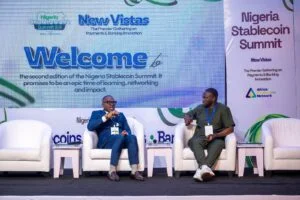
The summit, organised by the Africa Stablecoin Network, brought together policymakers, fintech operators and industry experts to examine virtual assets and cross-border payments.
Olushola said the Central Bank of Nigeria (CBN), Securities and Exchange Commission (SEC), NRS and the Presidency were aligned on creating an enabling digital asset environment.
He described the Presidential Executive Order on Virtual Assets Coordination, 2026, as a significant milestone in regulating cryptocurrencies and virtual assets.
According to him, the order establishes a central governance framework that coordinates regulatory oversight, reduces duplication and improves the ease of doing business.
“What the President has done is to ensure that the virtual asset sector is stable,” Olushola said.
He noted that multiple regulatory agencies previously operated under separate laws, making compliance difficult and discouraging investment and business expansion.
“The new Presidential Executive Order on Virtual Assets Coordination, 2026, will help us better understand the crypto business and protect all parties involved,” he said.
Olushola explained that the order creates a unified regulatory framework and establishes a Virtual Asset Council chaired by the Central Bank of Nigeria.
He added that the government recognised the substantial capital flowing through virtual assets, while tax revenues from the sector remained below potential.
“We are committed to creating a system where digital assets will thrive and Nigeria will become a hub and model for virtual assets in Africa.
“With the new order signed by President Tinubu, we will develop a more friendly policy that supports sectoral growth,” Olushola said.
Addressing compliance, he urged startups and emerging operators to meet tax obligations early rather than waiting until their businesses become larger.
“Don’t wait to be big to start complying with tax laws. Comply to become big. Regulatory compliance can make or break you,” he said.
He described the development as “a new dawn” and assured operators that regulators were working towards an acceptable and unified framework.
“CBN, SEC, NRS and even the Presidency have embraced you. See us as partners in progress,” Olushola said.
He pledged that authorities would design a fair tax system that remains simple for operators to understand and comply with.
Reacting, Africa Stablecoin Network President and summit convener, Nathaniel Luz, described the government’s position as a turning point for African commerce.
Luz said the Executive Order provided regulatory clarity and moves Nigeria’s digital asset industry from uncertainty towards structured implementation.
“For years, the industry operated under a cloud of regulatory ambiguity that stifled institutional participation,” he said.
He said government agencies now recognised digital assets and stablecoins as critical infrastructure supporting trade, remittances and financial inclusion.
“The institutions gathered here are no longer here to speculate; they are here to build the payment rails powering African trade,” Luz said.
He commended the Federal Government for taking what he described as a decisive step toward making Nigeria Africa’s digital asset capital.
Also speaking, Nexply Compliance Chief Executive Officer, Tosin N. Luz, urged operators to balance expansion with strict data privacy compliance.
He stressed the importance of maintaining consumer protection standards as stablecoins and digital asset services continue expanding across markets.
Experts from Sphere Labs, Vale Holdings and the Africa Fintech Network also examined stablecoins’ rapid evolution into mainstream payment infrastructure.
Participants highlighted the growing role of stablecoins in facilitating international transactions and shaping the future of global financial systems. (NAN)