) The Federal Ministry of Health and Social Welfare has urged stakeholders to enforce the International Code of Marketing of Breast-milk Substitutes to promote optimal breastfeeding practices and improve child nutrition in the country.
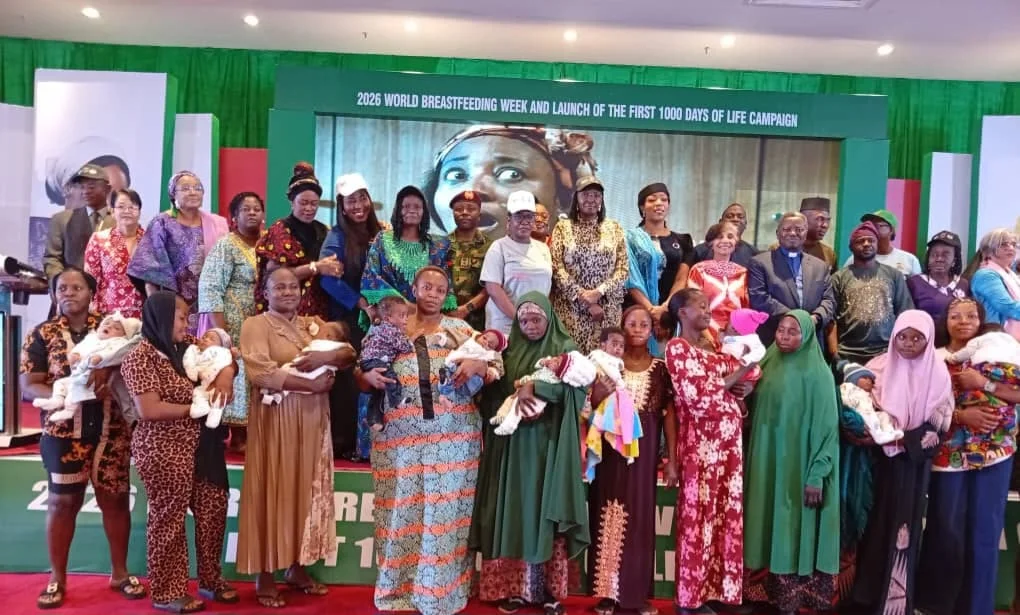
The Coordinating Minister of Health and Social Welfare, Prof. Muhammad Pate, made the call on Monday in Abuja at the commemoration of the 2026 World Breastfeeding Week (WBW) and the launch of the First 1,000 Days Life Nutrition Social and Behaviour Change (SBC) Campaign.
The News Agency of Nigeria (NAN) reports that the 2026 WBW has the theme: “Breastfeeding for a Sustainable Start in Life: Strengthen What Works.”
Represented by the Permanent Secretary of the ministry, Ms Daju Kachollom, Pate said the campaign was aimed at promoting exclusive breastfeeding and improved nutrition during the first 1,000 days of life.
He described the period as a critical window that shapes a child’s growth, brain development, future productivity and lifelong health.
According to him, poor nutrition during the period results in irreversible consequences, including stunting, impaired cognitive development, weakened immunity and reduced economic potential.
“The theme of this year’s World Breastfeeding Week reminds us that breastfeeding is a life-saving intervention and one of the smartest investments for building healthier children, stronger families and resilient communities.
“‘Strengthen What Works’ means reinforcing policies, quality health services, baby-friendly workplaces, supportive communities and enforcement of the International Code of Marketing of Breast-milk Substitutes.
“Nigeria continues to face the triple burden of malnutrition comprising undernutrition, micronutrient deficiencies and rising overweight and obesity,” he said.
Pate noted that although breastfeeding remained one of the most effective interventions for child survival, optimal breastfeeding practices in Nigeria were still low.
According to him, while 95 per cent of mothers breastfeed, only 36 per cent initiate breastfeeding within one hour of birth, while just 29 per cent exclusively breastfeed for the first six months.
He reaffirmed the Federal Government’s commitment to protecting, promoting and supporting breastfeeding, particularly during the first 1,000 days of life.
In her keynote address, the Senior Special Assistant to the President on Public Health, Mrs Uju Rochas-Anwukah, described breast milk as the most powerful public health intervention available to any nation.
She said the theme of the celebration was a call to action for families, communities and governments to strengthen support for exclusive breastfeeding.
According to her, breast milk contains all the nutrients an infant requires during the first six months of life.
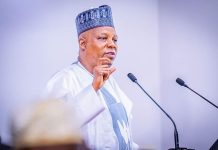
Rochas-Anwukah said Vice-President Kashim Shettima had directed that breastfeeding be treated not merely as a maternal choice but as a national investment.
“A breastfed child is a healthier child, a smarter child and a more productive citizen in waiting.
“This campaign must not end in Abuja; it must extend to all the 774 local government areas through the Nutrition 774 framework and reach every ward, primary healthcare centre and household,” she said.
The Deputy Representative of UNICEF Nigeria, Dr Rownak Khan, described exclusive breastfeeding as a child’s first protection against illness, malnutrition and preventable deaths.
Khan said breastfeeding also laid a strong foundation for learning, productivity and human capital development.
According to her, evidence has consistently shown that scaling up breastfeeding can prevent hundreds of thousands of maternal and child deaths while improving children’s cognitive development.
Also speaking, the Director of Nutrition, Federal Ministry of Budget and Economic Planning, Dr Clementina Okoro, called for greater support for nursing mothers.
Okoro, who represented the National Committee on Food and Nutrition, said breastfeeding must be promoted, protected and supported through coordinated action by all stakeholders.
The Executive Secretary of Civil Society Scaling Up Nutrition in Nigeria (CS-SUNN), Mr Sunday Okoronkwo, described exclusive breastfeeding as the foundation for human capital development, healthier communities and sustainable national development.
Represented by the Programme Manager, Mr Ridwan Awosanya, Okoronkwo urged governments at all levels, employers, the private sector, communities and development partners to strengthen policies and support systems that enable mothers to initiate breastfeeding early.
He also advocated for policies that promote the practise of exclusive breastfeeding for six months and continued breastfeeding in line with global recommendations.
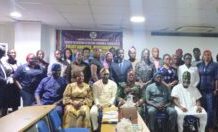
NAN reports that the event featured an interactive session in Pidgin English with breastfeeding mothers drawn from the six Area Councils of the Federal Capital Territory (FCT).(NAN)