The Federal Government has unveiled a seven-week implementation roadmap for the proposed National Policing Bill, designed to provide the legal and operational framework for state police in Nigeria.
Chief of Staff to the President and Chairman of the Presidential Working Group on the National Policing Bill, Mr Femi Gbajabiamila, disclosed this on Monday during a briefing at the Presidential Villa, Abuja.
Gbajabiamila also announced an open call for memoranda and proposals from Nigerians and stakeholders, saying submissions could be made through www.nationalpolicingbill.com on or before Aug. 13.
He said the approved work programme would run from July 27 to Sept. 14, with the Executive Bill package scheduled for presentation to President Bola Tinubu on Sept. 3 (today).
“The timetable is demanding, but it is not a shortcut. Legal drafting, policy research, data analysis and implementation modelling will proceed in parallel, with fixed review gates,” he said.
He addes that the proposed legislation would address recruitment, training, funding, command structure, jurisdiction, accountability, intelligence sharing and cooperation between federal and state police institutions.
Gbajabiamila noted that although the Senate and House of Representatives approved constitutional proposals for state police, the amendment process still required approval by State Houses of Assembly.
“The constitutional amendment creates the authority and broad architecture for federal and state policing. However, it does not, by itself, provide the complete operating system,” he said.
According to him, no state police service currently exists while the Nigeria Police Force remains the constitutionally recognised policing institution.
He said the Nigerian president established the presidential working group to ensure the country was fully prepared when the constitutional process was concluded.
“Our mandate is to produce a technically robust, implementation-ready draft National Policing Bill and supporting legislative package,” he said.
The chief of staff explained that the assignment includes a legal audit of policing laws, national minimum standards, state readiness certification, federal-state cooperation mechanisms and independent complaints institutions.
He also announced a multi-disciplinary Policy Advisory Committee, to be chaired by Justice Mohammed Liman, to provide policy and technical oversight for the process.
On concerns about abuse of state police powers, he said government would balance local policing authority with strong national safeguards.
“State Police cannot mean thirty-six state militias, just as national standards cannot become a disguised method of re-centralising day-to-day state policing,” he said.
He also said no political office holder would be allowed to direct the arrest of opponents or use policing institutions for partisan purposes.
“Officers must answer to the Constitution and the law, not to personal or partisan instruction,” he emphasised.
Gbajabiamila further said that no state would commence policing operations without demonstrating readiness in recruitment, training, discipline, oversight, firearms control, data management and financial sustainability.
“National standards will be the baseline; states may establish higher standards; however, no Nigerian should receive a lower standard of protection because of where they reside.
“Safeguards are not obstacles to state police; they are what make it credible, lawful and sustainable,” he said.
Earlier, the Attorney-General of the Federation and Minister of Justice, Lateef Fagbemi (SAN), said minimum national standards would prevent political persecution and guarantee equal protection for Nigerians regardless of location.
Gov. Dapo Abiodun of Ogun, who is a member of the working group, described the proposed national policing bill as one of the most consequential reforms of the Tinubu administration.
He said the legislation would define federal and state police responsibilities, address funding, jurisdiction and firearms control, and provide the framework for effective state policing.
The Federal Government says the reform will strengthen Nigeria’s security architecture and create a policing system better suited to Nigeria’s size, diversity and evolving security realities.
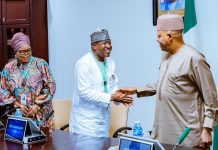
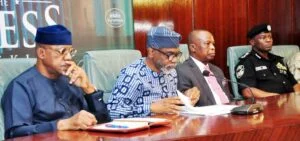
Present at the briefing were the Inspector-General of Police, Olatunji Disu; President of the Nigerian Bar Association, Afam Osigwe, Chairman, Policy Advisory Committee, Justice Abdullahi Liman; and Special Adviser to the President on Planning and Research, Nnadubem Moghalu.(NAN)