Prof. Olayemi Akinwumi has urged the Federal Government and military authorities to establish mechanisms for retaining the expertise of experienced military officers retired following appointments of new service chiefs.
Akinwumi, a former Vice Chancellor , Federal University Lokoja, made the call on Thursday in Abuja, while reviewing a book titled, “In the Line of Duty”, an autobiography by retired Maj.-Gen. Muhammad Aliyu.
He said Nigeria could not afford to lose decades of military experience and institutional knowledge without adequately harnessing them for national development.
The book examines the officer’s military career, family life, life-changing accident and retirement of the author.
The reviewer said the 17-chapter book was organised into five broad thematic areas, with the final section highlighting the institutional implications of losing experienced military personnel through abrupt retirement.
He said the military and government must rethink the practice of disengaging senior officers without creating opportunities to utilise their accumulated knowledge and experience.
Akinwumi cited the author’s experience after 35 years of service, when he attained the rank of Major-General but was required to retire following the appointment of a new service chief.
“The book offers an important message that military leadership and the broader government cannot afford to ignore: Nigeria must stop wasting valuable human resources,” he said.
In the book, Aliyu expressed concern that appointments of service chiefs were often influenced by political considerations rather than strictly by seniority or qualification.
He also lamented that the practice could deprive the military of valuable expertise that could benefit incoming leadership.
The Chairman of the occasion and former Minister of Defence, retired Lt.-Gen. Aliyu Gusau, commended Aliyu for documenting his military career, describing the autobiography as a valuable contribution to Nigeria’s institutional memory.
Gusau, who was represented by Maj.-Gen. Mohammed Idris, said military experience should not be lost after retirement, urging senior officers to preserve their professional knowledge through writing and other forms of documentation.
He also proposed a structured military oral history and professional experience documentation programme in military educational institutions to preserve the experiences of senior officers for research, teaching and leadership development.
He said such a programme would strengthen institutional learning, adding that “retirement may bring an end to formal military responsibilities, but it need not bring an end to meaningful service.”
In a goodwill message, former Chief of Defence Staff, retired Gen. Martin-Luther Agwai, said military service exposed officers to diverse experiences and responsibilities that remained useful beyond active service.
Agwai said the military equipped officers with skills in management, logistics, transformation and leadership, which other institutions could also benefit from.
He stressed that retirement should not end an officer’s contribution to national development, adding that retired personnel could continue serving in different capacities by drawing on their professional experience.
The former defence chief also called for greater recognition of individuals while they were alive, saying it was important for people to receive appreciation and hear others acknowledge their contributions.
He said Aliyu’s experience demonstrated that physical limitations did not diminish an individual’s capacity to contribute to society, describing his resilience as an inspiration to young Nigerians.
Agwai urged the author to use his experience to inspire young officers and professionals to embrace sacrifice, patriotism and service to the country.
Similarly, former Chief of Army Staff, retired Lt.-Gen. Tukur Buratai, described Aliyu as an exemplary officer whose resourcefulness, resilience and commitment to duty distinguished him throughout his military career.
Buratai recalled Aliyu’s service as Commander of 21 Brigade in Bama and later as General Officer Commanding 3 Division during counter-insurgency operations in the North-East.
He said Aliyu demonstrated ingenuity in addressing operational challenges, particularly when inadequate communication equipment affected military operations in the theatre.
“When I assumed office as Chief of Army Staff in 2015, we realised that communication was a major challenge confronting troops in the theatre.
“However, through his ingenuity and innovation, General Aliyu was able to procure radio communication equipment with limited resources, enabling effective communication within his brigade,” he said.
Buratai said Aliyu’s resourcefulness informed his decision to support the officer’s elevation to greater command responsibilities.
Buratai described the officer’s experience as an important lesson in military leadership and human resource management.
“A wounded officer is not a wasted officer,” he said.
He said Aliyu’s story demonstrated that military institutions could continue benefiting from experienced personnel by adapting responsibilities to their capabilities.
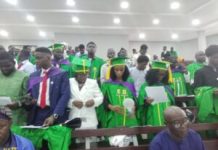
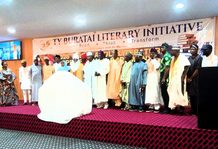
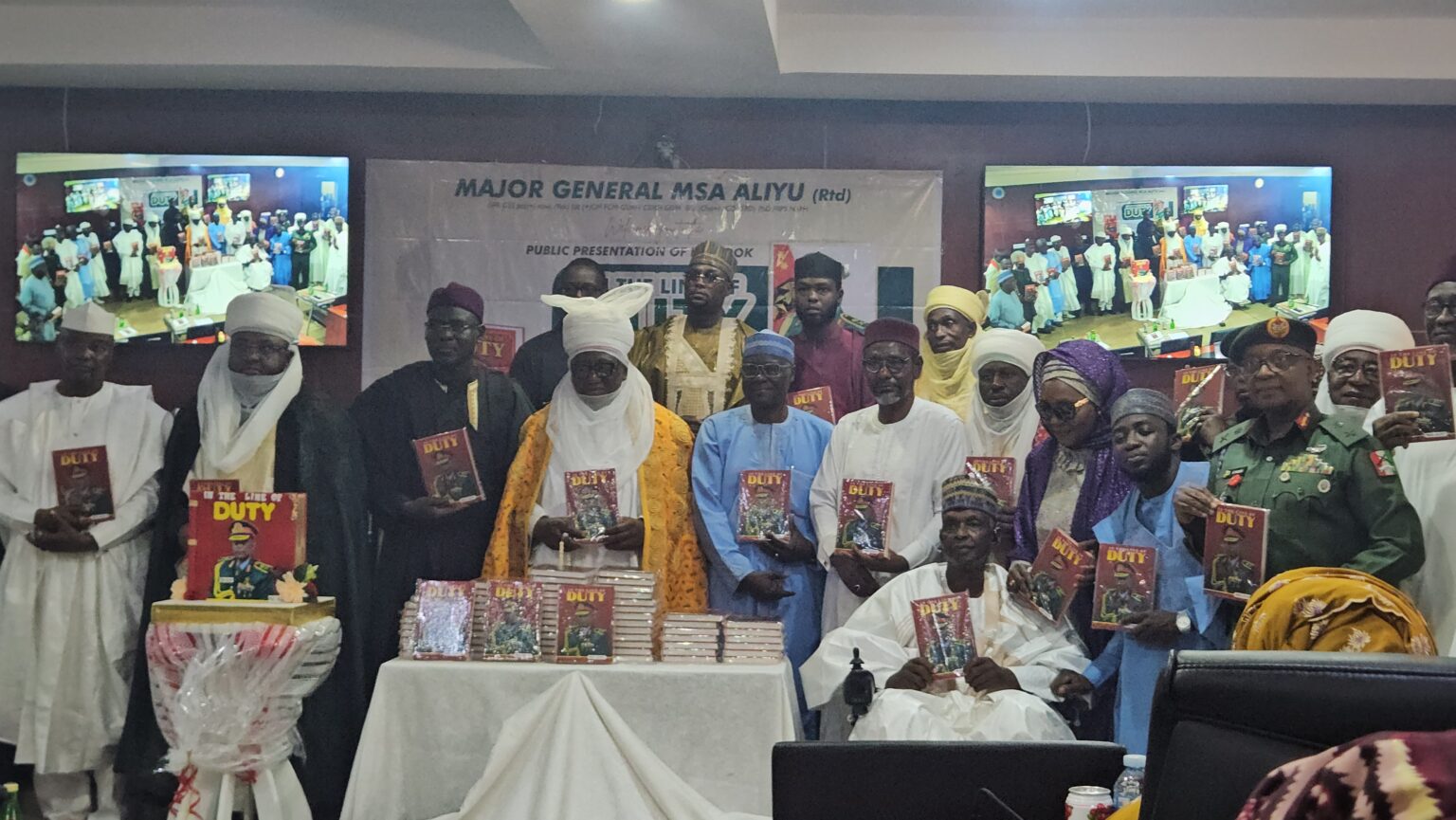
The book presentation brought together former military chiefs, senior officers, members of the National Assembly, academics and other dignitaries to reflect on military service, leadership, resilience and the preservation of institutional knowledge. (NAN)