The End Cervical Cancer Nigeria Initiative (ECCNI) has inaugurated the “Operation Teal-Up Nigeria” advocacy campaign to mobilise nationwide action to eliminate cervical cancer.
The initiative was unveiled virtually to mark World Cervical Cancer Elimination Day, held annually on Nov. 17, with this year’s theme, “Together We Can Eliminate Cervical Cancer”.
The global movement focuses on driving progress toward the World Health Organisation’s (WHO) 90–70–90 targets by 2030.
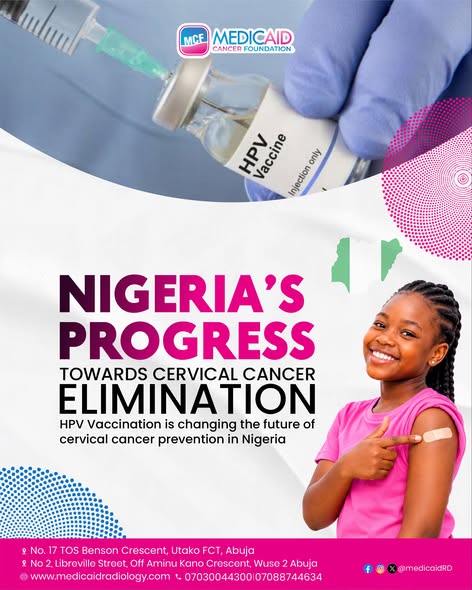
The WHO 2030 targets 90 per cent of girls fully vaccinated against human papillomavirus (HPV) by age 15 and 70 per cent of women screened with a high-performance test at ages 35 and 45.
It also targets 90 per cent of women identified with pre-cancer treated and 90 per cent with invasive cancer managed.
Dr Qudus Lawal, Executive Director of ECCNI, said cervical cancer remains one of the leading causes of cancer-related deaths among women globally, with Nigeria bearing a significant burden of the disease.
Lawal disclosed that the campaign leverages the symbolic significance of teal, which represents cervical cancer awareness, and the anniversary of the WHO’s 2020 inauguration of the global elimination strategy.
He said the initiative seeks to galvanise Nigerians, communities, and stakeholders to commit to the WHO global strategy targets to eliminate cervical cancer.
According to him, time is running out ahead of the 2030 target deadline.
“The clock to 2030 is ticking, and there is an urgent need to scale up interventions if Nigeria is to achieve the elimination goal and ensure no woman is left behind,” he said.
To drive grassroots participation, Lawal urged members of the public, media and civil society organisations to participate in symbolic and advocacy activities.
He emphasised that eliminating cervical cancer in Nigeria requires sustained collaboration among individuals, communities, government agencies and development partners.
Similarly, Dr Ishiak Lawal, Chairman, ECCNI Board, said collective action was crucial to tackling the public health challenge.
“Unified efforts yield far greater impact than isolated interventions,” he said.
He commended the Federal Government for its ongoing interventions against the disease, including vaccination and screening scale-up, while urging increased budgetary allocation and sustained funding. (NAN)