The Foundation for Partnership Initiatives in the Niger Delta (PIND) has called for stronger stakeholder collaboration and investment to improve farmers’ access to quality seeds.
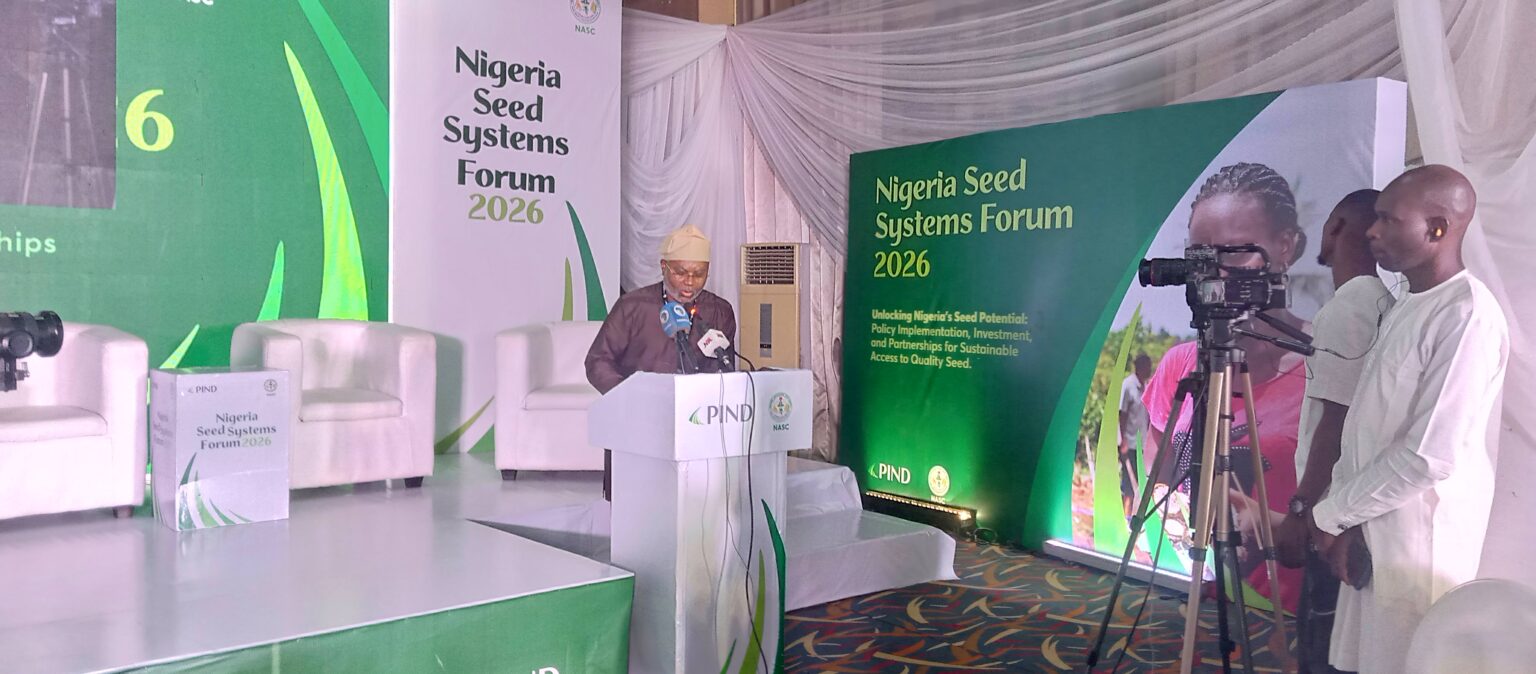
The Executive Director of PIND, Mr Sam Daibo, made the call at the Nigeria Seed Systems Forum in Abuja on Tuesday.
He said improved access to quality seeds would boost agricultural productivity, increase farmers’ incomes and strengthen food security.
The forum, convened by PIND in collaboration with the National Agricultural Seeds Council (NASC), was themed: “Unlocking Nigeria’s Seed Potential: Policy Implementation, Investment and Partnerships for Sustainable Access to Quality Seed”.
The News Agency of Nigeria (NAN) reports that the forum brought together institutions involved in seed regulation, financing, production and distribution to address barriers limiting farmers’ access to quality planting materials.
Daibo said quality seeds were critical to higher yields, stronger resilience, reliable incomes and competitive agricultural value chains.
“Every harvest begins long before a farmer enters the field. It begins with a seed and with the confidence that the seed is genuine, adapted, available at the right time and affordable.
“If that first link fails, every other investment in agriculture is placed at risk,” he said.
He stressed that improved seed varieties would have limited impact without effective distribution, accessible financing and farmers’ confidence in their quality.
“A promising variety that remains in a research station cannot raise a farmer’s yield. Certified seed that does not reach the last mile cannot improve livelihoods.
“The real measure of a seed system is not only what it produces on paper, but what reaches farmers’ fields with quality and trust intact,” he said.
Daibo identified high production costs, limited access to finance, slow certification processes and weak distribution networks as major constraints affecting the sector.
He also cited the mismatch between breeders’ output and commercial demand, delays in moving improved varieties from research to production, inconsistent seed quality and inadequate product information.
He, however, noted that Nigeria had recorded progress through electronic seed certification, plant variety protection, decentralised quality assurance and community-based seed production.
According to him, the forum was designed to connect policy, regulation, research, finance, enterprise and market delivery to address the challenges.
He said the seed system required coordinated efforts among regulators, researchers, seed companies, financiers, distributors, extension providers, development partners and farmers’ organisations.
“Regulation cannot succeed without credible producers. Producers cannot scale without research, finance and distribution. Investors need transparent rules and viable enterprises.
“Farmers need confidence that the seed they buy will perform as promised. Each part of the system depends on others,” he said.
Daibo described the forum as the first major joint deliverable under the two-year Memorandum of Understanding (MoU) signed by PIND and NASC on Sept. 10.
He said the agreement combined NASC’s regulatory and quality assurance leadership with PIND’s expertise in market systems, enterprise development and networks across the Niger Delta.
According to him, PIND’s role is to strengthen existing institutions, partnerships and commercial incentives rather than create parallel structures.
He said the foundation would bring lessons from its engagement in the Niger Delta, while working with NASC to address seed access challenges requiring national coordination.
“NASC brings the mandate, technical leadership and sector reach required to protect quality and build confidence. PIND brings facilitation, market evidence and experience in connecting public institutions, enterprises and farmers.
“This forum is where those strengths meet the wider capabilities of everyone,” he said.
Daibo said the engagement was expected to generate evidence, improve efficiency, protect seed quality, develop farmer-centred interventions and promote commercially viable investments in the seed sector. (NAN)