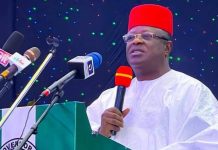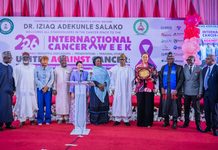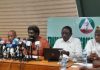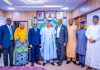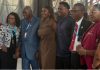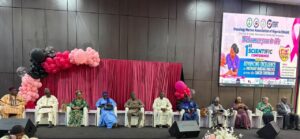
The Minister of State for Health and Social Welfare, Dr Iziaq Salako, has called for greater involvement of oncology nurses in health policy and cancer care.
Salako made the call during the opening ceremony of the first National Scientific Conference of the Oncology Nurses Association of Nigeria (ONAN) on Wednesday in Abuja.
The conference has the theme: “Advancing Excellence in Oncology Nursing Practice Across the Cancer Care Continuum.”
Salako who was represented by Dr Uchechukwu Nwokwu, the National Coordinator, National Cancer Control and Nuclear Medicine Programme, said cancer was complex and required coordinated efforts by different health professionals, with nurses playing important roles across the healthcare system.
“The policy space is for every one of us. It is not owned by the Minister of Health.
“Nurses should be part and parcel of the policy development and implementation process,” he said.
Salako said nurses were present across primary, secondary and tertiary healthcare levels and had important roles in cancer care.
“In cancer care, they have a very important role to play.
“Particularly at the primary healthcare level, in early detection, screening and prompt diagnosis.”
The minister said cancer’s complexity made multidisciplinary collaboration essential to effective treatment and patient care.
He assured oncology nurses of the ministry’s commitment to strengthening their skills and ensuring their rightful place within the health system.
“We are open to ensuring that nurses get their rightful place in terms of skills, in terms of position.
“Also in terms of the relationship with other professionals within the health system.”
The ONAN President, Siraju Marafa, an oncology nurse at Usmanu Danfodiyo University Teaching Hospital, Sokoto, said the conference marked an important beginning for oncology nurses seeking to strengthen their practice and improve cancer care.
Represented by the Vice President of the association, Joyce Asufi, Marafa said oncology nurses remained closely involved with patients throughout their cancer journey, providing care during some of treatment’s most difficult stages.
“We sit with patients through long infusions. We explain difficult diagnoses to frightened patients and their families.
“We manage pain and side effects, and we stay close when treatment ends and care turns to comfort.”
Marafa said many oncology nurses had learned in isolation, making the conference an opportunity to exchange knowledge and strengthen the profession.
He said the conference addressed the full continuum of cancer care, from prevention and early detection to treatment, survivorship, palliative and end-of-life care.
Marafa identified specialist training, early detection, access to treatment and workplace safety as key challenges facing oncology nursing practice.
He, however, called for better protection for nurses who prepare and administer cytotoxic drugs and work around radiation.
“Too many of us do this without adequate protective equipment, safe handling systems, or regular monitoring.
“We are asking government to partner with us to make our workplaces safer,” he said.
He also called for more opportunities for oncology nurses to receive specialist training at home and abroad.
Marafa also called for incentives to encourage more nurses to specialise in oncology nursing.
The President of the Nigerian Cancer Society (NCS), Prof. Abidemi Omonisi
said the shortage of qualified oncology nurses remained a concern in the country.
Omonisi said many hospitals lacked qualified oncology nurses, with some facilities relying on interested nurses or those seconded to cancer units.
“There are some staff who show interest or are seconded, but the oncology nurse is a component of the multidisciplinary team structure.
“Where there is no qualified oncology nurse, that position is vacant.”
He urged more nurses, particularly nursing students, to consider oncology as a specialised field and take advantage of training and mentorship opportunities.
Omonisi also stressed the importance of collaboration among health professionals, saying no single professional group could address cancer patients’ complex needs alone.
Yemisi Daodu, a 25-year old colon cancer survivor, said encouragement from an oncology nurse gave her confidence to continue treatment.
“She gave me all the confidence that I should not worry, it will be better, it will be okay.
“It’s important to start the treatment and to end it. Early detection, early treatment saves lives.”
Daodu urged people to seek medical attention when they noticed concerning symptoms rather than allowing fear of cancer to prevent them from getting tested.
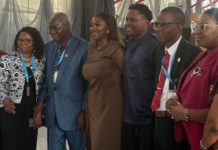
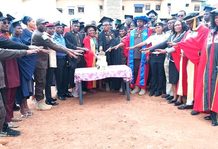
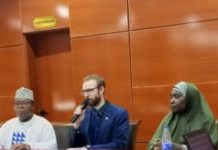
The News Agency of Nigeria (NAN) reports that the conference brought together oncology nurses, cancer specialists, policymakers, survivors and other stakeholders to discuss ways of strengthening cancer care in Nigeria. (NAN)