Non-custodial
The Nigerian Correctional Service (NCoS) has established Non-Custodial Services Directorates in all 36 states of the federation and the Federal Capital Territory (FCT).
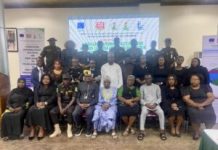
The NCoS Controller-General, Mr Sylvester Nwakuche, disclosed this at a high-level national policy dialogue and peer learning on the implementation of non-custodial measures in Nigeria on Wednesday in Abuja.
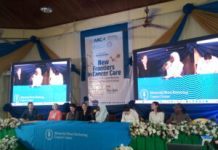
The News Agency of Nigeria (NAN) reports that the dialogue is organised by the Prisoners Rehabilitation and Welfare Action (PRAWA), with support from the Rule of Law and Anti-Corruption in Nigeria (RoLAC II) Programme, implemented by International Institute for Democracy and Electoral Assistance (IDEA).
The event is themed “From Practice to Policy: Strengthening the Effective and Sustainable Implementation of Non-Custodial Measures in Nigeria”.
Nwakuche, represented by the Assistant Controller-General in charge of Non-Custodial Measures, Mr Dabit Timothy, said the establishment of the directorates was part of efforts to translate the provisions of the NCoS Act 2019 into practical implementation.
He said the Act marked a paradigm shift from punitive incarceration to restorative and corrective justice.
According to him, Section 3(7) of the Act empowers the service to administer non-custodial measures, including community service, probation, restorative justice and other alternatives to imprisonment.
“We have moved from policy to practical impact on implementation.”
Nwakuche said the service had deployed trained non-custodial officers and strengthened collaboration with the Judiciary, Ministries of Justice, the Police and state governments.
He said courts were increasingly applying non-custodial sentences to minor offenders, contributing to the reduction of overcrowding in custodial centres.
According to him, the impact is also seen in the reintegration of offenders through the supervision of community service.
He said non-custodial measures had helped to decongest custodial facilities, reduce government expenditure on feeding and strengthened community trust.
“Non-custodial measures have provided second chances, preserved family ties and promoted true reformation,” he said.
Dr Toyin Badejogbin, Project Manager, Criminal Justice Reform, RoLAC II Programme, called for adequate and sustained funding to consolidate Nigeria’s non-custodial reforms.
Badejogbin said although significant progress had been made in establishing the legal, institutional and operational framework, sustainability remained a major concern.
He said international IDEA had partnered with PRAWA because of its demonstrated capacity to address longstanding challenges within Nigeria’s justice system.
“The partnership recognised the opportunity to tackle perennial challenges, particularly congestion in custodial facilities and the protection of the rights of persons in conflict with the law,” he said.
NAN reports that the RoLAC initiative is funded by the European Union and implemented by the international IDEA.(NAN)