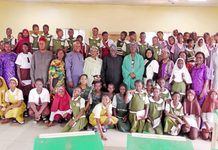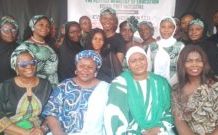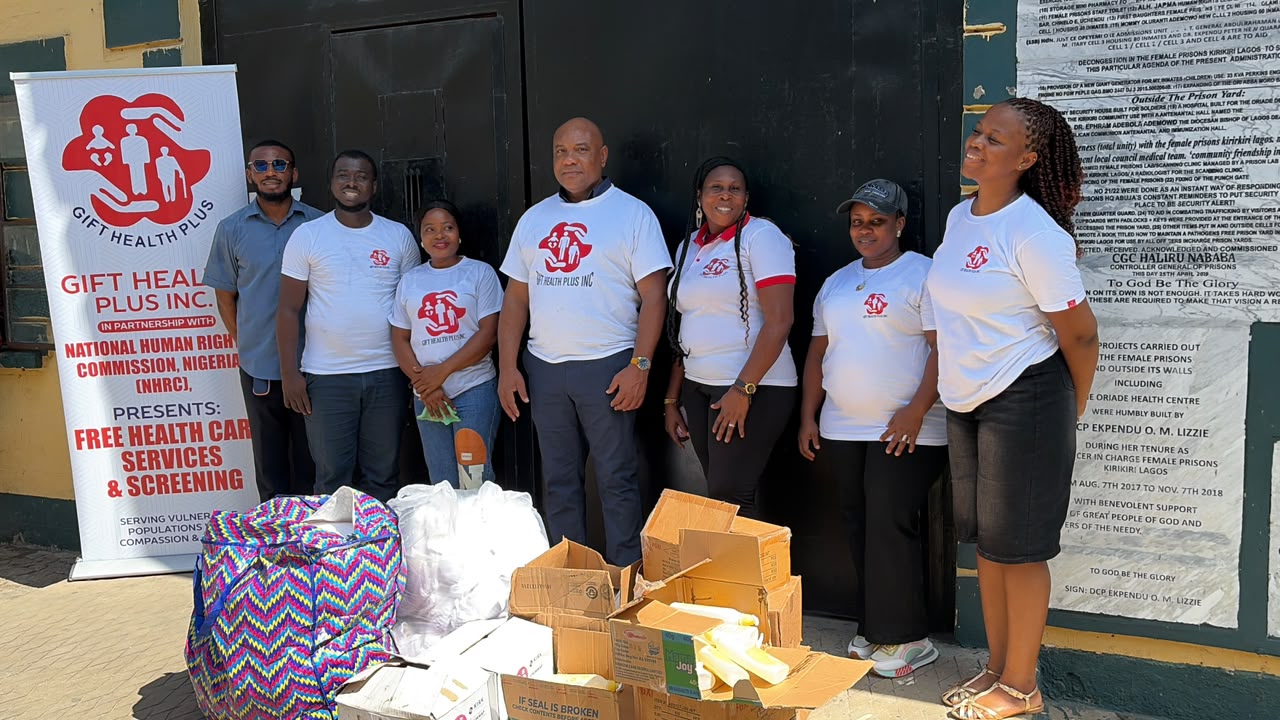
A non-governmental organisation, Gift Health-Plus, has provided free medical services to 130 female inmates at the Nigerian Correctional Service (NCoS) Female Custodial Facility, Kirikiri, Lagos.
The outreach, on Friday, provided free eye screening, reading glasses, eye drops, prenatal vitamins and personal healthcare items to the inmates, including 10 nursing mothers.
Speaking during the exercise, Dr Chamberlain Nwanne, Founder and Executive Director of the organisation, said personal care items were also provided to correctional officers, as part of the intervention.
“For this outreach, we donated hundreds of reading glasses to inmates who need them.
“Since this is a female facility, we also brought NAFDAC-approved micronutrient prenatal vitamins for onward distribution to the inmates,” he said.
Nwanne said the organisation had carried out similar outreaches in correctional facilities across the country through a standing partnership with the National Human Rights Commission (NHRC).
He said the organisation reached 1,926 inmates nationwide in the previous year, visiting 22 out of the country’s 54 correctional facilities and providing glasses, personal care items and other assistance.
According to him, the intervention is not only about providing material support but also about restoring hope among vulnerable people, particularly inmates awaiting trial.
“Many of these inmates are awaiting trial and have not been convicted of any crime. Being able to give them hope and say, ‘Look, we see you,’ is important,” he said.
Nwanne said the foundation was motivated by the need to support vulnerable people who might lack access to basic necessities, adding that it would continue its outreach based on identified needs and available resources.
Also speaking, Dr Obaje Joseph, an optometrist and consulting doctor at the outreach, said the exercise enabled the team to screen inmates with various eye-related complaints.
He said some inmates reported difficulty seeing small letters, eye pain and other conditions, adding that those who required reading glasses and eye drops received them.
Joseph advised the inmates to undergo another eye examination after two years, use their reading glasses appropriately and avoid activities that could result in eye injuries.
Another optometrist, Dr Deborah Uzuka-Uchegbu, said most inmates she attended to complained of difficulty reading, a problem largely linked to age.
The beneficiaries appreciated the gesture, with a 17-year-old inmate (name withheld), describing the outreach as impactful and noting that inmates who needed medical care had previously lacked access to checks and eye drops.
Another inmate, 56-year-old (name withheld), said she experienced redness in both eyes after eating groundnut, egusi and vegetable oil most times. (NAN)