Existence of ‘global order’ requires international consensus — Former NIIA boss
A former Director-General, Nigerian Institute of International Affairs (NIIA), Prof. Bola Akinterinwa, says a global order can only exist when there is consensus among the international community.
He says, however, that the emergence of different blocs and organisations pursuing their own interests makes such harmonisation difficult.
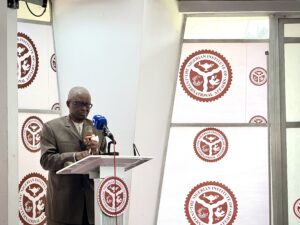
Akinterinwa made the assertion at the NIIA Foreign Policy Lecture Series on Wednesday in Lagos.
The professor of international relations delivered a lecture titled, “The Evolving Global Order and the Future of International Law: Robotic Diplomacy as a Main Definiendum”.
Akinterinwa raised the question of whose interests a global order would serve.
He noted that different power blocs and countries were increasingly developing their own systems and approaches to international relations.
The professor noted that there was a need to distinguish between the concepts of “international,” “global” and “world order” when discussing contemporary international relations.
He explained that international relations could be bilateral, plurilateral or multilateral, while the concept of global implied something encompassing the entire world.
According to him, bilateral and plurilateral arrangements cannot, by themselves, constitute a global order.
“International does not mean the same thing as global. Global does not mean the same thing as world,” he said.
Akinterinwa cited the European Union, BRICS and the United States as examples of actors developing or pursuing distinctive approaches to international relations.
He said BRICS was evolving its own order as its member states sought to resist what he described as the “Westernisation of their mentality”.
The professor also examined the evolution of U.S. foreign policy, particularly the “America First” doctrine and the “Make America Great Again” agenda under U.S. President Donald Trump.
“This development reflects how major powers can pursue national interests while their policies also have implications for the wider international system,” he said.
On international law, Akinterinwa questioned whether the existing system was applied equally across states, asking, “Whose international law?”
“The bottom line is that there is nothing wrong in seeking to evolve a global order, ” he said.
He argued that respect for international law was often affected by differences in political and geopolitical power.
“Those who are respecting international law are only respected by the weak countries, particularly African countries.
“Powerful countries sometimes apply international law selectively when pursuing their interests, the former director-general said.
Akinterinwa said any attempt to establish a global order must, therefore, address questions of consensus, universality, competing interests and the changing distribution of global power.
Speaking on the efficacy of international law, the Director-General of NIIA, Prof. Eghosa Osaghae, said it remained one of the underlying pillars of the international order.
According to him, international law is important in protecting weaker and smaller countries.
Osaghae said Nigeria’s commitment to a rules-based international system was reflected in its strong advocacy for multilateralism, particularly through the UN system.
“The UN provides a framework of principles, rules and conventions subscribed to by countries.
“The laws also protect the weaker and smaller countries, which is why outside of the political realm where power is might, we all still are observing the same rules,” he said.
Osaghae noted that without such rules governing the international system, relations among states would be reduced to “power is might”.
That, he said, would be injurious to weaker and smaller countries. (NAN)