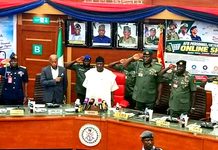
The Minister of Information and National Orientation, Mohammed Idris, says the Federal Government is intensifying its efforts to exterminate terrorists, insurgents and other criminal elements threatening peace and security across Nigeria.
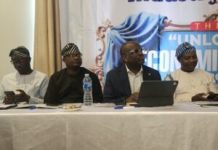
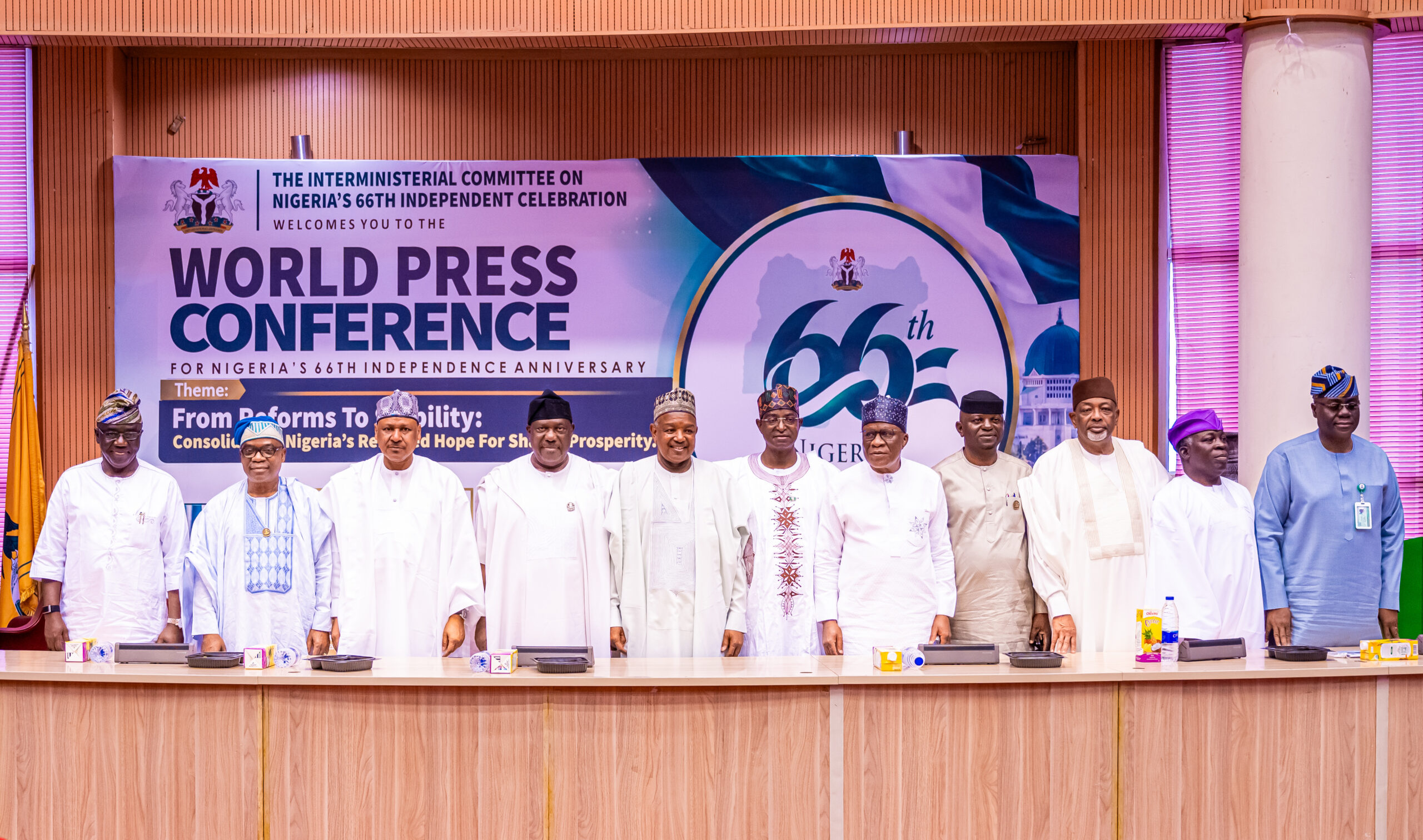
Idris stated this in Abuja on Thursday at a news conference organised ahead of Nigeria’s 66th Independence Anniversary, themed, “From Reforms to Stability: Consolidating Nigeria’s Renewed Hope for Shared Prosperity.”
He said President Bola Tinubu’s administration acknowledged the security challenges confronting the country and remained committed to addressing them.
“The government of President Bola Tinubu always acknowledges the challenges that we have in terms of insecurity,” Idris said.
He added that the President had consistently acknowledged that the country had not yet reached its desired security destination.
“Mr President is humble enough all the time to say we are not yet where we want to be, but certainly there is so much work in progress,” he said.
According to him, the security situation in some parts of the country has improved considerably compared with previous years.
Idris recalled that travelling between some major cities was previously difficult because of insecurity and attacks by criminal elements.
He specifically cited the Kaduna-Abuja route as an example of an area where movement had become easier.
“Sometimes it is difficult to even remember that a few years ago it was very challenging for someone who lives in Kaduna, for example, to come to Abuja or vice versa,” he said.
He noted that Nigerians could now travel between Abuja and Kaduna more freely, describing the development as an indication of progress in the fight against insecurity.
“People just take their cars now, enter transport, and just go to Kaduna as if we didn’t have this challenge before,” Idris said.
He, however, cautioned that the improvement should not be interpreted to mean that all security challenges had been completely resolved.
“Now, does it mean that we have solved all the security challenges in this country? No,” he said.
The minister said the administration had continued to provide resources for the acquisition of additional equipment and platforms for the nation’s armed forces and security agencies.
He said President Tinubu had approved funding for the procurement of military platforms and other security equipment since assuming office.
According to him, the procurement of sophisticated military equipment is a gradual process because some of the platforms require significant time to manufacture and deliver.
“Many of these platforms aren’t just off the shelf to go and pick,” he explained.
Idris said some of the equipment currently being delivered had been ordered during the administration of former President Muhammadu Buhari.
He listed attack helicopters and other military hardware among the equipment being delivered to strengthen the operational capacity of the armed forces.
He said additional platforms were being provided to the Nigerian Army, Nigerian Navy and Nigerian Air Force.
“Additional platforms are coming into this country for the Nigerian Army, Nigerian Navy, Nigerian Air Force,” Idris said.
The minister also disclosed that the President had approved an increase in the number of army divisions from eight to 12.
He said the expansion was aimed at bringing the armed forces closer to areas of operation and improving their ability to respond rapidly to security threats.
“I was in Taraba State recently, and I was passing by the headquarters of the new army division there,” he said.
Idris explained that the establishment of new divisions would reduce the distance security personnel had to travel when responding to attacks.
“This is to ensure that the armed forces are being brought closer to areas of operation,” he said.
He added that the measure would enable the military to confront criminal elements and insurgents more effectively.
The minister further said the Federal Government had improved the welfare and salaries of members of the armed forces.
According to him, the improvement in remuneration was intended to boost the morale of military personnel engaged in protecting Nigerians.
He also highlighted improved coordination between security agencies and intelligence services as part of the administration’s security strategy.
Idris said enhanced intelligence sharing and inter-agency collaboration had contributed to the arrest of high-profile terrorism suspects.
He cited the capture of individuals identified as Mahmuda and his Chief of Staff as an example of the results of such coordination.
“Today, Mahmuda and his Chief of Staff are having their day in court,” he said.
He noted that some international governments had previously placed bounties on the suspects.
Idris said their capture without an exchange of gunfire demonstrated the importance of intelligence-led operations and cooperation among security agencies.
“They were captured without one shot fired,” he said.
According to him, the Federal Government has also responded promptly to security incidents by working to restore normalcy in affected communities.
He cited security situations in Oyo, Kwara, Niger and parts of the North-East as examples of areas where government interventions had been undertaken.
The minister stressed that the government was not claiming that insecurity had been completely eliminated.
He, however, said the administration was determined to continue working until terrorist and insurgent activities were brought to an end.
“But we are on a march towards exterminating this once and for all,” Idris said.
He urged the media to support the armed forces by reporting not only security incidents but also efforts being made by government and security agencies to address them.
“What we want you to do, especially members of the media, is to support the administration, to support our armed forces,” he said.
Idris said President Tinubu had also appointed an adviser on homeland security to complement the efforts of the National Security Adviser.
He said the appointment was aimed at strengthening the government’s efforts to restore normalcy and improve national security.
The minister added that international partners were beginning to recognise what he described as Nigeria’s progress towards stability.
He linked the gradual return of investors to the country with improved confidence in Nigeria’s economic and security environment.
Idris also spoke about the broader economic reforms of the Tinubu administration, saying the government had taken difficult decisions to address longstanding structural and fiscal challenges.
He said the country’s real Gross Domestic Product had grown by 4.43 per cent compared with 4.23 per cent recorded in the corresponding period of the preceding year.
He further said Nigeria’s foreign reserves had strengthened, while domestic refining capacity and productive activities had expanded.
Idris said the government’s next priority was to translate economic stability and growth into tangible improvements in the lives of Nigerians.
“This means more jobs, higher incomes, greater access to education and credit, lower transportation costs, stronger businesses, and wider opportunities for the prosperity of all,” he said.
He said the government would continue to focus on young Nigerians by connecting their talents and energy to education, skills, finance and opportunities.
Idris said a prosperous Nigeria required an economy where enterprise was rewarded and access to capital was broadened.
He urged Nigerians to remain committed to building the country, stressing that Nigeria remained the only country shared by all citizens.
Also speaking, the Minister of Agriculture and Food Security, Sen. Abubakar Kyari, said improved security in some previously affected areas had contributed to increased agricultural production.
Kyari said about 70 per cent of areas that were previously insecure in some locations had been liberated, creating opportunities for farmers to return to production.
“I come from a place that was once, you know, unsecured conditions, but I can guarantee you, we have seen a lot of areas,” he said.
He said increased agricultural production was being supported by government interventions in fertiliser, farm inputs and improved agricultural practices.
Kyari acknowledged that insecurity remained a challenge but said other factors, including climate change, were increasingly affecting agricultural production.
He said the government was therefore promoting improved seed varieties capable of resisting floods and other climate-related challenges.
The minister said continued investment in agriculture, security and economic reforms would contribute to improved food production and the broader objective of shared prosperity.(NAN)