The Kwara Commissioner for Health, Dr Amina El-Imam, has warned that misdiagnosis could result in unnecessary costs, prolonged illness and loss of lives if accurate laboratory diagnosis is not prioritised.
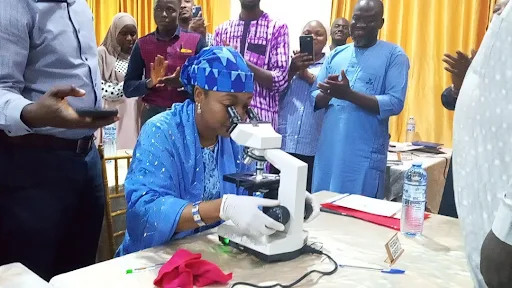
El-Imam said this on Thursday in Ilorin while declaring open a 10-day training for 44 Medical Laboratory Scientists (MLS) on malaria and tuberculosis microscopy across the state.
The News Agency of Nigeria (NAN) reports that the training was organised by the Kwara Ministry of Health to strengthen diagnostic capacity and improve healthcare delivery statewide.
El-Imam said that the quality of information provided by laboratory scientists significantly influenced clinical decisions, underscoring the need for accurate diagnosis and sustained professional capacity development across facilities.
She described the training as a critical step toward improving accurate diagnosis and saving lives, saying misdiagnosis remained a major threat to patient safety and quality healthcare.
“This exercise has become necessary because misdiagnosis can lead to unnecessary costs, prolonged illness and even loss of lives,” she said.
The commissioner urged participants to take the training seriously and apply the knowledge gained to improve service delivery and diagnostic outcomes in their respective facilities.
She said the present administration remained committed to strengthening the health system through continuous capacity building, workforce development and provision of modern diagnostic equipment statewide.
Speaking earlier, the Director of Medical Laboratory Services in the ministry, Mrs Kehinde Aderibigbe, said the training would combine theory and practical sessions for participants.
Aderibigbe said the programme would focus on malaria parasite identification and tuberculosis microscopy to improve diagnostic accuracy and enhance disease surveillance and response efforts.
She commended the state government for prioritising laboratory strengthening and supporting initiatives aimed at improving diagnostic services and healthcare outcomes for residents across the state.
Aderibigbe said that the training would enhance early detection and management of malaria and tuberculosis, thereby improving treatment outcomes and reducing disease-related complications among patients.(NAN)