The International Fund for Agricultural Development (IFAD) says its investments in Nigeria have reached no fewer than 96,827 women through programmes aimed at strengthening agricultural productivity, financial inclusion and economic opportunities.
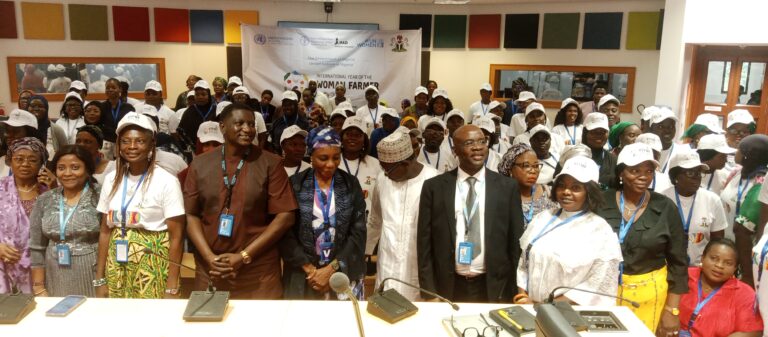
Mrs Chioma Adiele-Okpara, IFAD Nigeria Country Programme Officer, said this on Tuesday in Abuja at the commemoration of the 2026 International Year of the Woman Farmer.
The event had the theme, “Empowering Women Farmers: Advancing Inclusive Policies and Investment for Resilient Agrifood Systems.”
Adiele-Okpara said the women were reached through three IFAD-supported programmes: the Value Chain Development Programme (VCDP), Livelihood Improvement Family Enterprises Project in the Niger Delta (LIFE-ND), and the Special Agro-Industrial Processing Zones (SAPZ) project.
She said the programmes had enabled women to move beyond subsistence farming into organised production, processing and market engagement.
“Through IFAD-supported investments, we have seen women move beyond subsistence farming into more organised production, processing and market engagement.
“They have gained access to financial services and productive assets, strengthened their businesses, and increasingly participate in decisions within their households, organisations and communities,” she said.
Adiele-Okpara said that beyond outreach, the programmes were strengthening women’s productive capacity, organisations, and access to knowledge and technology.
“Under the VCDP, 87,888 women are members of supported rural producer organisations, 36,572 have been trained in crop production technologies and 50,613 have accessed advisory services.
“LIFE-ND has trained 17,201 women, including women engaged in crop production and fisheries, while SAPZ has trained 5,815 women in improved crop production practices.
“Climate resilience is also a major focus, with women accessing climate information services across all three programmes and nearly 60,000 female household members supported by VCDP to cope with the effects of climate change,” she said.
According to her, the programmes are also addressing interconnected challenges relating to finance, nutrition and economic opportunities.
She said LIFE-ND’s financial inclusion interventions had enabled 11,003 women to access savings services, 9,568 to access credit, 11,382 to obtain insurance, and 14,654 to receive financial literacy training.
Adiele-Okpara added that more than 20,000 women across the three programmes had received targeted nutrition support, while SAPZ was progressively expanding women’s access to finance, producer organisations and employment opportunities.
She called on government, development partners and the private sector to invest more in women’s productive capacity, enterprises, organisations, innovations and leadership.
“According to her, we must ensure that women are not simply included in agricultural programmes but are positioned as equal partners and decision-makers in transforming Nigeria’s agrifood systems.”
Adiele-Okpara said IFAD remained committed to working with government, development partners, the private sector and women farmers to scale solutions that created lasting economic opportunities.
She described the celebration as recognition of the invaluable contributions of women to Nigeria’s agrifood systems.
According to her, it also provides an opportunity to recognise, invest in and amplify the voices of millions of women who are at the heart of the country’s food systems.
“Every day, women across Nigeria produce food, process agricultural products, manage rural enterprises, feed their families, create jobs and strengthen the resilience of their communities.
“In spite of their enormous contribution, women farmers continue to face significant barriers in accessing land, finance, technology, productive assets, extension services, markets and decision-making opportunities.
“The United Nations General Assembly declared 2026 the International Year of the Woman Farmer precisely to bring greater global attention to these challenges and, importantly, to the actions required to address them,” she said.
Adiele-Okpara said the national event was also the culmination of broader engagements held across states, where IFAD-supported programmes worked with women farmers and partners to promote dialogue, learning and advocacy.
“IFAD-supported programmes have worked with women farmers and partners across the states to mark the year, create spaces for dialogue and learning, showcase women’s achievements, and highlight the opportunities and constraints they face.
“This is important because the transformation we seek cannot happen only in national policy spaces. It must be rooted in the realities, aspirations and innovations of women farmers in our communities.
“These women represent thousands of others across Nigeria who are working every day to feed their families, create jobs, strengthen local economies and contribute to national food security.
“We must acknowledge that significant barriers remain. Women farmers continue to face challenges in accessing land, finance, technology, extension services, markets and leadership opportunities,” she said.(NAN)