) The Federal Executive Council (FEC) on Wednesday approved an amendment to the National Mental Health Act to decriminalise attempted suicide in Nigeria.
The amendment, which will be transmitted to the National Assembly for enactment, seeks to shift the treatment of persons who attempt suicide from punishment to care, protection and support.
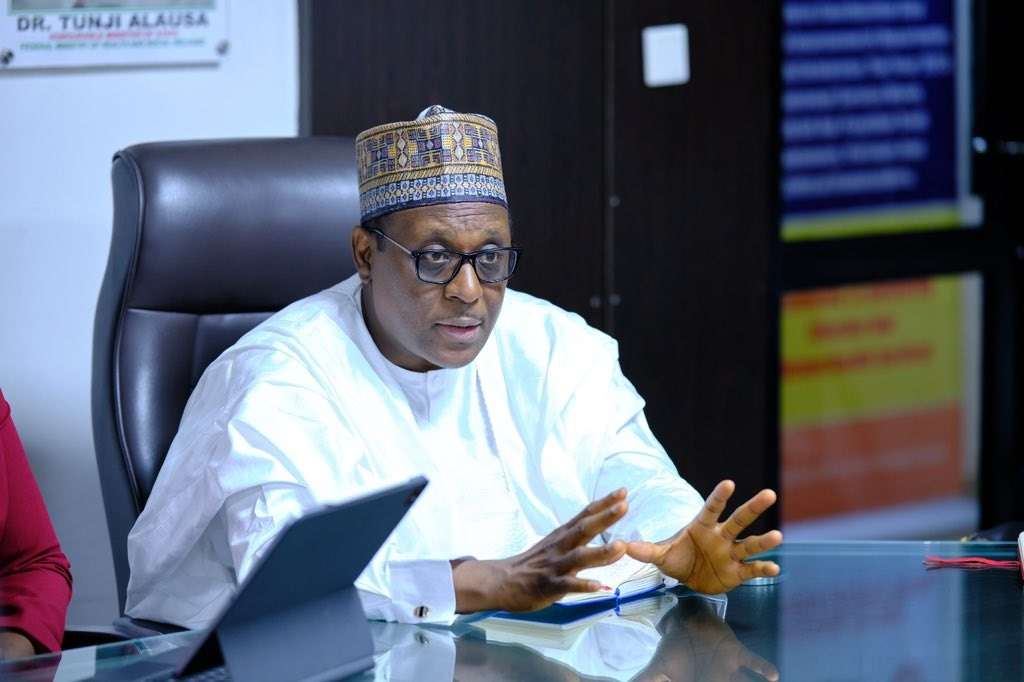
Minister of Health and Social Welfare, Prof. Ali Pate, disclosed this while briefing State House correspondents after the FEC meeting presided over by President Bola Tinubu in Abuja.
Pate said attempted suicide remained criminalised under colonial-era provisions of the Criminal Code Act and Penal Code, in spite of the National Mental Health Act 2021 providing supportive care for people at risk of self-harm.
“As you all know, suicide is a major public health concern in Nigeria, as well as several other countries.
“According to the World Health Organisation, it is responsible for more than 7,000 deaths annually, with an estimated 300,000 suicide attempts across the country each year,” he said.
He said the existing legal framework discouraged help-seeking behaviour and created inconsistency with the National Mental Health Act 2021, which provides supportive care, protection and treatment for people at risk of self-harm.
“The idea is attempted suicide is not a crime. This legal approach discourages help-seeking behaviours and also conflicts with our national mental health policy and the National Mental Health Act 2021, which provides for supportive care, protection and treatment for individuals at risk of self-harm,” he said.
Pate said the amendment followed consultations among the Ministries of Health and Social Welfare and Justice, mental health advocates, the Attorney-General’s Office, a task force and the National Assembly.
“A task force had been set up following a resolution of the House of Representatives, which is supportive of this, and together with the Ministry of Health and Social Welfare and Justice, worked towards an amendment of the Mental Health Act,” he said.
The minister said FEC also approved the National Centre for Oral Health Establishment Bill 2026 for transmission to the National Assembly, to strengthen oral health services, research and training.
He said the proposed centre would provide a national referral and research institution while establishing a comprehensive legal and institutional framework for addressing oral diseases and related conditions.
Pate said FEC further approved major infrastructure upgrades at the National Hospital, Abuja, including an administrative block for N18.74 million, modular clinics and theatre complex for N64.92 billion, a high-end wing for N103 billion and a Neuroscience Institute for N69 billion.
“In line with the President’s direction to boldly transform this country through infrastructural upgrades and equipment for the health sector, the Council has also today approved contracts to be awarded.”
He said the Neuroscience Institute would provide dedicated infrastructure for neurosurgical, radiological, interventional and rehabilitative services for patients suffering from stroke, brain tumours and other neurological conditions.
“Ultimately, quality healthcare is not cheap. To have the healthcare system we need, Nigeria has to invest in it.”
The Council also approved N302.3 billion for the design, construction, furnishing, equipment, supervision and commissioning of a National Institute for Cancer Research and Treatment (NICRAT) Centre, with a completion period of 36 months.
Pate said the project would provide a flagship institution for cancer research, treatment, innovation and capacity building, noting that three upgraded cancer centres in Katsina, Benin and Enugu had already been completed and launched.
“These two major investments are really modernising the infrastructure landscape for the health sector, which will serve Nigerians and hopefully provide services that will make it further less likely for Nigerians to have to travel long distances to get the care that they need,” he explained.
He said the projects were funded through appropriations to the relevant agencies, adding that due process and competitive procurement procedures were followed, with the Bureau of Public Procurement providing the necessary clearances.
He added that improved health infrastructure would also create better working conditions for Nigerian health professionals and reduce the need for medical professionals to seek opportunities abroad.
Pate said the investments were part of the Federal Government’s broader effort to strengthen healthcare infrastructure and improve access to quality medical services across the country. (NAN)