) The Society of Petroleum Engineers (SPE) Nigerian Council has urged journalists covering the energy sector to strengthen their technical knowledge to improve reporting quality, accuracy and credibility.
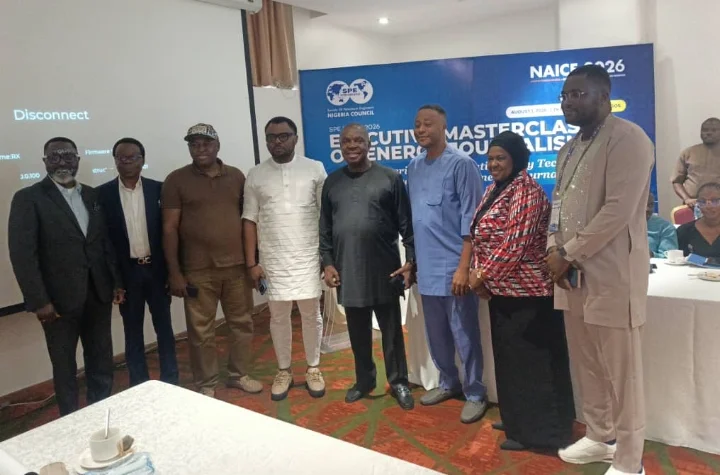
Mr Francis Nwaochei, SPE Nigerian Council Chairman, made the call at the council’s Executive Masterclass on Energy Journalism held on Sunday in Lagos.
He said Nigeria’s evolving energy landscape required reporters to move beyond headlines and develop deeper understanding of technical, regulatory and commercial issues.
The masterclass, with the theme ‘Engineering the Narrative: Why Technical Knowledge Matters in Energy Journalism,’ attracted journalists, engineers and industry stakeholders.
The event examined the role of informed reporting in promoting balanced public understanding of Nigeria’s energy industry and its growing complexities.
Nwaochei said discussions on energy now extended beyond crude oil production to several emerging and interconnected areas of national development.
According to him, these include gas development, energy security, carbon management, digital technologies, local content, infrastructure development, financing and regulatory reforms.
He added that the country’s energy discourse also increasingly focused on the transition toward a lower-carbon and more sustainable future.
“As the industry becomes more complex, reporting on it also requires greater depth and context,” Nwaochei said.
He stressed that Nigeria deserves an energy narrative reflecting both the opportunities and challenges confronting the sector.
He said: “Nigeria deserves an energy narrative that is both ambitious and accurate.
“We should celebrate our achievements, acknowledge our challenges, explain our opportunities and report our progress with fairness and context.”
According to him, credibility in journalism is built through facts, evidence and responsible reporting rather than sensationalism.
“Credibility is built not by sensational headlines, but by facts, evidence and responsible journalism,” he stated.
He explained that the masterclass was designed to equip journalists with confidence and technical understanding needed for informed and balanced reporting.
Participants were expected to develop skills for asking informed questions, conducting due diligence and producing credible reports.
Nwaochei challenged engineers and industry professionals to improve communication with journalists and the wider public.
“We must explain technical concepts in language that is accessible without compromising accuracy,” he said.
He urged experts to remain open to questions and recognise the importance of informed journalism to industry growth.
“We should be open to questions and recognise that informed journalism strengthens, rather than weakens, our industry,” he added.
Also speaking, the Immediate Past Chairman of SPE Nigeria, Mrs Aminat Danmadami, highlighted the significance of the industry’s current transformation.
Danmadami said Nigeria’s energy sector was entering a critical phase requiring greater public understanding of developments shaping its future.
She urged journalists to move beyond event-driven reporting and help citizens understand the impact of engineering, technology and regulation.
According to her, informed reporting can improve public appreciation of policies, innovations and investments influencing the sector’s direction.
Participants at the workshop also advocated stronger collaboration among engineers, regulators and media professionals.
They said sustained engagement would promote accurate, credible and balanced reporting capable of supporting informed public discourse.
The participants added that improved collaboration would strengthen public confidence in Nigeria’s energy sector and contribute to more effective communication. (NAN)